- Change status from "scaffolded" to "implemented (Phase A)"
- Update file structure to match actual files
- Replace stale decision doc refs with ADR links
- Add related research document links

Co-Authored-By: Claude Opus 4.5 <noreply@anthropic.com>
- Add console.warn when node.on('beforeSerialize') is used (ADR-0010)
- Add console.warn if extensions registered but startExtensionSystem()
  never called (ADR-0012 mitigation)
- Enhance JSDoc with migration examples for deprecated beforeSerialize

Co-Authored-By: Claude Opus 4.5 <noreply@anthropic.com>
Documents the 5 categories of widget state (identity, value,
properties, options bag, DOM-specific) and their constraints
for agents working with the extension API.

Co-Authored-By: Claude Opus 4.5 <noreply@anthropic.com>
Analyzes whether the 4 serialization contexts can be reduced.
Recommends keeping all 4 - each has distinct semantics that
extensions may need to differentiate.

Co-Authored-By: Claude Opus 4.5 <noreply@anthropic.com>
Analyzes the relationship between DOM widgets and base widgets.
Recommends keeping the current partial convergence - unified at
entity/interface/command level, separate at creation API level.

Co-Authored-By: Claude Opus 4.5 <noreply@anthropic.com>
Analyzes canvas vs screen coordinates in the extension API.
Current approach is appropriate - node positions in canvas space,
widget heights in pixels.

Co-Authored-By: Claude Opus 4.5 <noreply@anthropic.com>
Analyzes when extensions need raw entity IDs and recommends keeping
them exposed with clear documentation that they are opaque values.

Co-Authored-By: Claude Opus 4.5 <noreply@anthropic.com>
Documents the decision to use pure function registration (defineNode,
defineWidget) with a centralized loader (startExtensionSystem) rather
than side-effect registration at import time.

Co-Authored-By: Claude Opus 4.5 <noreply@anthropic.com>
Decision: All collection-returning methods (widgets(), inputs(), etc.)
and object-returning methods (getProperties()) return fresh copies.

Benefits:
- True immutability: mutations never affect internal state
- JavaScript-safe: works regardless of TypeScript types
- Simple mental model: "this is your copy"

Applied consistently across the extension API surface.

Addresses review discussion item #10 from design-review-12142.md (Topic 14)

Co-Authored-By: Claude Opus 4.5 <noreply@anthropic.com>
Node-level `node.on('beforeSerialize')` is wrong-layered:
- Extension state should flow through widgets, not arbitrary node fields
- Widget-level `widget.on('beforeSerialize')` handles all legitimate use cases
- Node-level hooks encourage ad-hoc state storage that breaks clean separation

Decision: Deprecate now, remove in v1.0. Add migration guidance to ADR.

Addresses review discussion item #9 from design-review-12142.md (Topic 11)

Co-Authored-By: Claude Opus 4.5 <noreply@anthropic.com>
Shorter function names improve ergonomics while maintaining clarity:
- defineNode() - register node-scoped extensions
- defineWidget() - register widget type extensions

Old names kept as deprecated aliases for backwards compatibility.
Will be removed in v1.0.

Updates all docs, examples, tests, and internal references.

Addresses review discussion item #4 from design-review-12142.md

Co-Authored-By: Claude Opus 4.5 <noreply@anthropic.com>
Remove redundant "widget" prefix since we're already in widget context.

Addresses review discussion item #5 from design-review-12142.md

Co-Authored-By: Claude Opus 4.5 <noreply@anthropic.com>
Changes:
- Strip internal decision refs (D3, D5, D6, D7, etc.) from JSDoc
- Remove @stability stable tags (pre-v1.0, nothing is stable yet)
- Remove apiVersion from ExtensionOptions (telemetry deferred)
- Change NodeMode from number union to string union
  ('always'|'never'|'bypass'|'once'|'onTrigger')
- Rename widget() to getWidget() for consistency

Addresses review discussion items #1, #2, #3, #7, #8 from design-review-12142.md

Co-Authored-By: Claude Opus 4.5 <noreply@anthropic.com>
knip flagged the new src/extension-api/* files and exports as unused
because nothing internal consumes them — by design. They are the public
API surface published by PKG2 (#12143).

Changes:
- knip.config.ts: add src/extension-api/index.ts as entry point (per
  AGENTS.md, this barrel is the explicit exception to the
  no-barrel-files-in-src rule because it IS the package entry).
- knip.config.ts: ignore src/types/extensionV2.ts (deprecated stub,
  removed once PKG2 ships).
- knip.config.ts: register `-publicAPI` tag.
- Tag externally-consumed exports with @publicAPI:
  - lifecycle.ts: defineNodeExtension/Extension/WidgetExtension declares
    + back-compat type re-exports
  - extension-api-service.ts: _setDispatchImplForTesting, NodeInstanceScope
  - worldInstance.ts: World

Verifies the full lint-format CI matrix locally:
  pnpm lint        ✅
  pnpm stylelint   (unaffected, CSS-only)
  pnpm format:check ✅
  pnpm knip        ✅
The previous comment described what the Vue intrinsics do but called them
no-op shims without explaining the contract gap. That read as if the
service was relying on dep-tracking suppression that the shim was silently
violating.

Rewrite the comment to make the Phase A scope explicit: this is a no-op
stub by design (the API surface is the contract being stabilized, not the
dep-tracking guarantee), and the real @vue/reactivity import lands together
with the reactive-World contract in #11939. Adds the TODO(#11939) marker so
the swap-in is grep-able alongside the rest of the Phase B handoff points.

No code change - comment-only. Per Architect review #5, we deliberately do
NOT add @vue/reactivity as a direct dep in Phase A.
Extract NodeExtensionOptions, ExtensionOptions, and WidgetExtensionOptions
into a new src/extension-api/types.ts so both the runtime service and the
public lifecycle barrel depend on the type contracts without forming a cycle.

Before:
  - extension-api-service.ts imported the option types from
    @/extension-api/lifecycle.
  - lifecycle.ts re-exported onNodeMounted/onNodeRemoved from
    @/services/extension-api-service.
  -> service <-> lifecycle circular import (Architect review #3).

After:
  - types.ts owns the three option-type interfaces (single source of truth).
  - lifecycle.ts re-exports them from ./types so the public path
    @/extension-api/lifecycle keeps working.
  - extension-api-service.ts imports the types from @/extension-api/types.
  - The barrel @/extension-api re-exports from ./types directly.

No public API change - all named exports remain available from
@comfyorg/extension-api and from @/extension-api/lifecycle.
Restratified foundation. Includes:
- Public API declaration files (src/extension-api/{events,identifiers,index,
  lifecycle,node,shell,widget}.ts + README)
- Scope registry runtime (src/services/extension-api-service.ts) +
  scope-registry tests
- Boot wiring (src/scripts/app.ts, src/services/extensionService.ts)
- Phase A ECS world stubs (src/world/{componentKey,entityIds,
  widgets/widgetComponents,worldInstance}.ts)
- Public type re-exports (src/types/extensionV2.ts)

Test framework moved to ext-api/i-tf, npm package + docgen moved to
ext-api/i-pkg, core extension v2 conversions moved to ext-api/i-ext.

Original (pre-restratify) branch tip backed up at
refs/backup/restratify-20260511/ext-api-i-foundation
and tag backup/restratify/ext-api-i-foundation on fork.
*PR Created by the Glary-Bot Agent*
---
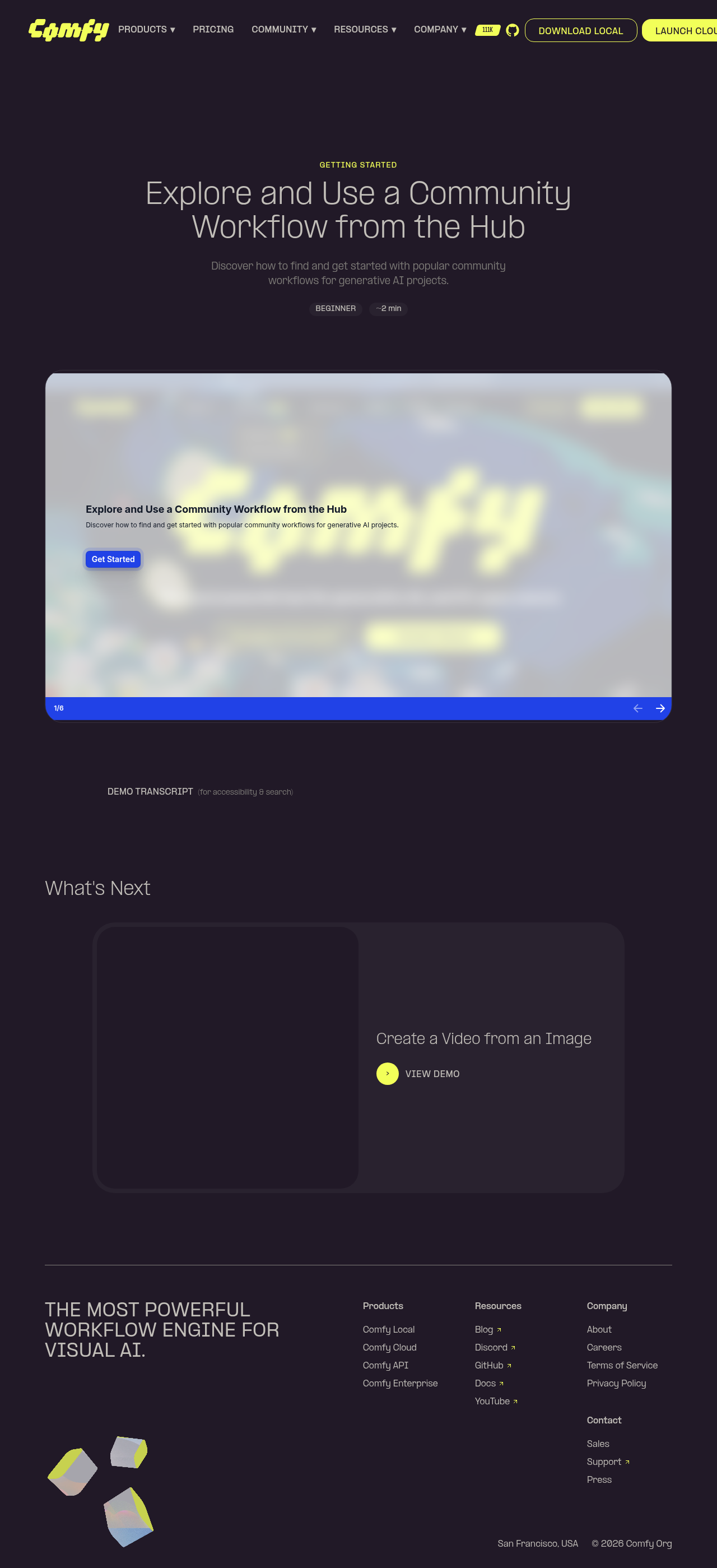
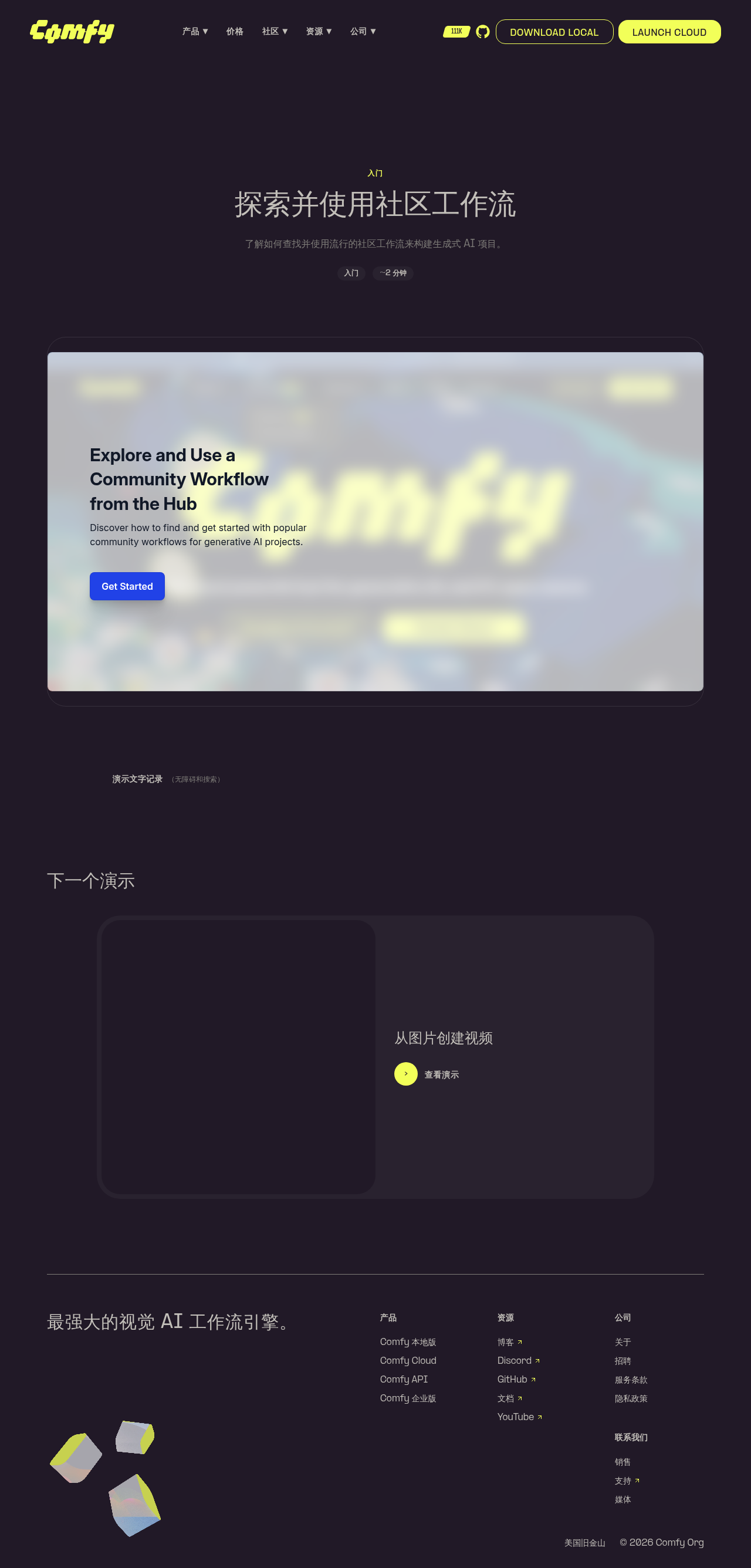
Adds a new interactive demo page at
`comfy.org/demos/community-workflows` for the [Explore and Use a
Community Workflow from the
Hub](https://app.arcade.software/flows/mqZh17oWDuWIyhK0xwEV/view) Arcade
walkthrough.
Built on top of the demo infrastructure merged in #11436.
## Changes
- `apps/website/src/config/demos.ts` — register the new demo
- `apps/website/src/i18n/translations.ts` — add en + zh-CN strings
(title, description, transcript)
- `apps/website/public/images/demos/community-workflows-og.png` —
1200×630 OG image so email/social previews render correctly
- `apps/website/public/images/demos/community-workflows-thumb.webp` —
1280×720 WebP thumbnail
- `apps/website/e2e/demos.spec.ts` — refactored to iterate `demos` from
config so every demo (current + future) is exercised in both en and
zh-CN, and the iframe `src` is asserted to contain the correct Arcade ID
Adding a new demo only requires editing `demos.ts` + `translations.ts`
going forward; the e2e refactor is a one-time generalization that gives
future demos coverage automatically.
## Verification
- `pnpm typecheck:website`: 0 errors, 0 warnings, 0 hints
- Pre-commit hook ran `pnpm typecheck`, `oxfmt`, `oxlint`, `eslint` —
all clean on staged files
- `npx astro build`: 53 pages built; `/demos/community-workflows/` and
`/zh-CN/demos/community-workflows/` generated and present in
`sitemap-0.xml`
- Page rendered in Playwright preview: hero (title, GETTING STARTED,
BEGINNER, ~2 min), Arcade embed loads, transcript section present,
"What's Next" links to `image-to-video`
- zh-CN page shows localized title (探索并使用社区工作流), description, badges,
and "What's Next" heading
- OG meta tag references the new 1200×630 PNG
## Screenshots
┆Issue is synchronized with this [Notion
page](https://www.notion.so/PR-11942-feat-website-add-community-workflows-demo-page-3576d73d36508139b647c774b1d39323)
by [Unito](https://www.unito.io)
---------
Co-authored-by: Glary-Bot <glary-bot@users.noreply.github.com>
## Automated Ingest API Type Update

This PR updates the Ingest API TypeScript types and Zod schemas from the
latest cloud OpenAPI specification.

- Cloud commit: 0a03f3a
- Generated using @hey-api/openapi-ts with Zod plugin

These types cover cloud-only endpoints (workspaces, billing, secrets,
assets, tasks, etc.).
Overlapping endpoints shared with the local ComfyUI Python backend are
excluded.

---------

Co-authored-by: MillerMedia <7741082+MillerMedia@users.noreply.github.com>
Co-authored-by: GitHub Action <action@github.com>
*PR Created by the Glary-Bot Agent*
---
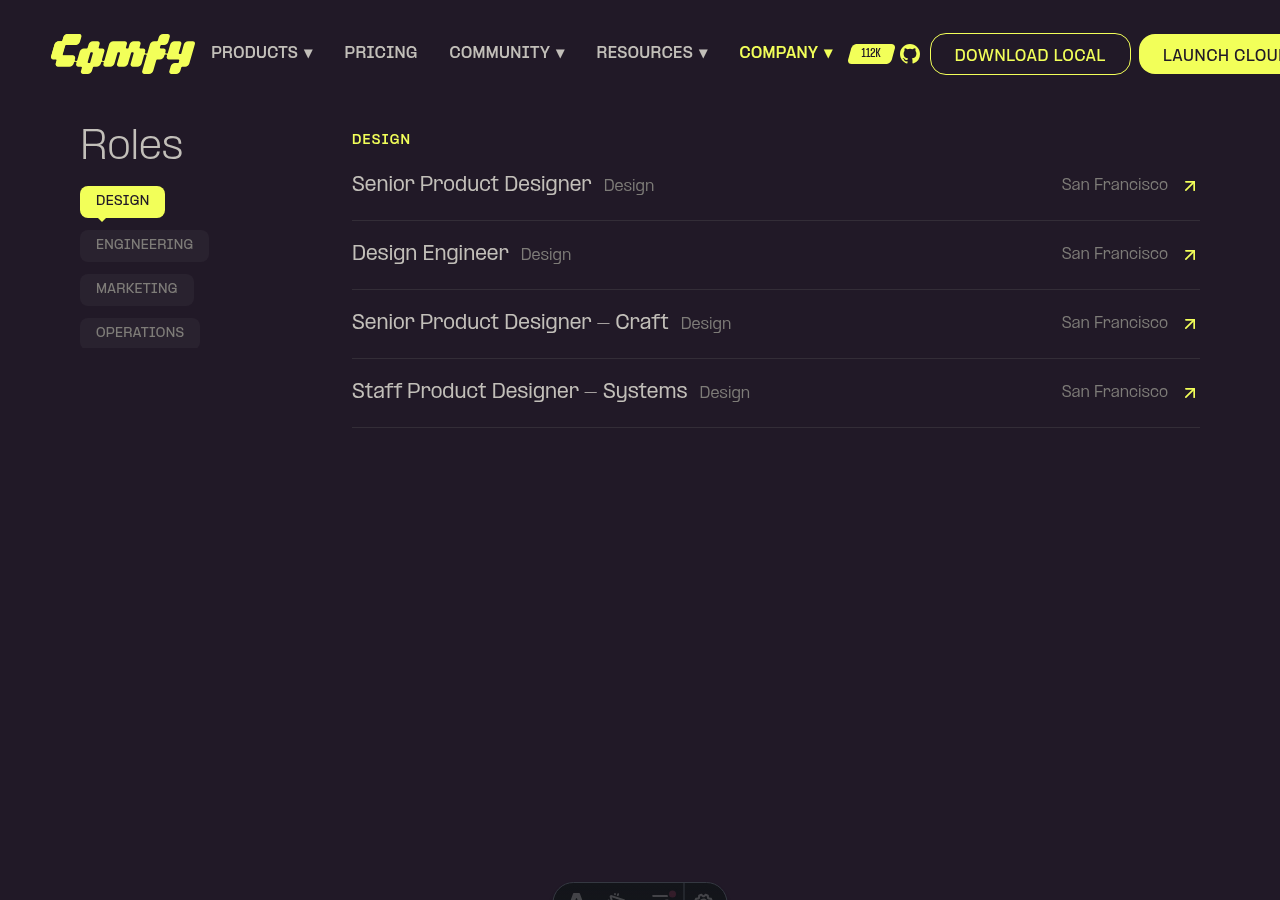
Converts the `CategoryNav` in the careers `RolesSection` from a
click-to-filter button into a scroll-spy section locator, matching the
pattern already used by `ContentSection.vue` (customer story details,
TOS, privacy policy).
## Changes
- **`apps/website/src/components/careers/RolesSection.vue`**
- Replaced category-based filtering with anchor navigation: clicking a
department in the sidebar smooth-scrolls (via existing Lenis/GSAP
`scrollTo` helper) to that department's section with a `-144px` header
offset.
- Removed the `ALL` button — every department is always rendered as its
own scroll target with `id="careers-dept-{key}"`.
- Added `useIntersectionObserver` (rootMargin `-20% 0px -60% 0px`) that
updates the active nav item as the user scrolls. An `isScrolling` guard
prevents the observer from fighting click-jumps mid-animation.
- Added a viewport-entry fade/slide-up animation on each department
section, gated by `motion-safe:` so users with `prefers-reduced-motion`
see content immediately. The reveal state is sticky (one-way) so
sections don't disappear once revealed.
- Active state is driven by raw department keys; both the nav model and
the observer's id-to-key mapping use a single consistent identifier.
- **`apps/website/e2e/careers.spec.ts`**
- Replaced the obsolete "ENGINEERING filter narrows the list" test with
one that validates locator behavior: clicking the department button
scrolls the section into the viewport, sets `aria-pressed="true"`, and
keeps the full role list rendered.
## Verification
- `pnpm --filter @comfyorg/website typecheck` — clean.
- `pnpm exec oxfmt` / `pnpm exec eslint` / `pnpm exec oxlint` — clean.
- Pre-commit lint-staged hooks (stylelint, oxfmt, oxlint, eslint,
typecheck) — passing.
- Manual smoke test via Playwright on `astro dev`: careers page renders
all departments stacked vertically, active department in the sidebar
highlights based on viewport position (DESIGN active on initial scroll),
nav items reflect each department instead of including an `ALL` button.
## Screenshots
┆Issue is synchronized with this [Notion
page](https://www.notion.so/PR-12110-feat-convert-careers-CategoryNav-to-scroll-spy-locator-35b6d73d3650818a9226e5dcb1244756)
by [Unito](https://www.unito.io)
---------
Co-authored-by: Glary <glary@bot.local>
## Summary

`.m4v` and `.mkv` files render as a generic file icon in the assets
sidebar instead of a video preview because `VIDEO_EXTENSIONS` doesn't
list them, even though both formats are widely produced by ComfyUI
custom nodes and are browser-playable when written with common codecs.

## Changes

- **What**: Add `m4v` and `mkv` to `VIDEO_EXTENSIONS` in
`packages/shared-frontend-utils/src/formatUtil.ts` and extend the
existing test cases. Aligns with ComfyUI core's canonical video
extension list
(`tests-unit/folder_paths_test/filter_by_content_types_test.py:13`),
which includes both. The frontend's format registry at
`src/platform/workflow/core/types/formats.ts` also lists `.m4v` with
mime `video/x-m4v` — `formatUtil.ts` was the inconsistent surface.
- **Breaking**: None.
- **Dependencies**: None.

## Review Focus

`m4v` is Apple's MP4 container variant; `mkv` is the Matroska container.
ComfyUI custom nodes most commonly produce both with H.264/VP9 codecs,
which play natively in modern browsers via `<video>`. Adding the
extensions routes those files through the existing `MediaVideoTop`
component without any new rendering logic.

If a user's `.mkv` happens to use an exotic codec the browser can't play
(e.g. H.265/HEVC in Chrome), they get the same controllable failure mode
as today's `.avi` entries — a `<video>` element with the browser's
native unsupported-source UI. That is no worse than the current "show a
generic file icon" behavior, and strictly better in the common case.

## Screenshots (if applicable)

> **Note**: Screenshots taken from the OSS *input* assets sidebar with
[#12086](https://github.com/Comfy-Org/ComfyUI_frontend/pull/12086) also
applied locally. That PR fixes a separate regression where OSS input
filenames carry a `[input]` annotation suffix that breaks all
extension-based media detection — without it, `m4v`/`mkv` files (and
every other file in that sidebar) still render as the generic icon. This
PR alone is sufficient for cloud assets and OSS output history; the
input-sidebar previews require both PRs.

Before:
<img width="1197" height="714" alt="2026-05-09-031123_hyprshot"
src="https://github.com/user-attachments/assets/5c6ebc2d-aac2-411f-a2e4-51a111033184"
/>

After:
<img width="1042" height="723" alt="2026-05-09-031005_hyprshot"
src="https://github.com/user-attachments/assets/f0acc2cf-8571-4fd0-b0cd-2b8b87ff9b74"
/>
*PR Created by the Glary-Bot Agent*

---

## Summary

Fixes the bug where the last badge in `ContentSection`'s sticky sidebar
nav stays unhighlighted when the user scrolls to the very bottom of the
page on tall viewports (reported on a 14" MacBook M4 Pro at 3024×1964 /
2016×1310 logical, both Chrome and Safari).

## Root cause

The scroll-spy uses an IntersectionObserver with `rootMargin: '-20% 0px
-60% 0px'`, which makes only a 20%–40% horizontal band from the viewport
top "active". When multiple intersecting entries are reported, the
callback picks the one whose `boundingClientRect.top` is smallest
(highest up on screen).

On tall viewports, when the page is scrolled to the absolute bottom, the
last *and* the second-to-last sections frequently both sit inside that
20%–40% band at the same time. The "smallest top" tiebreak then selects
the second-to-last section, leaving the last badge inactive even though
the user has reached the end of the page.

## Fix

`apps/website/src/components/common/ContentSection.vue`:

1. Add `isAtBottom()` — true when the viewport bottom has reached the
document bottom (within 4px to absorb sub-pixel rounding).
2. The IntersectionObserver callback bails out when `isAtBottom()` so it
cannot overwrite the choice below.
3. A passive `scroll` listener (and a one-shot `onMounted` call) sets
`activeSection` to the last section whenever the page is at the bottom —
including when the component mounts already at the bottom (e.g. hash
navigation to a trailing anchor, restored scroll position, or a page
shorter than the viewport).
4. Both the scroll handler and the IO callback honor the existing
`isScrolling` flag, so click-driven smooth scroll-to-section behavior is
unchanged.

## Verification

Reproduced the bug at viewport 2016×1310 (14" M4 Pro "More Space" mode)
on `/privacy-policy`:

- Before fix: at absolute bottom, IntersectionObserver picks
`australian-privacy` (second-to-last) — bug confirmed via DOM inspection
that showed multiple sections intersecting the active band, with the
second-to-last winning the "smallest top" tiebreak.
- After fix:
  - Scrolled to bottom → last badge `CONTACT` is active.
  - Scrolled to top → first badge `INTRO` is active.
  - Scrolled mid-page → correct mid-section is active.
  - Click on a badge → smooth scrolls and that badge becomes active.
- Initial render at bottom (loaded `/privacy-policy#contact`, browser
scrolls to the bottom on mount) → `CONTACT` active immediately.

`pnpm typecheck` and `pnpm typecheck:website` pass; `pnpm lint` reports
0 errors; existing website unit tests pass.

Note: The website app currently has no Vue component test setup
(`vitest.config.ts` is configured for `node` env, no DOM). Adding
component tests for this scroll-spy interaction would require setting up
`happy-dom` and `@testing-library/vue` for the website app, which is out
of scope for this bug fix.

Fixes FE-604

┆Issue is synchronized with this [Notion
page](https://www.notion.so/PR-12057-FE-604-fix-website-activate-last-section-badge-when-scrolled-to-bottom-3596d73d365081faa243f4dd8e6ee54a)
by [Unito](https://www.unito.io)

---------

Co-authored-by: Glary-Bot <glary-bot@users.noreply.github.com>
## Summary

When an image fails to load in the image preview, the context buttons
are still visible - clicking these does not work (Mask editor opens and
closes, download does nothing) - this hides the buttons if load fails.

## Changes

- **What**:
- hide buttons if load failed
- tests

## Review Focus

<!-- Critical design decisions or edge cases that need attention -->

<!-- If this PR fixes an issue, uncomment and update the line below -->
<!-- Fixes #ISSUE_NUMBER -->

## Screenshots (if applicable)
Current:
<img width="622" height="857" alt="image"
src="https://github.com/user-attachments/assets/26e391a0-5538-4c6c-ac8a-b6f2b6acabae"
/>

┆Issue is synchronized with this [Notion
page](https://www.notion.so/PR-12136-fix-hide-image-buttons-if-load-failed-35d6d73d365081579c71f1849b9ab1bd)
by [Unito](https://www.unito.io)
## Summary

After deleting an asset, the Load Image node kept displaying the deleted
thumbnail — both in the node body and in the picker dropdown (All /
Imported / Generated tabs), even after a workflow reload.

- Fixes FE-230
- Source: Slack
https://comfy-organization.slack.com/archives/C0A4XMHANP3/p1776715727656809

## Root Cause

Three distinct paths kept the deleted asset visible:

1. **Node-body preview cache** — `useMediaAssetActions.deleteAssets`
never cleared `node.imgs` / `node.videoContainer` / the
`nodeOutputStore` Vue ref, so the canvas renderer kept its cached frame.
2. **Live-delete dropdown gap** — the picker reads from
`outputMediaAssets.media` (the asset list) and from
`missingMediaStore.missingMediaCandidates` (verified-missing names). On
live delete, neither was updated for the deleted asset, so the dropdown
filter had nothing to drop.
3. **Synthetic "selected" placeholder** —
`useWidgetSelectItems.missingValueItem` rebuilt any orphaned
`modelValue` as a fake item with a `/api/view?filename=...` preview URL.
Browsers had cached that URL pre-delete, so the deleted thumbnail still
rendered with a blue checkmark even after the filter dropped the real
asset entry.

A subtler issue compounded #2/#3: candidate names stored in
`missingMediaStore` are raw widget values (e.g. `sub/foo.png [output]`),
but the dropdown computed comparison keys differently per source (asset
list uses bare `asset.name`, widget option list uses bare filename).
Names with a subfolder prefix slipped through the filter.

## Fix

- **`clearNodePreviewCacheForFilenames`** (existing helper, refactored):
exports `findNodesReferencingFilenames` +
`extractFilenameFromWidgetValue`. Uses
`nodeOutputStore.removeNodeOutputs` so the **reactive** Pinia ref
updates, not just the legacy `app.nodeOutputs` mirror. Also clears
`node.videoContainer` for Load Video.
- **`markDeletedAssetsAsMissingMedia`** (new): on successful deletion,
surfaces the affected widgets through `missingMediaStore` immediately so
the dropdown filter has something to drop without waiting for
verification.
- **`useMissingMediaPreviewSync`** (new): watches `missingMediaStore`
and clears `node.imgs` / `node.videoContainer` / Vue preview source for
nodes referencing confirmed-missing media on workflow load — covers the
post-reload case.
- **`useWidgetSelectItems`**: normalizes both sides of the missing-media
filter via `extractFilenameFromWidgetValue` (strips
`[input|output|temp]` annotation + subfolder prefix), and suppresses
`missingValueItem` when the value is in the missing-media store so the
cached-thumbnail "selected" placeholder doesn't appear.

## Red-Green Verification

| Commit | CI Status | Run |
|--------|-----------|-----|
| `test: FE-230 add failing test for Load Image preview cache clearing`
| 🔴 Failure — test caught the bug |
https://github.com/Comfy-Org/ComfyUI_frontend/actions/runs/24700188700 |
| `fix: FE-230 clear Load Image preview cache when asset is deleted` |
🟢 Success |
https://github.com/Comfy-Org/ComfyUI_frontend/actions/runs/24700265884 |

## Test Plan

- [x] Unit coverage: 78 tests across 5 files (preview-cache helper,
mark-deleted-as-missing, missing-media-preview-sync, widget-select-items
missing-media filter incl. subfolder-prefix case, useMediaAssetActions
integration)
- [x] Live delete: Load Image node preview clears, dropdown drops the
asset across All / Imported / Generated, no synthetic "selected"
placeholder
- [x] Post-reload: missing-media verification →
`useMissingMediaPreviewSync` clears the preview, dropdown drops the
asset
- [x] Linear FE-230 auto-links via the Source line

## Scope note

In-session and session-restore are both covered. If the backend/CDN
continues serving the deleted `filename`/`asset_hash` after deletion, a
cross-session reopen may still render stale bytes from cache — that's a
backend/CDN concern tracked separately.


## demo

### before


https://github.com/user-attachments/assets/e4d3a40e-0d46-43ad-985c-22ce7e0d3faf


### after


https://github.com/user-attachments/assets/fcac9387-4c07-4be2-bcdd-d1a6192fe962
## Summary
Remove the module-level `reportedInactiveCalls: Set<string>` and the
early-return dedup check from `reportInactiveTrackerCall()` in
`src/scripts/changeTracker.ts`. Every invocation now emits
`console.warn` and (on Desktop) `Sentry.captureMessage` unconditionally.
## Why
The dedup was added in #11328 but is unnecessary:
- Every first-party call site already goes through the
`activeWorkflow?.changeTracker` guard, so flooding from in-repo code is
unlikely.
- Repeated identical alerts may actually provide more diagnostic signal
than the first-only approach suppresses.
## Changes
- Drop `reportedInactiveCalls` Set
- Drop the per-`(method, workflowPath)` early-return
- Trim the JSDoc accordingly
No behavior change for callers (`deactivate`, `captureCanvasState`);
only the reporting frequency increases.
## Verification
- `pnpm test:unit -- src/scripts/changeTracker.test.ts` — 16/16 passing
- `pnpm typecheck` — clean
- ESLint / oxfmt — clean
- Fixes#11372
┆Issue is synchronized with this [Notion
page](https://www.notion.so/PR-11833-refactor-remove-dedup-complexity-from-reportInactiveTrackerCall-3546d73d365081fabf57cbf1fa17051f)
by [Unito](https://www.unito.io)
## Summary
Replace `nodeId: string` with canonical `NodeId` type in right-side
panel parameters tab components, eliminating redundant `String()`
conversions at call sites.
## Changes
- `TabNodes.vue`: `isSectionCollapsed` and `setSectionCollapsed` now
accept `NodeId` instead of `string`; callers updated to pass `node.id`
directly (removing `String()` wrapping)
- `TabNormalInputs.vue`: same pattern
## Notes
The other 6 files listed in the issue use `nodeId` parameters that carry
execution IDs (`NodeExecutionId = string`), not graph node IDs (`NodeId
= number | string`). Changing those to `NodeId` would be semantically
incorrect. The two files changed here are the clear-cut cases where
`node.id` (a `NodeId`) was being unnecessarily stringified before being
passed.
## Testing
### Automated
- `pnpm typecheck` — passes
- `pnpm lint` — passes (0 warnings, 0 errors)
- `pnpm format:check` — passes
### E2E Verification Steps
1. Open ComfyUI frontend
2. Load a workflow with multiple nodes
3. Open the right side panel (Parameters tab)
4. Verify node sections collapse/expand correctly per node
5. Verify "Collapse All" / "Expand All" toggle works correctly
6. Repeat with both TabNodes and TabNormalInputs views
Fixes#11843
┆Issue is synchronized with this [Notion
page](https://www.notion.so/PR-12014-chore-11843-replace-bare-string-NodeId-typings-in-parameters-tab-components-3586d73d365081ed84caf560277f0553)
by [Unito](https://www.unito.io)
## Summary

This PR fixes missing-media false positives for annotated media widget
values such as:

```txt
photo.png [output]
clip.mp4 [input]
147257c95a3e957e0deee73a077cfec89da2d906dd086ca70a2b0c897a9591d6e.png [output]
clip.mp4[input]  // Cloud compact form
```

The change is intentionally scoped to the missing-media detection
pipeline for:

- `LoadImage`
- `LoadImageMask`
- `LoadVideo`
- `LoadAudio`

It preserves the raw widget value on `MissingMediaCandidate.name` for UI
display, grouping, replacement, and user-facing missing-media rows.
Normalized values are used only as comparison keys during verification.

## Diff Size

`main...HEAD` line diff is currently:

- Production/runtime code: `+478 / -37` (`515` changed lines)
- Unit test code: `+960 / -47` (`1,007` changed lines)
- Total: `+1,438 / -84` (`1,522` changed lines)

The PR looks large mostly because it locks both Cloud and OSS/Core
runtime paths with unit coverage; the production/runtime change is about
one third of the total diff.

## What Changed

- Added missing-media-scoped annotation helpers for detection-only path
normalization.
  - Core/OSS recognizes spaced suffixes like `file.png [output]`.
  - Cloud also recognizes compact suffixes like `file.png[output]`.
- User-selectable trailing `input` and `output` annotations are
normalized for matching.
- Unknown annotations and middle-of-filename annotations are left
unchanged.
- Added shared file-path helpers in `formatUtil`:
  - `joinFilePath(subfolder, filename)`
  - `getFilePathSeparatorVariants(filepath)`
- Updated media verification to compare candidates against both raw and
normalized match keys.
- Kept input candidates and generated output candidates in separate
identifier sets so an input asset cannot accidentally satisfy an output
reference with the same name.
- Moved missing-media source loading into `missingMediaAssetResolver` so
`missingMediaScan` remains focused on scan/verification orchestration.
- Updated Cloud generated-media verification to use the Cloud assets API
instead of job history:
  - Cloud input candidates use input/public assets.
  - Cloud output candidates use `output` tagged assets.
- Kept OSS/Core generated-media verification history-based, matching the
current generated-picker/widget availability model.

## Runtime Verification Paths

### Cloud

Cloud stores generated outputs as asset records. For an annotated output
value, this PR verifies against the `output` asset tag rather than job
history.

```txt
Widget value
  "147257...d6e.png [output]"
        |
        v
Detection keys
  "147257...d6e.png [output]"
  "147257...d6e.png"
        |
        v
Cloud asset sources
  input candidates  -> /api/assets?include_tags=input&include_public=true
  output candidates -> /api/assets?include_tags=output&include_public=true
        |
        v
Match against
  asset.name
  asset.asset_hash
  subfolder/asset.name
  subfolder/asset.asset_hash
  slash and backslash separator variants
```

Example:

```ts
candidate.name = 'abc123.png [output]'
asset.name = 'ComfyUI_00001_.png'
asset.asset_hash = 'abc123.png'
asset.tags = ['output']

// Result: not missing
```

### OSS / Core

Core widget options for the normal loader nodes are input-folder based.
Annotated output values are resolved by Core through
`folder_paths.get_annotated_filepath()`, but the current generated
picker path is history-backed. This PR keeps OSS generated verification
aligned with that widget availability model instead of treating the full
output folder as the source of truth.

```txt
Widget value
  "subfolder/photo.png [output]"
        |
        v
Detection keys
  "subfolder/photo.png [output]"
  "subfolder/photo.png"
        |
        v
OSS generated source
  fetchHistoryPage(...)
        |
        v
History preview_output
  filename: "photo.png"
  subfolder: "subfolder"
        |
        v
Generated match keys
  "subfolder/photo.png"
  "subfolder\\photo.png"
```

This means OSS/Core verification is about whether the generated media is
currently available through the same generated/history-backed path the
widget uses, not a full disk-level executability check across the entire
output directory.

## Why Not Consolidate All Annotated Path Parsers

There are existing annotated-path parsers in image widget, Load3D, and
path creation code. This PR does not replace them.

The helper added here is detection-only: it strips annotations to build
comparison keys for missing-media verification. Parser consolidation
across widget implementations is intentionally left out of scope to keep
this fix narrow.

## Known Follow-Ups / Out Of Scope

- FE-620 tracks the separate video drag-and-drop upload race between
upload completion and missing-media detection.
- Published/shared workflow assets are still not fully represented by
`/api/assets?include_public=true`; that remains a backend/API contract
issue.
- A future backend/API contract that answers “is this workflow media
executable?” would be preferable to stitching together runtime-specific
FE sources.
- OSS/Core full output-folder scanning via `/internal/files/output` was
considered, but that endpoint is internal, shallow (`os.scandir`), and
not the same source currently used by the generated picker flow.

## Validation

- `pnpm test:unit -- missingMediaAssetResolver missingMediaScan
mediaPathDetectionUtil formatUtil`
- touched files `oxfmt`
- touched files `oxlint --fix`
- touched files `eslint --cache --fix --no-warn-ignored`
- `pnpm typecheck`
- pre-commit `pnpm knip --cache`
- pre-push `pnpm knip --cache`

`knip` passes with the existing tag hint:

```txt
Unused tag in src/scripts/metadata/flac.ts: getFromFlacBuffer → @knipIgnoreUnusedButUsedByCustomNodes
```

## Screenshots

Before


https://github.com/user-attachments/assets/50eab565-3160-4a57-a758-87ec2c09071e


After


https://github.com/user-attachments/assets/08adcbbd-c3fc-43f9-b86c-327e4eb5abd8


┆Issue is synchronized with this [Notion
page](https://www.notion.so/PR-12069-fix-handle-annotated-output-media-paths-in-missing-media-scan-3596d73d365081f4afa3d4dd45cad3da)
by [Unito](https://www.unito.io)
*PR Created by the Glary-Bot Agent*

---

## Summary

Sort the canvas right-click "Add Node" context menu by display name
(case-insensitive, natural numeric). Previously, both category submenus
and leaf nodes appeared in node-registration order, making the menu hard
to scan for users browsing for nodes.

This change is scoped specifically to the **smaller right-click
contextual menu**. It does NOT affect the double-click search menu or
the left-side Nodes panel.

## Changes

- `src/lib/litegraph/src/LGraphCanvas.ts` — In `onMenuAdd` →
`inner_onMenuAdded`, sort the deduplicated category submenu entries and
the leaf-node entries by `content` using `localeCompare` with `{
numeric: true, sensitivity: 'base' }`. Categories still appear before
leaf nodes within a level (preserves existing UX).
- `src/lib/litegraph/src/LGraphCanvas.onMenuAdd.test.ts` — New unit
tests that mock `LiteGraph.ContextMenu` and assert: case-insensitive
sort, natural numeric ordering (`Cat1`, `Cat2`, `Cat10`), leaf-node
sorting inside a category, and category-before-leaf placement.

## Verification

- `pnpm vitest run src/lib/litegraph/src/LGraphCanvas.onMenuAdd.test.ts`
— 4/4 pass
- `pnpm typecheck` — clean (ran via pre-commit hook on initial commit)
- `oxfmt` / `oxlint` / `eslint` — clean
- Oracle review against `main` returned 0 critical / 1 warning (test
coverage) / 1 suggestion (numeric sort) — both addressed in this PR.

## Notes

- The sort is applied at the menu-build site rather than inside
`LiteGraphGlobal.getNodeTypesCategories`/`getNodeTypesInCategory` to
keep the change scoped to the menu UX and avoid changing the iteration
order seen by extensions that consume those public methods.
- Per user request, this is opening as a draft PR for self-review +
CodeRabbit feedback in a single follow-up pass; manual browser
verification (right-click screenshots) was deferred to that pass.
- Slack thread context: user reported the contextual menu is "a mess"
for discovering native nodes; alphabetical sorting addresses the
discoverability problem without touching the search-oriented menus.

┆Issue is synchronized with this [Notion
page](https://www.notion.so/PR-12039-feat-sort-right-click-context-menu-categories-alphabetically-3596d73d36508107a87ffec1c353994e)
by [Unito](https://www.unito.io)

---------

Co-authored-by: Glary-Bot <glary-bot@users.noreply.github.com>
Co-authored-by: Alexis Rolland <alexis@comfy.org>
## Summary

Imported assets render as a generic check-check icon instead of a
thumbnail because the OSS `/internal/files/{type}` endpoint returns
annotated filenames (`photo.png [input]`) that the assets-sidebar mapper
passes through verbatim, which breaks extension-based media-type
detection.

## Changes

- **What**: Strip ComfyUI's trailing directory-type annotation (`
[input]`, ` [output]`, `[temp]`) in `mapInputFileToAssetItem` so `name`,
`id`, and the generated `/view?filename=…` URL all use the canonical
on-disk filename. Adds a focused unit test.
- **Breaking**: None.
- **Dependencies**: None.

## Review Focus

### Root cause

ComfyUI core PR
[comfyanonymous/ComfyUI#13078](https://github.com/comfyanonymous/ComfyUI/pull/13078)
(April 2026) changed `/internal/files/{type}` to append the directory
type to each entry:

```python
# api_server/routes/internal/internal_routes.py
return web.json_response(
    [f"{entry.name} [{directory_type}]" for entry in sorted_files], status=200
)
```

The annotation is the wire format `LoadImage`-style widgets expect, so
the backend change is correct. The assets-sidebar mapper treated the
response strings as raw filenames. After
[#8914](https://github.com/Comfy-Org/ComfyUI_frontend/pull/8914) changed
`getMediaTypeFromFilename` to default unknown extensions to `'other'`,
every input asset now routes to `MediaOtherTop` and renders as
`icon-[lucide--check-check]`:

```
getMediaTypeFromFilename("photo.png [input]").split('.').pop() === "png [input]" → 'other'
```

The strip happens at data ingestion so every consumer of
`AssetItem.name` (sidebar grid, list, filter, gallery, drag-drop,
delete) gets the canonical filename automatically. OSS-only — Cloud
paths get clean names from the cloud API and are unaffected.

Reproduces locally on stock OSS ComfyUI on `main` of both repos; no
public issue tracker entry.

## Screenshots (if applicable)
Before:
<img width="1091" height="718" alt="image"
src="https://github.com/user-attachments/assets/ff1f070d-da39-4e5a-bc6d-99b7214f7da8"
/>

After:
<img width="1089" height="716" alt="image"
src="https://github.com/user-attachments/assets/7123d9bf-f7dd-4430-b6f7-f6702b70baaa"
/>


┆Issue is synchronized with this [Notion
page](https://www.notion.so/PR-12086-fix-assets-strip-directory-annotation-from-input-filenames-35a6d73d365081e9b9eed7d8630d6f0b)
by [Unito](https://www.unito.io)
*PR Created by the Glary-Bot Agent*
---
## Summary
Disable the `UltralyticsDetectorProvider` model-to-node mapping so the
node falls back to the static combo populated from `/api/object_info`,
restoring pre-#8468 behavior on cloud.
## Why
PR #8468 opted `UltralyticsDetectorProvider` into the cloud asset-widget
path, which exposed a latent mismatch in cloud asset metadata for
nested-directory model folders. The bug has two independent halves, and
a fix that addresses only one will still leave the workflow broken at
execution time:
- **Tag lookup mismatch.** Cloud stores tags as combined values like
`ultralytics/bbox`, while the asset query asks for split tags (`models`
+ `ultralytics`) with exact-match filtering — so the dropdown returns no
results.
- **Submitted value mismatch.** Cloud stores filenames as basenames, but
the node expects subdirectory-prefixed values (e.g.
`bbox/face_yolov8m.pt`) that the static combo path normally produces.
Both halves require cloud-side fixes (asset ingestion + metadata) before
the asset-browser registration can be safely re-enabled. Until then,
removing the registration restores the working static-combo behavior so
users are unblocked.
## Changes
- `src/platform/assets/mappings/modelNodeMappings.ts`: comment out the
`['ultralytics', 'UltralyticsDetectorProvider', 'model_name']` entry
with a note pointing at BE-689 and the re-enablement criteria.
- `src/stores/modelToNodeStore.test.ts`: drop the now-stale ultralytics
expectations from `EXPECTED_DEFAULT_TYPES`, `MOCK_NODE_NAMES`, and the
hierarchical-fallback `it.each` cases.
## Verification
Local quality gates:
- `pnpm typecheck` — clean
- `pnpm lint` — clean (3 pre-existing warnings, 0 errors)
- `pnpm format:check` — clean
- `pnpm knip` — clean (1 pre-existing warning unrelated to this change)
- `pnpm test:unit -- src/stores/modelToNodeStore.test.ts` — 51/51
passing
Manual runtime verification (dev server + Playwright against the live
module):
- `MODEL_NODE_MAPPINGS` no longer contains any entry where `[0] ===
'ultralytics'` or `[1] === 'UltralyticsDetectorProvider'` (84 entries
total, 0 ultralytics).
- `useModelToNodeStore().getNodeProvider('ultralytics')` returns `null`
after `registerDefaults()`, so the asset-widget path is no longer
triggered for this node.
- `getNodeProvider('ultralytics/bbox')` also returns `null`, confirming
hierarchical fallback no longer resolves to the disabled mapping.
- `getNodeProvider('checkpoints')` still resolves to
`CheckpointLoaderSimple`, confirming unrelated mappings are intact.
End-to-end cloud verification (actually exercising the asset-browser
path against cloud-seeded ultralytics metadata) is not possible in the
local sandbox, since the regression depends on the cloud's asset
ingestion data shape. The change is a single mapping-table removal that
reverts to the well-exercised static-combo path covered by the updated
unit tests.
Long-term cloud-side fix is tracked in BE-689.
- Fixes BE-689
## Screenshots
┆Issue is synchronized with this [Notion
page](https://www.notion.so/PR-12075-fix-disable-ultralytics-asset-browser-registration-35a6d73d36508179b394f0915e69742e)
by [Unito](https://www.unito.io)
Co-authored-by: Glary-Bot <glary-bot@users.noreply.github.com>
## Summary

The help icon (lucide circle-help) next to the credits balance in the
cloud user popover was a bare `<i>` with `v-tooltip` and `cursor-help`.
PrimeVue tooltip on a bare `<i>` did not fire reliably and the icon had
no focus/keyboard semantics, so users saw "no hover action and not
clickable".

Wrap the icon in `<Button variant="muted-textonly" size="icon-sm">`,
matching the existing pattern in `InfoButton.vue` and
`MissingPackGroupRow.vue`. Same change applied to
`CurrentUserPopoverLegacy.vue` and `CurrentUserPopoverWorkspace.vue`,
which shared the broken pattern.

- Fixes FE-617
-
https://comfy-organization.slack.com/archives/C0A4XMHANP3/p1778191473621829

## Red-Green CI Verification

The branch was force-pushed back to the test-only commit so CI could run
against it, then restored to the fix commit.

| Commit | CI: Tests Unit | Outcome |
|--------|---------------|---------|
| `test:` (e7c83abd0) — adds the regression test only |
https://github.com/Comfy-Org/ComfyUI_frontend/actions/runs/25532935842 |
failed — `Unable to find an element by:
[data-testid="credits-info-button"]` |
| `fix:` (64ec4cda4) — wraps the icon in `<Button>` |
https://github.com/Comfy-Org/ComfyUI_frontend/actions/runs/25533224195 |
passed |


<img width="434" height="364" alt="Screenshot 2026-05-08 at 5 32 47 PM"
src="https://github.com/user-attachments/assets/d3088b90-813f-4a0f-ba35-0f040fc79a6a"
/>

## Test Plan

- [x] Component test asserts the icon renders as an interactive
`<button>` with the unified-credits tooltip text as `aria-label`
- [x] Red CI failed with the expected error on the test-only commit
- [x] Green CI passed on the fix commit
- [ ] Manual verification on `pnpm dev:cloud` — hover the help icon next
to the credits balance and confirm the unification tooltip appears
## Summary

The nightly `Release Draft Create` -> `publish_types / Build types` job
has been failing on every run since 1.45.1 ([failed
run](https://github.com/Comfy-Org/ComfyUI_frontend/actions/runs/25531376650)).
Reproduced locally on `main` (`c8c0e5386`).

## Root cause

`pnpm build:types` ends with `FATAL ERROR: Reached heap limit Allocation
failed - JavaScript heap out of memory`. The `vite-plugin-dts` rolled-up
type generation now exceeds Node's default ~4GB heap on the GH runner.
The `TS2742`/`TS4082` warnings printed earlier are non-fatal diagnostics
from the plugin pre-pass — the api-extractor rollup itself completes
once the heap is large enough.

## Fix

Set `NODE_OPTIONS='--max-old-space-size=8192'` in `build:types`,
matching the existing pattern already used by `build` and `build:cloud`
(only one-line change).

## Verification

- `pnpm build:types` exits 0 locally with the change (built in ~40s).
- `dist/index.d.ts` (1.9MB) emitted with the public types intact:
`ComfyExtension`, `ComfyApi`, `ComfyApp`, `ComfyNodeDef`, `InputSpec`,
`DOMWidget`, etc.
- `dist/package.json` correctly produced by `scripts/prepare-types.js`.
- Reverting the change reproduces the OOM crash.

## Test plan

- [ ] Trigger `Release NPM Types` workflow manually (or wait for next
nightly) and confirm `Build types` step succeeds.

┆Issue is synchronized with this [Notion
page](https://www.notion.so/PR-12073-fix-restore-nightly-publish_types-build-35a6d73d3650819e95aecfbd8a66847c)
by [Unito](https://www.unito.io)
## Summary

This PR removes the `/api/assets/hash/:hash` verification path from
missing media/model detection.

I decided to remove this path for two reasons:

1. The Cloud runtime implementation and the OpenAPI/generated FE
contract do not agree on the hash format that this endpoint represents.
In current Cloud data, the dominant asset_hash shape is
<64-hex>.<extension> (for example, abc123....png), while the
OpenAPI/generated FE contract expects a blake3:<hash> style value. That
makes this path either dead code that should never be reached, or, when
it is reached, a request that always returns 400 and only adds
unnecessary noise.

2. Even if the format is reconciled, the Cloud implementation is a
global deduplication-oriented lookup, not an access-aware check for
whether the current workflow can use a resource. In theory, it can
return success for another user's personal asset, so it is the wrong
primitive for missing asset detection.

Because of that, this PR makes the existing asset list/store based
checks the primary verification path and removes the hash-specific
helpers, service method, and tests.

## Known follow-ups

These are known issues that are intentionally not solved in this PR:

1. Published assets are not exposed through
`/api/assets?...include_public=true`. This is a backend issue and can
still cause mismatch between missing-asset detection and resources that
preview/run successfully.
2. Shared workflow import has an ordering issue. The API contract issue
is being hotfixed separately under FE-603.
3. Annotated media paths can still be detected incorrectly.

I will prepare follow-up PRs for these, starting with the annotated
media path issue because that is the most critical frontend-side gap.

## Validation

- `pnpm exec vitest run
src/platform/assets/services/assetService.test.ts
src/platform/missingMedia/missingMediaScan.test.ts
src/platform/missingModel/missingModelScan.test.ts`
- `pnpm lint:unstaged`
- `pnpm typecheck`
- `pnpm knip`

┆Issue is synchronized with this [Notion
page](https://www.notion.so/PR-12061-fix-remove-asset-hash-verification-3596d73d365081a088f8dfc874724c1d)
by [Unito](https://www.unito.io)
*PR Created by the Glary-Bot Agent*
---
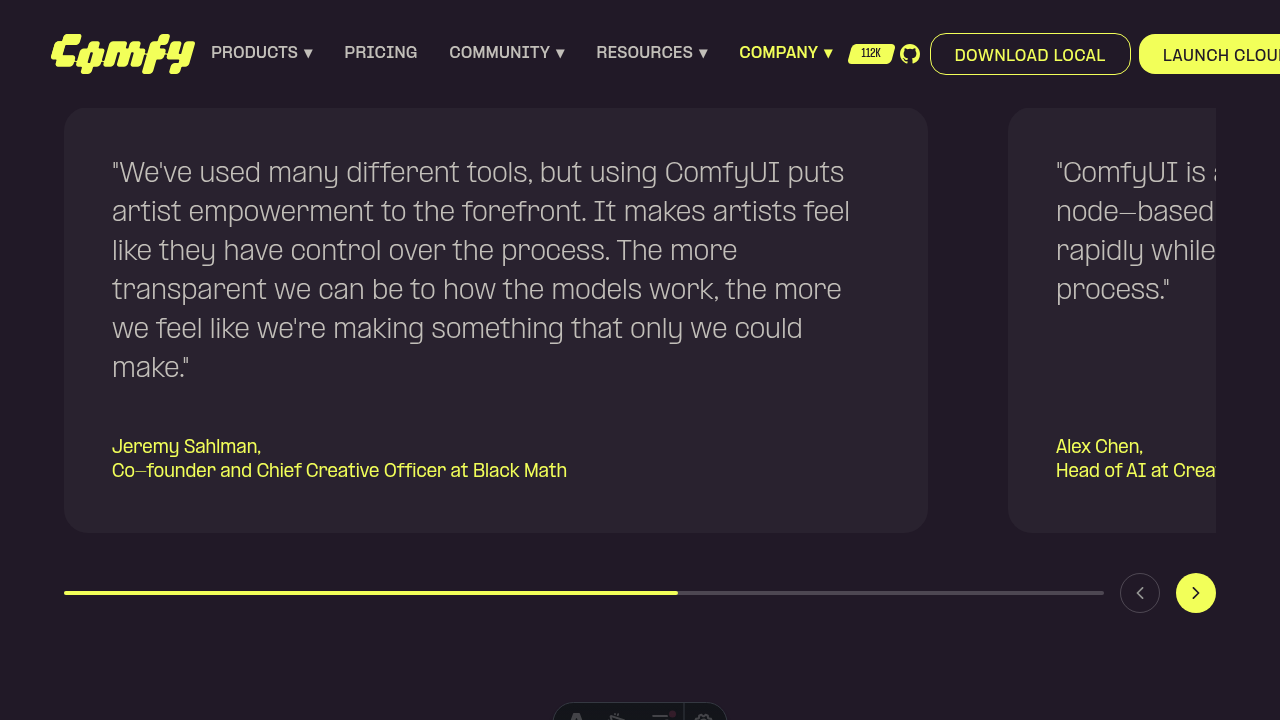
## Summary
The horizontal progress bar in `FeedbackSection.vue` lagged behind the
carousel scroll position because the bar's width was driven reactively
by `useScroll`, but the `transition-all duration-200` utility animated
each width change over 200ms. As scroll continuously emits new target
widths, the bar visibly trailed the scroll position.
Removing the transition makes the bar track scroll synchronously.
## Verification
- Reproduced the lag locally on `/customers`.
- Verified post-fix that `bar.style.width` updates in the same frame as
`scrollLeft` changes (samples at scrollLeft 0 / 944 / 1600 → width 0% /
59% / 100%, with `transitionDuration: 0s`).
- `pnpm exec eslint`, `pnpm exec oxfmt --check`, `pnpm nx typecheck
website`, and `pnpm test:unit` all pass.
## Notes
No regression test added — the customers section components have no
existing unit/E2E coverage in this repo, and standing up a new test
harness for a one-line CSS fix would be disproportionate. Worth
following up on broader carousel coverage as a separate task.
## Screenshot
After fix, scrolled to second slide — progress bar tracks scroll
position synchronously.
## Screenshots
┆Issue is synchronized with this [Notion
page](https://www.notion.so/PR-12059-fix-remove-transition-delay-from-FeedbackSection-progress-bar-3596d73d36508107bc80dc38ea7ab79e)
by [Unito](https://www.unito.io)
Co-authored-by: Glary-Bot <glary-bot@users.noreply.github.com>