## Summary

Use resized preview URLs for floating QPO row thumbnails so the expanded
overlay does not load full-size image assets while the canvas is being
navigated.

Linear: FE-538

## Changes

- **What**: Pass `ResultItemImpl.previewUrl` into `AssetsListItem` for
completed image/video job rows.
- **Dependencies**: None.

## Review Focus

Confirm this only changes the row thumbnail source; full asset viewing
still flows through the existing job/task preview output.

┆Issue is synchronized with this [Notion
page](https://www.notion.so/PR-11946-fix-use-resized-QPO-thumbnails-3576d73d365081b68682d1b7b109af30)
by [Unito](https://www.unito.io)
## Summary
Use ShadCN-style Reka popover primitives for the live queue job list
after the unused legacy queue row implementation is removed in #11621.
This is the first step in migrating popovers toward the ShadCN UI
pattern: local design-system wrappers over Reka UI, rather than ad hoc
direct Reka or PrimeVue popovers at each call site.

## Changes
- **What**: Added the minimal ShadCN-style popover primitives needed by
this fix: `Popover`, `PopoverAnchor`, and `PopoverContent`.
- **What**: Migrated `JobAssetsList` job details from manual fixed
positioning to these popover primitives with viewport collision
handling.
- **What**: Removed the obsolete manual hover-position helper after
`JobAssetsList` stopped using it.
- **Dependencies**: No new dependencies; the primitives wrap the
existing `reka-ui` package.
- Added browser coverage for bottom-row job details clipping in the
queue overlay.

## Review Focus
- This PR is stacked on #11621.
- The live queue surfaces are `JobAssetsList` consumers: expanded queue
progress overlay and job history sidebar.
- The new `src/components/ui/popover` files intentionally seed the
ShadCN-style migration path, but only include the pieces used here to
keep the first PR small.
- Follow-up PRs can add `PopoverTrigger` and migrate existing
PrimeVue/direct-Reka popovers once there is an actual caller.
## Summary

A follow-up PR of
https://github.com/Comfy-Org/ComfyUI_frontend/issues/11107.


## Changes

Add unit test to `editAttention.ts`
- [x] `Extract pure functions to module level`: **Moved**
`incrementWeight`, `findNearestEnclosure`, and `addWeightToParentheses`
out of the `init()` closure and **promoted** them to module-level
functions with `export` to allow for independent testing.
- [x] `Add unit tests for incrementWeight`: **Added** 6 tests covering
edge cases such as normal increment/decrement, NaN input, negative
weights, and floating-point precision.
- [x] `Add unit tests for findNearestEnclosure`: **Added** 7 tests
covering edge cases including simple brackets, no brackets, cursor
outside, nested brackets (inner/outer), empty strings, and missing
closing brackets.
- [x] `Add unit tests for addWeightToParentheses`: **Added** 6 tests
covering scenarios like adding a default 1.0 weight, retaining existing
weights, no changes when brackets are absent, scientific notation
weights, negative weights, and multi-word tokens.
- [x] `Mock app module`: **Used** `vi.mock('@/scripts/app')` to
intercept side effects from `app.registerExtension`, **preventing** the
triggering of ComfyUI extension registration logic during module import.


<!-- CURSOR_SUMMARY -->
---

> [!NOTE]
> **Medium Risk**
> Adjusts token selection/weight-detection logic used during
Ctrl/Cmd+Arrow editing, which could subtly change how prompts are
rewritten in edge cases (nested parens, scientific notation, time-like
text). Adds tests that should reduce regression risk but behavior
changes still warrant verification in the UI.
>
> **Overview**
> Adds a new `vitest` unit test suite for `editAttention` by mocking
`app.registerExtension` side effects and validating `incrementWeight`,
`findNearestEnclosure`, and `addWeightToParentheses` across common and
edge cases.
>
> Refactors those helpers to exported module-level functions and
tightens parsing/selection behavior: `findNearestEnclosure` now handles
the cursor being on an opening `(`, `addWeightToParentheses` improves
trailing weight detection (supports scientific notation/negatives and
avoids misclassifying time-like `12:30`), and the weight-rewrite regex
now matches exponent forms.
>
> <sup>Reviewed by [Cursor Bugbot](https://cursor.com/bugbot) for commit
df20340b49. Bugbot is set up for automated
code reviews on this repo. Configure
[here](https://www.cursor.com/dashboard/bugbot).</sup>
<!-- /CURSOR_SUMMARY -->


┆Issue is synchronized with this [Notion
page](https://www.notion.so/PR-11301-Test-edit-attention-unit-tests-3446d73d365081f29e8dfceefc06f5d3)
by [Unito](https://www.unito.io)
## Summary

Adds 11 tests for \`src/renderer/core/layout/store/layoutStore.ts\`
covering paths previously uncovered by the existing 17-test suite.
Targets the customRef setter machinery, reactive queries, and
link-layout updates that are reachable through the public API.

## Test Coverage

\`getNodeLayoutRef\` setter:
- Setter on a fresh ref triggers \`createNode\`.
- Position-only change triggers \`moveNode\`.
- Size-only change triggers \`resizeNode\`.
- zIndex-only change triggers \`setNodeZIndex\`.
- Setting to \`null\` triggers \`deleteNode\`.

Queries:
- \`getNodesInBounds\` returns reactive node IDs intersecting the
bounds.
- \`queryNodeAtPoint\` returns the top-zIndex node containing the point.
- \`queryNodeAtPoint\` returns \`null\` when no node contains the point.

Link layouts:
- \`updateLinkLayout\` short-circuits when bounds and centerPos
unchanged but still updates the path.
- \`updateLinkLayout\` replaces stored layout when bounds change.
- \`deleteLinkLayout\` removes the link and its segment layouts.

## Testing

\`\`\`bash
pnpm vitest run src/renderer/core/layout/store/layoutStore.test.ts
\`\`\`

┆Issue is synchronized with this [Notion
page](https://app.notion.com/p/PR-11747-test-add-unit-tests-for-layoutStore-setter-and-query-paths-3516d73d365081d9bc1de336ff7258ea)
by [Unito](https://www.unito.io)
… (issue #11092 phase 4b)

## Summary

Part of #11092 — Phase 4b: remove 2 `@ts-expect-error` suppressions from
`CustomizationDialog.vue`.

## Changes

`selectedIcon` ref initialisation and `resetCustomization` assignment
both suppressed a type error on `Array.find()` returning `T |
undefined`.

**Why**

`Array.find()` has no way to statically guarantee a match, so its return
type is always `T | undefined`. Both usages were searching `iconOptions`
— a literal array of 8 entries declared in the same scope — and
TypeScript could not prove that the searched value would always be
found, even though at runtime it always is (the default icon value is
defined from `iconOptions[0]`).

**How**

Added `iconOptions[0]` as a final fallback via `??` in both places.
Because `iconOptions` is a non-empty literal array, `iconOptions[0]` is
provably non-null to TypeScript, which makes the overall expression type
`T` and satisfies the assignment. The explicit generic on `ref<{ name:
string; value: string }>` was also dropped — TypeScript infers the type
correctly from the non-nullable initialiser. In `resetCustomization`,
`||` was replaced with `??` since the values being null-coalesced are
objects (never falsy), making `??` the semantically precise operator for
this case.

<!-- CURSOR_SUMMARY -->
---

> [!NOTE]
> **Low Risk**
> Low risk: UI-only refactor that adds explicit fallbacks for
`Array.find()` results and introduces a small unit test suite; behavior
should remain the same except for safer handling of unexpected icon
values.
>
> **Overview**
> Removes two `@ts-expect-error` suppressions in
`CustomizationDialog.vue` by making `selectedIcon` initialization and
`resetCustomization` use a guaranteed fallback (`iconOptions[0]`) via
`??`, ensuring the selected icon is never `undefined`.
>
> Adds `CustomizationDialog.test.ts` to verify `confirm` emits the
expected icon/color for default, provided initial values, and an invalid
`initialIcon` fallback.
>
> <sup>Reviewed by [Cursor Bugbot](https://cursor.com/bugbot) for commit
f77addf713. Bugbot is set up for automated
code reviews on this repo. Configure
[here](https://www.cursor.com/dashboard/bugbot).</sup>
<!-- /CURSOR_SUMMARY -->

┆Issue is synchronized with this [Notion
page](https://www.notion.so/PR-11339-refactor-remove-ts-expect-error-suppressions-in-CustomizationDialog-3456d73d36508165865ac569e047db2e)
by [Unito](https://www.unito.io)
## Summary
Phase D of the **useBrushDrawing-refactor plan.md**. Extract `WebGPU`
state management from `useBrushDrawing` into a dedicated
`useGPUResources` composable, reducing `useBrushDrawing` from ~1,160
lines to ~230. This is Phase D of the ongoing `useBrushDrawing`
decomposition (Phases A–C landed in previous PRs).

## Changes
- **What**: Split `useBrushDrawing` along a clean boundary — GPU
device/texture lifecycle moves to `useGPUResources`, stroke
orchestration stays in `useBrushDrawing`. Shared reactive state
(`dirtyRect`, `isSavingHistory`, `previewCanvas`) is now owned by
`useGPUResources` and exposed as refs. A pure
   `clampDirtyRect` helper is extracted to `gpuUtils.ts`.
- **Dependencies**: No new dependencies
## Tests
Local test - pass


<!-- CURSOR_SUMMARY -->
---

> [!NOTE]
> **Medium Risk**
> Refactors WebGPU initialization, texture management, and readback
paths used during drawing; regressions could affect stroke rendering,
canvas visibility, and undo/redo GPU sync.
>
> **Overview**
> Extracts WebGPU device/texture/renderer lifecycle, watchers (clear,
undo/redo sync, texture recreation), and readback logic out of
`useBrushDrawing` into a new `useGPUResources` composable, with shared
refs (`dirtyRect`, `isSavingHistory`, `previewCanvas`, `hasRenderer`)
now owned by that module.
>
> Updates `useBrushDrawing` to delegate GPU-specific operations
(prepare/render/draw point/composite/readback/cleanup) to
`useGPUResources` while keeping CPU drawing + stroke orchestration, and
adds new pure helpers in `gpuUtils` (`clampDirtyRect`,
`buildStrokePoints`) to centralize dirty-rect clamping and stroke point
resampling.
>
> Adds Vitest coverage for the new helpers, `useGPUResources`
no-op/error behavior when GPU isn’t available, and `useBrushDrawing`
interactions with the extracted GPU API (composition mode selection,
shift-line, history save, and canvas/preview opacity restoration).
>
> <sup>Reviewed by [Cursor Bugbot](https://cursor.com/bugbot) for commit
a9fcd80ab5. Bugbot is set up for automated
code reviews on this repo. Configure
[here](https://www.cursor.com/dashboard/bugbot).</sup>
<!-- /CURSOR_SUMMARY -->


┆Issue is synchronized with this [Notion
page](https://app.notion.com/p/PR-11784-refactor-extract-GPU-lifecycle-into-useGPUResources-phase-D-3526d73d365081108a97c164a0bfa13e)
by [Unito](https://www.unito.io)
## Summary

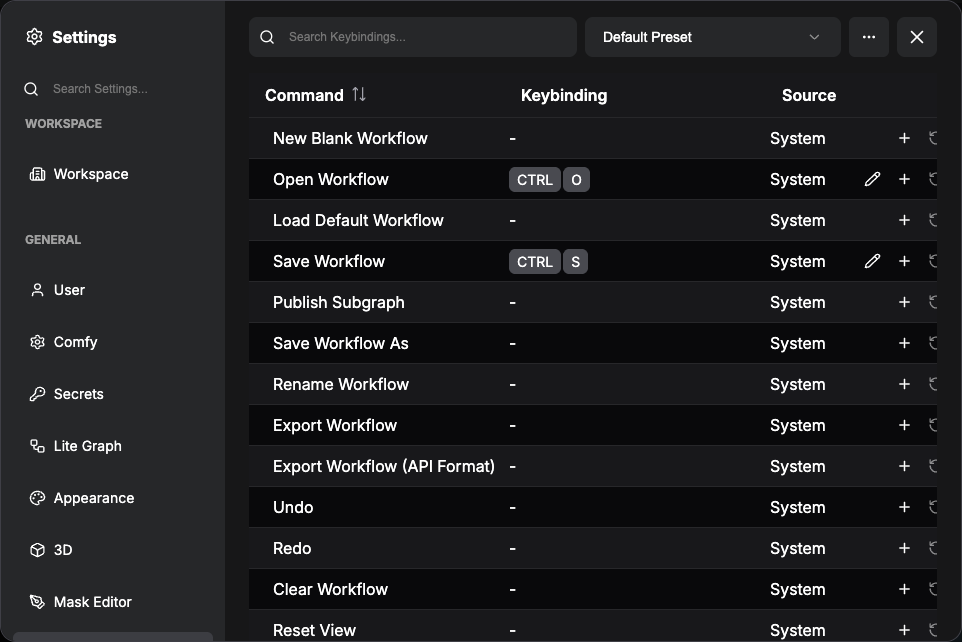
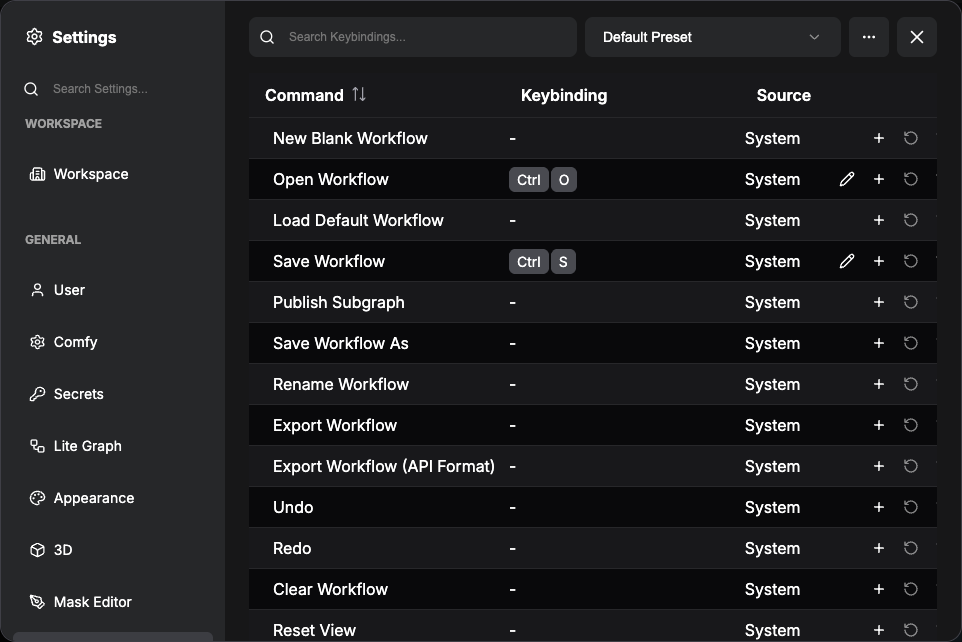
Render keybinding badges in sentence case (`Ctrl + Shift + A`) instead
of UPPERCASE (`CTRL + SHIFT + A`) by swapping the `uppercase` Tailwind
class for `capitalize` in `KeyComboDisplay.vue`.

`KeyComboImpl.getKeySequences()` already returns labels in their
canonical form (`Ctrl`, `Alt`, `Shift`, plus the raw key). The badge
styling was forcing them all to UPPER, which is what FE-524 calls out.
`text-transform: capitalize` cleanly handles every case: lower modifier,
upper modifier, and single character keys.

- Fixes FE-524

## Before / After

| Before (`uppercase`) | After (`capitalize`) |
| --- | --- |
| <img
src="https://raw.githubusercontent.com/Comfy-Org/ComfyUI_frontend/c6bb96fce/docs/screenshots/fe-524/before.png"
width="480"> | <img
src="https://raw.githubusercontent.com/Comfy-Org/ComfyUI_frontend/c6bb96fce/docs/screenshots/fe-524/after.png"
width="480"> |

## Test plan

- [ ] Open Settings → Keybinding panel and confirm modifier badges
render as `Ctrl`, `Alt`, `Shift` instead of `CTRL`, `ALT`, `SHIFT`
- [ ] Confirm single-letter keys (e.g. `A`, `S`) still render uppercase
- [ ] Edit a keybinding and verify the live preview badges in the dialog
also render in sentence case
## Summary
Use spread pattern when writing `nodeValue.properties['Model Config']`
so future ModelConfig fields are preserved across viewer dialog
cancel/apply.
## Changes
- **What**: Spread existing `Model Config` before applying known keys in
both `restoreInitialState()` and `applyChanges()` in
[useLoad3dViewer.ts](src/composables/useLoad3dViewer.ts). Removes the
hard-coded `showSkeleton: false` override from `applyChanges()` so it
falls through from the existing config.
## Review Focus
The change is intentionally minimal and matches the suggestion in the
upstream issue. Two regression tests added (one each for restore/apply)
verify that an unknown future field on Model Config survives both code
paths.
Fixes#11346
┆Issue is synchronized with this [Notion
page](https://www.notion.so/PR-11838-fix-load3d-preserve-unknown-Model-Config-fields-with-spread-3546d73d3650819686efc4e1a9799ad9)
by [Unito](https://www.unito.io)
## Summary
`fitToViewer()` in `SceneModelManager` resets the model rotation to
`(0,0,0)` as part of its normalize-and-scale flow, but does not reapply
`currentUpDirection` afterward. This causes a state/view mismatch when
the user has previously selected a non-default up-axis (e.g. `+x`,
`-z`): the model snaps back to its raw orientation while the Up
Direction control still shows the previously selected value.
## Changes
- In `fitToViewer()`, clear `originalRotation` (to avoid compounding
with the stale pre-fit base) then reapply `currentUpDirection` if it is
not `'original'`
- Add 5 unit tests covering: no-op when no model, reapplication of
direction, no rotation compounding on repeated calls, zero rotation for
`'original'` direction, and stale `originalRotation` guard
## Testing
### Automated
- `src/extensions/core/load3d/SceneModelManager.test.ts` — 5 new tests
in `describe('fitToViewer')`
- All 48 unit tests pass
### E2E Verification Steps
1. Open the Load3D viewer with any 3D model
2. Change **Up Direction** to any non-default value (e.g. `+x` or `-z`)
— observe model rotates correctly
3. Click **Fit to Viewer** — model should remain in the chosen
up-direction orientation, not snap back to raw orientation
4. Click **Fit to Viewer** again — rotation should remain stable (no
compounding)
5. Change Up Direction back to `original` then click **Fit to Viewer** —
model should return to neutral orientation `(0,0,0)`
## Review Focus
The key invariant: `fitToViewer()` resets `rotation.set(0,0,0)`
explicitly, so we must clear `originalRotation = null` before calling
`setUpDirection`. Otherwise `setUpDirection` restores the stale pre-fit
rotation as a base and then adds the direction offset on top,
compounding incorrectly.
Fixes#11347
<!-- Pipeline-Ticket: pick-issue-3414 -->
┆Issue is synchronized with this [Notion
page](https://app.notion.com/p/PR-11826-fix-load3d-reapply-up-direction-after-fitToViewer-transform-reset-3546d73d36508166b9bcecc9949c4952)
by [Unito](https://www.unito.io)
## Summary
Fixes a bug where models reloaded in wireframe/normal/depth modes would
not restore to their original materials correctly, because the material
snapshot was being taken *after* the mode was applied.
## Changes
- Move `setupModelMaterials(model)` to immediately after
`scene.add(model)` and before `setMaterialMode()` / `setUpDirection()`
in `SceneModelManager.setupModel()`
- Save `materialMode` into `pendingMaterialMode` before calling
`setupModelMaterials()`, since the latter internally calls
`setMaterialMode('original')` which resets `this.materialMode` —
preserving the value ensures the subsequent reapplication guard works
correctly
- Update stale test assertion that reflected the old (incorrect) call
order
- Add regression test: verifies that `originalMaterials` captures the
pre-mutation material and that restoring to `'original'` after a
non-original load gives back the true original mesh material
## Testing
### Automated
- `src/extensions/core/load3d/SceneModelManager.test.ts` — 44 tests, all
pass
- Full load3d test suite — 401 tests, all pass
### E2E Verification Steps
1. Open ComfyUI with a Load3D node
2. Load any GLB/OBJ model
3. Switch Material Mode to **Wireframe** (or Normal/Depth)
4. Load a different model (or reload the same one)
5. Switch Material Mode back to **Original**
6. Verify the model renders with its original diffuse/PBR materials (not
wireframe)
## Review Focus
The key invariant: `setupModelMaterials()` must snapshot mesh materials
in their *unmodified* state. It must run before any `setMaterialMode()`
call that mutates them. The `pendingMaterialMode` variable is needed
because `setupModelMaterials()` internally calls
`setMaterialMode('original')`, which updates `this.materialMode`, making
the subsequent guard `if (this.materialMode !== 'original')` silently
skip reapplication without it.
Fixes#11344
<!-- Pipeline-Ticket: pick-issue-3417 -->
┆Issue is synchronized with this [Notion
page](https://app.notion.com/p/PR-11825-fix-load3d-snapshot-original-materials-before-reapplying-materialMode-3546d73d3650818b9c35fa60c15f17a3)
by [Unito](https://www.unito.io)
## Summary

Preview 3D and Animation nodes were stuck at the LOD from initial page
load because CSS `scale3d` transforms don't affect
`clientWidth`/`clientHeight` — `handleResize()` always received
layout-space dimensions regardless of zoom level. This fix passes
`ds.scale` as the renderer pixel ratio so the 3D scene renders at the
correct visual resolution when the graph is zoomed in or out.

## Changes

- **What**: In `Load3d.handleResize()`, call
`renderer.setPixelRatio(ds.scale)` before `setSize` so pixel density
scales with canvas zoom. A `getZoomScale` callback is threaded through
`Load3DOptions` → `Load3d` constructor → `handleResize`. In `useLoad3d`,
a watcher on `canvasStore.appScalePercentage` triggers `handleResize`
whenever the zoom level changes.
- **What**: Fix `SceneManager.captureScene()` to save and restore the
renderer's logical size and pixel ratio around capture, so exact-pixel
output is unaffected by the current zoom state.

## Review Focus

- `handleResize` now calls `setPixelRatio` before `setSize`. Three.js
renders at `logicalWidth × pixelRatio` physical pixels while CSS
displays it at `logicalWidth` CSS pixels — this is the standard pattern
for HiDPI but here used to match the visual zoom level.
- `captureScene` must reset `pixelRatio` to 1 so `setSize(w, h)`
produces exactly `w×h` pixel output. It saves and restores both logical
size and pixel ratio via `renderer.getSize()` /
`renderer.getPixelRatio()`.
- The zoom watcher is guarded with `getActivePinia()` to avoid errors in
unit tests and non-Pinia contexts.

## Test
before


https://github.com/user-attachments/assets/9778ad54-7cb2-4fdc-b200-65a683ee8e4d

after


https://github.com/user-attachments/assets/acfaaf7a-43c7-495f-b352-5dd2cdaa94db

## Analysis Report

https://linear.app/comfyorg/issue/FE-401/bug-preview-3d-and-animation-nodes-lod-stuck-at-initial-page-load

## More
- Add `debounce` and pixel ratio limit


<!-- CURSOR_SUMMARY -->
---

> [!NOTE]
> **Medium Risk**
> Medium risk because it changes core `Load3d.handleResize()` rendering
behavior (pixel ratio/LOD) and adds a debounced zoom-driven resize
watcher, which could affect performance or visual output across all
Load3D nodes. Capture logic is also refactored to manipulate renderer
size/pixel ratio and camera params, so regressions would show up in
thumbnails/exports.
>
> **Overview**
> Fixes Load3D LOD/render sharpness when the graph canvas is zoomed by
threading a new `getZoomScale` option from `useLoad3d` into `Load3d` and
using it to call `renderer.setPixelRatio()` (clamped) during
`handleResize()`.
>
> Adds a debounced watcher on `canvasStore.appScalePercentage` to
trigger `handleResize()` on zoom changes, and updates
`SceneManager.captureScene()` to temporarily force pixel ratio 1 and
restore renderer size/pixel ratio and camera settings after capture.
Coverage is expanded with new Playwright smoke coverage plus unit tests
for zoom propagation, debouncing, pixel ratio behavior, and capture
state restoration.
>
> <sup>Reviewed by [Cursor Bugbot](https://cursor.com/bugbot) for commit
261940d111. Bugbot is set up for automated
code reviews on this repo. Configure
[here](https://www.cursor.com/dashboard/bugbot).</sup>
<!-- /CURSOR_SUMMARY -->


┆Issue is synchronized with this [Notion
page](https://www.notion.so/PR-11734-fix-load3d-update-renderer-pixel-ratio-on-canvas-zoom-to-fix-LOD-resolution-3516d73d365081e6b3d4cdd05f516489)
by [Unito](https://www.unito.io)
## Summary

Fixes several issues in both Simplified Chinese (zh) and Traditional
Chinese (zh-TW) locale files that were identified through systematic
comparison against the English source.

### Changes

**nodeDefs.json (zh + zh-TW):**
- **CLIPLoader.description**: Added missing model recipes (lumina2, wan,
hidream, omnigen2) to match English source
- **ByteDanceSeedreamNode.display_name**: Updated version from "Seedream
4" to "Seedream 4.5 and 5.0" to match English
- **BriaImageEditNode.display_name**: Added missing "FIBO" model name

**nodeDefs.json (zh only):**
- **APG.inputs.eta.name**: Fixed incorrect translation "预计到达时间" (ETA) ->
kept as "eta" (technical parameter name)

**commands.json (zh + zh-TW):**
- **Comfy_ToggleLinear**: Updated label to match English "Toggle App
Mode"
- **Experimental_ToggleVueNodes**: Rebranded "Vue 节点"/"Vue 節點" to "Nodes
2.0" to match English

**settings.json (zh + zh-TW):**
- **Comfy_VueNodes_Enabled / Comfy_VueNodes_AutoScaleLayout**: Rebranded
"Vue 节点"/"Vue 節點" to "Nodes 2.0"

**main.json (zh + zh-TW):**
- **errorDialog.accessRestrictedMessage / accessRestrictedTitle**: Added
missing Chinese translations

┆Issue is synchronized with this [Notion
page](https://www.notion.so/PR-11930-fix-i18n-correct-zh-and-zh-TW-translations-3566d73d365081ff9b0beb1c1fc7ef1a)
by [Unito](https://www.unito.io)

---------

Co-authored-by: LifetimeVip <lifetimevip@users.noreply.github.com>
## Summary

Add 27 unit tests for MembersPanelContent component covering workspace
views, member management, and billing states.

## Changes

- **What**: New test file for MembersPanelContent with 27 tests across 8
describe blocks (personal workspace, owner view, member view, sorting,
search filtering, pending invites, single seat plan, member count
display)

## Review Focus

- Uses `@testing-library/vue` + `@testing-library/user-event` per
project conventions
- Component stubs (Button, SearchInput, Menu, UserAvatar) for isolation
- Reactive mock refs in `vi.hoisted()` shared across `vi.mock()` calls

┆Issue is synchronized with this [Notion
page](https://www.notion.so/PR-11402-test-add-MembersPanelContent-unit-tests-3476d73d36508107abcbce95b72b3fb7)
by [Unito](https://www.unito.io)
## Summary
The Vue node model picker mixes output assets into the dropdown with a
trailing ' [output]' suffix on the value. Forwarding that string to
loadModel as a literal filename under the configured input folder caused
a 404 and the model never rendered. Strip the trailing folder annotation
per call and use the matching folder so picking an output asset loads
correctly while plain values keep the configured folder.

Output assets stored under a subfolder (e.g. 3d/) were exposed in the
Vue node dropdown as just '<filename> [output]', so selection produced
an /api/view URL with empty subfolder and a 404. Read the subfolder from
the asset's OutputAssetMetadata and prefix it onto the annotated path so
the downstream load handler can split it back out and target the correct
folder.

## Screenshots (if applicable)

https://github.com/user-attachments/assets/463d1071-efdc-46a4-b101-8e1c012d19c7

┆Issue is synchronized with this [Notion
page](https://app.notion.com/p/PR-11805-fix-load3d-parse-output-input-temp-annotation-when-loading-3536d73d365081a8ac9cf75d14ae29e6)
by [Unito](https://www.unito.io)
## Summary

The existing \`MixpanelTelemetryProvider.test.ts\` was misnamed: it only
tested \`getExecutionContext\` from \`../../utils/getExecutionContext\`,
never the provider class itself — provider coverage sat at **0%**
despite a 239-line test file living next to it.

This PR:

1. **Renames** the existing test file to
\`src/platform/telemetry/utils/getExecutionContext.test.ts\` (co-located
with the source it actually tests). Updates its relative import to
\`./getExecutionContext\`.
2. **Adds** a fresh
\`src/platform/telemetry/providers/cloud/MixpanelTelemetryProvider.test.ts\`
covering the provider class.

Lifts provider coverage from **0% → 81.1%** lines (functions 73.5%,
branches 88.5%).

## Test Coverage (new tests)

Constructor / initialization:
- Without \`mixpanel_token\`, warns and disables itself; subsequent
\`trackXxx\` calls are no-ops.
- With \`mixpanel_token\`, dynamically imports mixpanel-browser, calls
\`init\`, and after \`loaded()\` fires identifies users via
\`onUserResolved\`.

Queueing semantics:
- Events fired before \`loaded()\` are queued and flushed in order once
Mixpanel reports ready.

Filtering:
- Events listed in the default \`disabledEvents\` set (e.g.
\`workflow_opened\`) are suppressed.

Direct dispatchers (parameterized \`it.each\`):
- 16 \`trackXxx\` methods covered: signup/auth/login, subscription
lifecycle, credit topup events, template lifecycle, workflow
imported/saved, default-view, enter-linear, share-flow, execution
success/error.
- \`trackApiCreditTopupButtonPurchaseClicked\` payload includes
\`credit_amount\`.
- \`trackEmailVerification\` dispatches the matching
\`USER_EMAIL_VERIFY_*\` event for each stage.
- \`trackSubscription\` maps \`'modal_opened'\` and
\`'subscribe_clicked'\` to their distinct events.
- \`trackRunButton\` populates \`RunButtonProperties\` from the
execution context.
- \`trackWorkflowExecution\` consumes the latest \`trigger_source\` from
\`trackRunButton\`, then resets it to \`'unknown'\`.

Survey:
- On \`'submitted'\`, normalized properties are written to
\`Mixpanel.people\`.
- On \`'opened'\`, \`Mixpanel.people\` is not touched.

Topup delegation:
- \`startTopupTracking\`, \`clearTopupTracking\`,
\`checkForCompletedTopup\` all forward to the \`topupTracker\` utility.

## Testing

\`\`\`bash
pnpm vitest run
src/platform/telemetry/providers/cloud/MixpanelTelemetryProvider.test.ts
pnpm vitest run src/platform/telemetry/utils/getExecutionContext.test.ts
\`\`\`

┆Issue is synchronized with this [Notion
page](https://app.notion.com/p/PR-11749-test-rename-misnamed-Mixpanel-test-and-cover-the-actual-provider-class-3516d73d365081609c54f34bd2d8b00d)
by [Unito](https://www.unito.io)

---------

Co-authored-by: Christian Byrne <cbyrne@comfy.org>
Nodes in the 'essentials' category do not have type 'core'. The check
has been updated to instead use the dedicated `isCoreNode` prop.

No tests currently. The existing tests for this code section all mock
out the relevant code path and properly writing a test for this would
take far more time than I can allocate right now.

┆Issue is synchronized with this [Notion
page](https://app.notion.com/p/PR-11809-Fix-core-node-detection-for-missing-nodes-3536d73d3650815aabb2deb54c4ecec4)
by [Unito](https://www.unito.io)
## Summary

Replaces all 7 production `as Error` type assertions with proper
`instanceof Error` narrowing or a new `toError()` helper, and adds an
ESLint rule to prevent new ones. First slice of #11429 (the `as Error`
category — 9 total occurrences, 7 production + 2 in a test file left
untouched).

## Changes

- **What**:
- New `src/utils/errorUtil.ts` exporting `toError(value: unknown):
Error` and `getErrorMessage(value: unknown): string | undefined`.
`toError` returns the value unchanged if already an `Error`, otherwise
wraps it (handles strings, `undefined`, JSON-serializable objects, and
circular refs via `String()` fallback).
  - Refactored 7 production call sites:
- `src/services/gateway/registrySearchGateway.ts` — `toError(error)` for
`lastError` assignment in fallback loop
- `src/platform/cloud/onboarding/auth.ts` (×2) — `toError(error)` for
`captureApiError` Sentry calls
-
`src/renderer/extensions/vueNodes/widgets/composables/audio/useAudioRecorder.ts`
— `toError(err)` before forwarding to `options.onError`
- `src/extensions/core/load3d/LoaderManager.ts` — replaced `error as
Error & { response?: ... }` cast inside `isNotFoundError` with
`'response' in error` + nested narrowing
- `apps/desktop-ui/src/stores/maintenanceTaskStore.ts` — inline `error
instanceof Error ? error.message : String(error)`
- `apps/desktop-ui/src/components/maintenance/TaskListPanel.vue` —
inline `error instanceof Error ? error.message : undefined`
- New ESLint rule (`no-restricted-syntax` block named
`comfy/no-unsafe-error-assertion`) banning `TSAsExpression
TSTypeReference[typeName.name='Error']` in `src/**` and `apps/*/src/**`,
with test files (`*.test.ts`, `*.spec.ts`) excluded.
  - 12 unit tests for the new helpers in `src/utils/errorUtil.test.ts`.
- **Breaking**: none
- **Dependencies**: none

## Review Focus

- The lint rule is scoped to non-test source files. Test files retain
freedom to use `as Error` for fixture construction; only 2 occurrences
exist (in `teamWorkspaceStore.test.ts` and `errorDialog.spec.ts`) and
they're intentional.
- `toError` is duplicated as inline `instanceof` narrowing in
`apps/desktop-ui/` rather than imported, since the desktop-ui workspace
doesn't share `@/utils/` with the main app and adding a path mapping for
one helper felt heavier than two inline guards.
- Remaining `as`-on-DOM categories (HTMLElement ×133, HTMLInputElement
×55, HTMLCanvasElement ×36, KeyboardEvent ×7, Element ×3, MouseEvent ×2,
Event ×2) are intentionally left for follow-up PRs to keep this one
reviewable.

Refs #11429

┆Issue is synchronized with this [Notion
page](https://www.notion.so/PR-11845-refactor-replace-unsafe-as-Error-assertions-with-type-guards-3546d73d36508137a015c4f9e8708f23)
by [Unito](https://www.unito.io)
*PR Created by the Glary-Bot Agent*
---
## Summary
Registers a new nightly feature survey for the Queue Progress Overlay
using the existing feature-survey registry (same pattern as the merged
node-search survey, PRs #8175/#8355/#9934).
- New registry entry `queue-progress-overlay` → Typeform `HZ5saxry`,
threshold **16**, 5s display delay.
- `trackFeatureUsed()` wired at the major user-initiated handlers inside
the overlay so the survey triggers regardless of panel location
(floating-right v1 or docked-left v2).
- Run button and other ActionBar items that the overlay pops over from
are deliberately **not** tracked — tracking is scoped to interactions
that originate inside the job panel / queue progress overlay itself.
## Tracked interactions
Both variants share most sub-components, so tracking is instrumented
once at each logical surface:
- **`QueueProgressOverlay.vue`** (v1 container): `viewAllJobs`,
`interruptAll`, `cancelQueuedWorkflows`, `onClearHistoryFromMenu`,
`toggleAssetsSidebar`, `onCancelItem`, `onDeleteItem`, `inspectJobAsset`
- **`QueueOverlayExpanded.vue`**: job tab switches
- **`JobHistorySidebarTab.vue`** (v2 docked): job tab switches,
`clearQueuedWorkflows`, `onClearHistory`, `onCancelItem`,
`onDeleteItem`, `onViewItem`
- **`JobFilterActions.vue`** (shared): workflow filter + sort mode
selections
- **`JobHistoryActionsMenu.vue`** (shared): docked-history toggle +
run-progress-bar toggle
Deliberately **not tracked** to keep the signal clean:
- Hover handlers (ambient preview behaviour)
- Search-box keystrokes (debounced typing)
- Context menu open and menu-item dispatch — menu actions either bubble
through already-tracked terminal handlers (e.g. inspect-asset →
`onViewItem`) or are secondary operations (copy-id, open-workflow,
download). Avoids double-counting per code review feedback.
## How it works (inherits from existing infrastructure)
1. `surveyRegistry.ts` drives `NightlySurveyController` →
`NightlySurveyPopover`, which handles the Typeform embed.
2. Eligibility already gated on `isNightly && !isCloud && !isDesktop`,
once-per-user, 4-day global cooldown across all surveys, and opt-out.
3. Typeform response routing to #C0ALLT6Q3SQ is handled on the Typeform
side.
## Verification
- `pnpm typecheck` ✅
- `pnpm lint` ✅ (no new warnings)
- `pnpm knip` ✅
- `pnpm test:unit` on `src/components/queue`,
`src/components/sidebar/tabs/JobHistorySidebarTab`,
`src/platform/surveys` → **123/123 passing**
- Pre-commit hooks (stylelint, oxfmt, oxlint, eslint, typecheck) all
pass
- Manual: dev server + backend boot cleanly, app loads without new
runtime errors, `localStorage['Comfy.FeatureUsage']` layout verified to
match what `useFeatureUsageTracker` writes
## Notes
- Survey key `queue-progress-overlay` covers both v1 (floating-right)
and v2 (docked-sidebar) per product guidance: _"This should trigger
regardless of the location of the panel (docked from left or floating on
right)."_ Both surfaces are the same product feature — the survey is
intentionally scoped to the whole job-panel experience.
## Screenshots
┆Issue is synchronized with this [Notion
page](https://www.notion.so/PR-11560-feat-add-queue-progress-overlay-feature-survey-34b6d73d3650819a9a50fd67fd9b5941)
by [Unito](https://www.unito.io)
---------
Co-authored-by: Glary-Bot <glary-bot@users.noreply.github.com>
## Summary

Use exact BLAKE3 hash lookups first for missing model/media detection,
and add a separate public-inclusive input asset cache so public input
assets are considered missing-detection candidates without changing the
user-only input assets shown in the UI.

## Changes

- **What**:
- Added `assetService.checkAssetHash()` for `HEAD
/api/assets/hash/{hash}` status-only existence checks.
- Added strict BLAKE3 hash helpers so only `blake3:<64 hex>` media
values and raw 64-hex BLAKE3 model metadata are sent to the hash
endpoint.
- Updated missing media detection to group BLAKE3 candidates by hash,
resolve them through the hash endpoint, and fall back to the legacy
asset list path for invalid/unverifiable/non-hash values.
- Updated missing model detection to use hash lookup for BLAKE3-backed
asset-supported candidates before falling back to the existing node-type
asset matching path.
- Added `assetService.getInputAssetsIncludingPublic()` backed by a
dedicated cache that fetches input assets with `include_public=true` for
missing media fallback checks.
- Kept `assetsStore.inputAssets` user-only for widget/UI display, while
invalidating the public-inclusive missing-detection cache when input
assets may change.
- Added abort handling for paginated asset fetches and shared
public-input cache callers so one aborted caller does not cancel the
shared fetch for other callers.
- Added regression coverage for hash lookup, fallback behavior, abort
paths, public input fallback detection, and cache invalidation.
- **Dependencies**: None.
- **Change size**:
  - Production code: 4 files, 400 insertions, 24 deletions, net +376.
  - Test code: 4 files, 806 insertions, 59 deletions, net +747.
  - Total: 8 files, 1206 insertions, 83 deletions, net +1123.

## Review Focus

- The public-inclusive input asset cache is intentionally separate from
`assetsStore.inputAssets`. The existing store data is user-only and
drives the asset widgets/sidebar, so using it for missing input
detection misses public assets. Making that store public-inclusive would
change UI data semantics; this PR instead keeps the UI dataset unchanged
and adds a missing-detection-specific cache in `assetService`.
- Hash lookup is only used when the workflow exposes a valid BLAKE3
hash. Filename-like values and invalid hash values still use the legacy
fallback path.
- Missing model detection keeps the existing fallback behavior for
non-hash candidates and for hash checks that are invalid or fail
transiently.
- Async model download cache refresh behavior is left unchanged; this PR
avoids coupling model download completion to input asset cache
invalidation.
- No browser/e2e test was added because this changes the missing asset
detection data path, not UI interaction or rendering. The behavioral
coverage is in unit tests for the asset service and the missing
media/model scanners.

## Follow-up Items

- Fix `assetsStore.updateAssetTags()` partial-failure recovery. If
`removeAssetTags()` succeeds and `addAssetTags()` fails, the local model
asset cache can roll back to tags that the backend has already removed;
this should be handled in a focused model asset cache PR.
- Consider extracting shared hash-verification flow used by missing
media and missing model scans after this behavior stabilizes.
- Consider adding a concurrency cap or short-lived request cache for
large workflows with many unique hash lookups.
- Consider splitting `assetService.ts` further, e.g. hash helpers, abort
utilities, and the public-inclusive input asset cache.
- Consider tightening the asset hash service API shape so callers do not
directly depend on HTTP-oriented statuses such as `invalid`.
- Consider adding broader mutation-path coverage for public-inclusive
input cache invalidation once the cache has more consumers.

Linear: FE-534

## Screenshots (if applicable)

Before <false positive / missing image / public asset>


https://github.com/user-attachments/assets/db7ce2a9-b169-4fae-bf9f-98bb93d3ee6d

After


https://github.com/user-attachments/assets/29af9f9e-b536-4fcd-a426-3add40bcb165


┆Issue is synchronized with this [Notion
page](https://www.notion.so/PR-11873-Use-hash-lookup-for-missing-asset-detection-3556d73d36508165babafb16614be0d8)
by [Unito](https://www.unito.io)
## Summary
Adds tests for metadata parsers

## Changes

- **What**:
- add test file generation script
- identified & fixed bug in webp exif parsing over-reading
- identified & fix bug in mp3/ogg parser where it would read from a
fixed position instead of relative, causing incorrect reads throwing
RangeError
- added catch in latent + json parsing to resolve errors

┆Issue is synchronized with this [Notion
page](https://www.notion.so/PR-11307-test-add-metadata-parser-coverage-3446d73d36508108ac36dddcec0a54d4)
by [Unito](https://www.unito.io)

---------

Co-authored-by: GitHub Action <action@github.com>
Fixes#11345
## Summary
`clearModel()` in `SceneModelManager` only traversed and disposed
`THREE.Mesh` instances, leaving `THREE.Points` objects (created by
`handlePLYModeSwitch()` for point-cloud mode) leaking GPU geometry and
material memory on repeated point-cloud loads/clears.
## Changes
- `SceneModelManager.ts`: extend the dispose traversal in `clearModel()`
to also handle `THREE.Points`, mirroring the pattern already used by
`removeAllMainModelsFromScene()`.
- `SceneModelManager.test.ts`: add regression test verifying
`geometry.dispose()` and `material.dispose()` are called for
`THREE.Points` children on `clearModel()`.
┆Issue is synchronized with this [Notion
page](https://www.notion.so/PR-11836-fix-load3d-dispose-THREE-Points-GPU-resources-in-clearModel-3546d73d365081718338e824bc3e737d)
by [Unito](https://www.unito.io)
*PR Created by the Glary-Bot Agent*

---

## Summary

- Adds `browser_tests/tests/queueNotificationBanners.spec.ts` covering
`useQueueNotificationBanners` composable E2E behavior
- Adds `data-testid="queue-notification-banner"` to
`QueueNotificationBannerHost.vue` for stable test targeting
- Registers the new test ID in `TestIds.queue.notificationBanner`

### Test coverage added (7 tests)

| Group | Tests | Behavior |
|---|---|---|
| Queuing lifecycle | 4 | `promptQueueing` → banner appears,
`promptQueued` upgrades to queued, batch plural text, requestId mismatch
doesn't upgrade |
| Auto-dismiss | 1 | Banner disappears after 4s timeout |
| FIFO queue | 1 | Second notification shows after first auto-dismisses
|
| Direct queued | 1 | `promptQueued` without prior `promptQueueing`
shows banner directly |

### Approach
Tests dispatch `promptQueueing`/`promptQueued` custom events directly
via `window.app.api.dispatchCustomEvent()` inside `page.evaluate()`,
matching how `app.ts` triggers these events during real queue
operations. This avoids needing a running execution pipeline while
exercising the full composable → component → DOM rendering chain.

### Verification
- TypeScript: zero errors
- ESLint: clean
- oxlint: clean
- oxfmt: formatted
- Playwright execution requires running ComfyUI backend (not available
in sandbox)

┆Issue is synchronized with this [Notion
page](https://www.notion.so/PR-11366-test-add-queue-notification-banners-lifecycle-browser-tests-3466d73d36508172a7ffd3fe3b4fd925)
by [Unito](https://www.unito.io)

---------

Co-authored-by: Glary-Bot <glary-bot@users.noreply.github.com>
Co-authored-by: Amp <amp@ampcode.com>
## Summary

Replaces the 4-step Cloud onboarding survey with a 7-step flow that
captures both ICP attributes and user persona dimensions. The survey
questions are now populated dynamically from remoteConfig.

## Changes

- **What**: New survey questions — Usage, Familiarity, Role, Team size,
Industry, Making, Source. Role / Team size / Industry are gated to
"Work" usage; Education users see a Student / Educator short list for
Role. Most option lists are randomized per visit (familiarity and team
size stay ordered as ordinals). \`SurveyResponses\` extended with
optional \`usage\`, \`role\`, \`teamSize\`, \`source\` fields.
- **Breaking**: None — \`useCase\` and \`workflowRelationship\` remain
optional in the type and existing telemetry normalization keeps working
unchanged.

## Review Focus

- The \`role\` step has a function-form \`options\` so the list can swap
based on \`usage\`. \`steps\` is a computed that filters by
\`showWhen()\` and resolves the option function — verify reactivity when
\`usage\` changes.
- Changing \`usage\` clears the previously-picked \`role\` via a watcher
to prevent a stale value from carrying over between Work / Education
modes.
- Per-visit shuffle is stable: option lists are passed through
\`randomize()\` once at module load, not on every render.

## Screenshots


https://github.com/user-attachments/assets/3602a388-50dc-401e-ada9-ea9016c5052d


┆Issue is synchronized with this [Notion
page](https://www.notion.so/PR-11628-feat-redesign-cloud-onboarding-survey-for-ICP-and-persona-signal-34d6d73d365081f4a792cfe76a987ffb)
by [Unito](https://www.unito.io)

---------

Co-authored-by: Dante <bunggl@naver.com>
## Summary

- Adds `silentOnNotFound` option to `LoadModelOptions` interface,
threaded through `Load3d.loadModel` → `LoaderManager.loadModel`
- 404 errors (detected via message text or `response.status`) are
silently swallowed when `silentOnNotFound: true`; all other errors still
surface a toast
- Sets `silentOnNotFound: true` for output-folder loads in `load3d.ts`
and `saveMesh.ts` — covers shared workflows opened on a machine that
never ran them

## Test plan

- [x] `LoaderManager.test.ts` — 40 unit tests covering 404 suppression,
non-404 still toasts, stale load handling
- [x] `Load3DConfiguration.test.ts` — 4 unit tests verifying
`silentOnNotFound` propagates correctly through `configureForSaveMesh`
and `configure`
- [x] `load3d.spec.ts` — 2 E2E tests: 404 → no toast, 500 → toast
appears

<!-- CURSOR_SUMMARY -->
---

> [!NOTE]
> **Medium Risk**
> Changes error-handling behavior in the 3D model loading pipeline and
extends method signatures/options; risk is mainly missed call sites or
incorrectly classifying non-404 errors as 404 and hiding real failures.
>
> **Overview**
> Prevents noisy user-facing toasts when an *output* 3D model referenced
by `Preview3D`/`SaveGLB` is missing locally by adding a
`silentOnNotFound` flag and suppressing the "Error loading model" toast
specifically for HTTP 404 failures.
>
> Threads the new `LoadModelOptions` through `Load3d.loadModel` →
`LoaderManager.loadModel` and updates `Load3DConfiguration`/callers to
opt in for output-folder loads, with new unit + Playwright coverage (404
stays silent, non-404 still toasts).
>
> <sup>Reviewed by [Cursor Bugbot](https://cursor.com/bugbot) for commit
049f75ef60. Bugbot is set up for automated
code reviews on this repo. Configure
[here](https://www.cursor.com/dashboard/bugbot).</sup>
<!-- /CURSOR_SUMMARY -->

┆Issue is synchronized with this [Notion
page](https://app.notion.com/p/PR-11807-fix-load3d-suppress-error-toast-on-404-when-loading-output-model-file-3536d73d36508129ac0de1d5b081dcf0)
by [Unito](https://www.unito.io)
## Summary
ZIP export toast now reports the total number of files instead of the
number of selected jobs when any selected job has multiple outputs.
## Changes
- **What**: In `downloadMultipleAssetsAsZip`
(`src/platform/assets/composables/useMediaAssetActions.ts`), compute
`fileCount` by summing each asset's `outputCount` metadata (fallback 1)
and pass it to `mediaAsset.selection.exportStarted` instead of
`assets.length`. The existing i18n string already handles `file`/`files`
plural.
- **Tests**: 3 new unit tests in `useMediaAssetActions.test.ts` covering
multi-output, single-output fallback, and mixed selections. The
`useToast` and `useI18n` mocks were lifted to hoisted refs so toast call
args are assertable.
## Review Focus
- Reduce uses `count > 1 ? count : 1`, mirroring the
`hasMultiOutputJobs` gate above so a known `outputCount === 1` is still
counted as 1 file (no double-counting).
- Only `downloadMultipleAssetsAsZip` is touched; OSS individual-download
path and direct-download path are unchanged.
Fixes#11736
┆Issue is synchronized with this [Notion
page](https://app.notion.com/p/PR-11737-fix-report-total-file-count-not-job-count-in-ZIP-export-toast-3516d73d3650811ba78dfdb0a0ae8ea1)
by [Unito](https://www.unito.io)
---------
Co-authored-by: Alexander Brown <drjkl@comfy.org>
## Summary

Fixes two visual bugs in the Desktop app at small window sizes: the
search bar getting pushed/clipped in modal headers, and autocomplete
suggestion dropdowns being cut off by `overflow-hidden` ancestors.

## Changes

- **`SearchAutocomplete.vue`**: Wrap `ComboboxContent` in
`ComboboxPortal` so the suggestions dropdown teleports to `<body>`,
escaping `overflow-hidden` ancestors (fixes z-index clipping in Manager
dialog and other modals using `BaseModalLayout`)
- **`BaseModalLayout.vue`**: Replace `shrink-0` with `min-w-0` on the
header content container so the search bar can shrink at narrow window
sizes instead of overflowing and being clipped by the modal root's
`overflow-hidden`
- **`GraphCanvas.vue`**: Fix dead code where the native drag
(`app-drag`) div was nested inside a `v-if="workflowTabsPosition ===
'Topbar'"` block with its own mutually exclusive condition — move it
before the block and add `pointer-events-auto` so Desktop window
dragging works when tabs are in Sidebar position

## Why no E2E tests

- **`SearchAutocomplete` portal**: The fix is structural (teleport to
`<body>`). A meaningful regression test would require opening the
Manager dialog with a real or mocked extension list — that is a
substantial standalone effort tracked in #11714.
- **`BaseModalLayout` header shrink**: A viewport-resize assertion would
test CSS layout behaviour, not application logic; it would be fragile
and low-value.
- **`GraphCanvas` app-drag**: Desktop/Electron-only.
`-webkit-app-region: drag` cannot be exercised in headless Chromium.

Unit tests for `SearchAutocomplete` cover the new code paths (portal
rendering, suggestion display, item selection).

<!-- CURSOR_SUMMARY -->
---

> [!NOTE]
> **Low Risk**
> Low risk UI-only changes: adjusts layout CSS and combobox rendering
via `ComboboxPortal`, plus adds unit tests; no business logic or data
flow changes.
>
> **Overview**
> Fixes small-window Desktop UI issues where modal-header search inputs
could be clipped and autocomplete dropdowns could be cut off by
`overflow-hidden` ancestors.
>
> `SearchAutocomplete` now renders its suggestions list inside a
`ComboboxPortal` (teleporting the popper content outside clipping
containers) and adds a focused unit test suite covering empty/non-empty
suggestions, selection behavior, and `optionLabel` handling.
>
> `BaseModalLayout` tweaks header flexbox constraints (`min-w-0` on the
header content container) to allow the search bar to shrink instead of
overflowing.
>
> <sup>Reviewed by [Cursor Bugbot](https://cursor.com/bugbot) for commit
fd32d960f9. Bugbot is set up for automated
code reviews on this repo. Configure
[here](https://www.cursor.com/dashboard/bugbot).</sup>
<!-- /CURSOR_SUMMARY -->

---------

Co-authored-by: Benjamin Lu <benjaminlu1107@gmail.com>
## Summary

Reverts #10849 (per-instance promoted widget value storage) and its
companion test-pinning PR #11697. The fix in #10849 caused regressions
in promoted-widget serialization (notably the Z-Image-Turbo template,
see #10146 follow-up). A replacement fix is being developed on
`fix/subgraph-promoted-widget-inline-state` and will land separately.

## Changes

- **Revert #11697** — drops the `it.fails`-marked tests that pin the
#10849 corruption symptom. With #10849 reverted, those markers would
falsely flip to passing.
- **Revert #10849** — removes per-instance `_instanceWidgetValues` map,
`_pendingWidgetsValues` configure-time hydration, the `widgets_values`
write path in `SubgraphNode.serialize()`, the `sourceSerialize` field on
`PromotedWidgetView`, the multi-instance Vitest suite, and the
multi-instance E2E test + asset.
- **Conflict resolution** in
`browser_tests/tests/subgraph/subgraphSerialization.spec.ts`: kept the
restored test coverage from #11579 (which is post-#10849 on main) and
removed only the now-unreachable multi-instance test, its helper, and
its workflow constant. Auto-merge with #11698 (`incrementVersion`) and
#11699 (ID type aliases) was clean.

## Review Focus

- Confirm no other on-main code path has come to depend on
`PromotedWidgetView.sourceSerialize` or
`SubgraphNode._instanceWidgetValues` since #10849 (grep is clean
locally).
- Confirm we want to land this revert before the replacement fix on
`fix/subgraph-promoted-widget-inline-state` is ready — this leaves the
original #10146 (multi-instance widget value collision) unfixed in the
meantime.
- The retained #11579 test coverage now exercises pre-#10849 behavior;
some of those assertions were written expecting the #10849 code path. CI
will surface any that need adjustment.

┆Issue is synchronized with this [Notion
page](https://app.notion.com/p/PR-11790-revert-roll-back-10849-11697-per-instance-promoted-widget-values-3536d73d3650814094abd58b6b712d8d)
by [Unito](https://www.unito.io)
## Summary
A follow-up PR of
https://github.com/Comfy-Org/ComfyUI_frontend/issues/11106.
This PR only focus on `layoutMutations.ts`.
`layoutMutations.ts` is the central API for all node layout mutations in
the Vue renderer. It previously had zero test coverage despite
containing non-trivial logic such as guard clauses, ID normalization,
and z-index scanning. This PR addresses issue #11106 to prevent silent
regressions in node positioning and lifecycle.

## What was tested and how
All tests use the real `layoutStore` singleton (no mocks).
`initializeFromLiteGraph` resets node state before each test, and
results are verified via `getNodeLayoutRef().value`.

| Method | Tests | Logic covered |
| :--- | :--- | :--- |
| `moveNode` | 3 | **Guard** (missing node -> no-op); position written
to store; numeric ID coerced to string |
| `resizeNode` | 2 | **Guard**; size written to store |
| `setNodeZIndex` | 2 | **Guard**; zIndex written to store |
| `createNode` | 1 | Node becomes readable with the provided position
and size |
| `deleteNode` | 2 | **Guard**; node removed from store |
| `batchMoveNodes` | 4 | Empty array -> no-op; multiple nodes updated
**atomically**; existing size preserved; missing nodes skipped while
valid ones still update |
| `bringNodeToFront` | 1 | Target node ends up with a **higher zIndex**
than all other nodes |

## What was not tested and why

| Method | Reason skipped |
| :--- | :--- |
| `createLink` / `deleteLink` | `layoutStore` exposes no public API to
query link existence by ID; methods contain no logic beyond a straight
`applyOperation` call. |
| `createReroute` / `deleteReroute` / `moveReroute` | Same reason as
above. |
| `setSource` / `setActor` | Single-line delegation to `layoutStore`; no
logic to test. |
| Default value behavior in `createNode` | Avoids "change-detector"
tests; asserting hardcoded defaults adds no regression value and would
block valid product changes. |

<!-- CURSOR_SUMMARY -->
---

> [!NOTE]
> **Low Risk**
> Test-only changes; no production logic is modified. Main risk is
potential flakiness due to reliance on singleton store state across
tests.
>
> **Overview**
> Adds a new `layoutMutations.test.ts` Vitest suite that exercises
`useLayoutMutations` against the real `layoutStore` singleton
initialized from LiteGraph data.
>
> Tests cover no-op guard clauses for missing nodes, node ID
normalization, position/size/z-index updates, node create/delete
behavior, `batchMoveNodes` semantics (empty input, skipping missing
nodes, preserving size), and `bringNodeToFront` z-index promotion
relative to other nodes.
>
> <sup>Reviewed by [Cursor Bugbot](https://cursor.com/bugbot) for commit
bb92de0b5b. Bugbot is set up for automated
code reviews on this repo. Configure
[here](https://www.cursor.com/dashboard/bugbot).</sup>
<!-- /CURSOR_SUMMARY -->

┆Issue is synchronized with this [Notion
page](https://www.notion.so/PR-11313-test-add-unit-tests-for-useLayoutMutations-3446d73d36508134a289d6147244e710)
by [Unito](https://www.unito.io)
## Summary
Fix part of the
#https://github.com/Comfy-Org/ComfyUI_frontend/issues/11092
A total of 4 `// @ts-expect-error` directives were removed across 3
files — all caused by PrimeVue's legacy `$el` access pattern (`const
inputElement = inputRef.value.$el`) — by replacing PrimeVue with
Reka-based UI components. 1 corresponding unit test file was added.

## Changes
### `src/components/ui/input/Input.vue`
- **Exposed APIs**: Extended `defineExpose` to include `blur()` and
`setSelectionRange()`. This allows parent components to programmatically
control input behavior without direct DOM manipulation.

### `src/components/ui/textarea/Textarea.vue`
- **Exposed APIs**: Added `focus()` via `defineExpose`.
- **Cleanup**: Removed redundant attribute spreading (`...restAttrs`) to
lean on Vue’s default `$attrs` inheritance, making the component more
predictable.

---

## Refactored Feature Components

### `WidgetMarkdown.vue` (Note/Markdown Widgets)
- **Dependency Swap**: Replaced `primevue/textarea` with local
`Textarea.vue`.
- **Logic Simplification**: Simplified focus logic from
`textareaRef.value?.$el?.focus()` to a typed
`textareaRef.value?.focus()`.
- **Code Style**: Converted arrow functions to function declarations and
removed redundant section comments.

### `PromptDialogContent.vue` (Generic Prompt Dialogs)
- **Component Update**: Replaced PrimeVue `FloatLabel` and `InputText`
with a native `<label>` and local `Input.vue`.
- **Vue 3.5 Adoption**: Implemented **Reactive Destructuring** for
props.
- **Conflict Resolution**: Renamed internal `onConfirm` handler to
`handleConfirm` to prevent collision with destructured props.

### `EditableText.vue` (Node Titles & Sidebar Items)
- **Style Modernization**: Removed `<style scoped>` block in favor of
**Tailwind CSS** utility classes (e.g., `inline`, `w-full`).
- **Clean Implementation**: Replaced PrimeVue PassThrough (`:pt`) logic
with standard `@blur` and `v-bind` attributes.

---

## Testing & Quality Assurance

### Updated Tests
- **Redundancy Removal**: Cleaned up `EditableText.test.ts` and
`WidgetMarkdown.test.ts` by removing unused PrimeVue global
registrations. All 34 existing behavioral tests remain passing.

### New Coverage
- **`PromptDialogContent.test.ts`**: Added 3 new tests to verify:
    1. Correct initialization with `defaultValue`.
    2. Value persistence when clicking the Confirm button.
    3. Form submission via the `Enter` key.

---

## Manual Test Screenshot
All functions have passed testing.

<img width="594" height="530" alt="test5"
src="https://github.com/user-attachments/assets/46a6b3b2-1855-414e-ac78-65668052ce50"
/>
<img width="1190" height="1074" alt="test4"
src="https://github.com/user-attachments/assets/89aa61ab-9401-44c2-9eae-9ca8761df675"
/>
<img width="1154" height="1028" alt="test3"
src="https://github.com/user-attachments/assets/3f63cfdf-8fbd-4dd3-9e42-dbebe4d8d421"
/>

<!-- CURSOR_SUMMARY -->
---

> [!NOTE]
> **Medium Risk**
> Moderate risk because it swaps underlying input/textarea components
and ref handling (focus/blur/selection) in interactive UI paths
(editable labels, prompt dialogs, markdown editor), which could subtly
change keyboard/blur behavior.
>
> **Overview**
> Refactors several Vue components to stop using PrimeVue
`InputText`/`Textarea` (and `$el` access) in favor of the project’s
`Input`/`Textarea` components, updating bindings/events and Tailwind
classes accordingly.
>
> Extends the shared `Input` to expose `blur`, `setSelectionRange`, and
`selectAll`, and updates `Textarea` to expose `focus`, enabling callers
to manage focus/selection without DOM internals.
>
> Adds a new unit test suite for `PromptDialogContent` and simplifies
existing tests by removing PrimeVue plugin/component setup; the groups
e2e test replaces a screenshot assertion with a functional visibility
check for the new title input.
>
> <sup>Reviewed by [Cursor Bugbot](https://cursor.com/bugbot) for commit
9c97314d59. Bugbot is set up for automated
code reviews on this repo. Configure
[here](https://www.cursor.com/dashboard/bugbot).</sup>
<!-- /CURSOR_SUMMARY -->

┆Issue is synchronized with this [Notion
page](https://www.notion.so/PR-11324-refactor-replace-PrimeVue-InputText-Textarea-with-project-UI-components-3456d73d36508109a18bc97a7d0487a7)
by [Unito](https://www.unito.io)
## Summary
Replace `vi.mock('vue-i18n')` stub with a real `createI18n` plugin
instance in `useReconnectingNotification` tests.
## Changes
- **What**: Add `setupComposable()` helper that renders a wrapper
component via `@testing-library/vue` with a real `createI18n` plugin.
Assertions now check translated values
(`'Reconnecting'`/`'Reconnected'`) instead of raw i18n keys. Removes the
brittle `vi.mock('vue-i18n')` stub.
## Review Focus
Straightforward test-only change — the composable requires a component
setup context for `useI18n()`, so we render a thin wrapper via
`@testing-library/vue` with the i18n plugin installed.
Fixes#11153
┆Issue is synchronized with this [Notion
page](https://www.notion.so/PR-11386-test-use-real-vue-i18n-plugin-in-useReconnectingNotification-tests-3476d73d3650814ba70eea6df91c8bbe)
by [Unito](https://www.unito.io)
---------
Co-authored-by: Alexander Brown <drjkl@comfy.org>
## Summary
Extracts the missing-model pipeline orchestration out of `ComfyApp` and
into an app-independent platform module, while tightening the
workflow-flattening type boundary that refresh needs when rescanning the
live LiteGraph graph.
This PR is intentionally refactor-heavy. It is the follow-up to the
earlier missing-model refresh work: instead of keeping refresh-specific
candidate recheck logic beside the UI, this change makes the refresh
path reuse the existing missing-model pipeline and removes the direct
dependency on private `ComfyApp` pipeline methods.
Linear: FE-499
Issues covered by this PR:
- Fixes#11678
- Fixes#11680
- Partially addresses #11679 by removing the missing-model refresh
path's unsafe `graph.serialize() as unknown as ComfyWorkflowJSON` cast
and replacing it with the narrower flattenable workflow contract.
Broader workflow serialization/type-boundary cleanup outside this
missing-model refresh path remains deferred.
## Changes
- **What**:
- Added `src/platform/missingModel/missingModelPipeline.ts` as the
orchestration module for missing-model detection/verification.
- `runMissingModelPipeline(...)` now owns the pipeline previously
embedded in `ComfyApp`:
- candidate scan and enrichment
- active ancestor filtering for muted/bypassed subgraph containers
- pending warning cache updates
- OSS folder path and file-size follow-up work
- cloud asset verification follow-up work
- surfaced missing-model errors via the existing execution error store
- `refreshMissingModelPipeline(...)` handles the refresh-specific flow:
- calls the injected `reloadNodeDefs()` first
- serializes the current live graph
- preserves model metadata by preferring active workflow `models`, then
falling back to current missing-model candidate metadata
- delegates back into the same pipeline used during workflow load
- Kept `ComfyApp` as the compatibility caller instead of the owner of
the pipeline.
- `loadGraphData(...)` now calls `runMissingModelPipeline(...)` with
`graph`, `graphData`, `missingNodeTypes`, and `silent` options.
- `refreshMissingModels(...)` is now a thin wrapper around
`refreshMissingModelPipeline(...)` and keeps the existing default
`silent: true` refresh behavior.
- The new pipeline module does not import `@/scripts/app`; app-owned
data/actions are passed in as inputs.
- Moved the workflow node-flattening helpers out of `workflowSchema.ts`
and into `src/platform/workflow/core/utils/workflowFlattening.ts`.
- This includes `flattenWorkflowNodes`, `buildSubgraphExecutionPaths`,
and `isSubgraphDefinition`.
- The move is intentional: these helpers are not zod schema definitions
or workflow validation logic. They are core workflow traversal utilities
used to flatten root workflow nodes plus nested subgraph definition
nodes into the execution-shaped node list needed by missing-model
scanning.
- The refresh path receives data from `LGraph.serialize()`, whose return
type is serialized LiteGraph data rather than validated
`ComfyWorkflowJSON`. Previously this forced unsafe typing like
`graph.serialize() as unknown as ComfyWorkflowJSON`.
- The new `FlattenableWorkflowGraph` / `FlattenableWorkflowNode`
structural contract describes only what flattening actually needs:
`nodes`, `definitions.subgraphs`, node `id`, `type`, `mode`,
`widgets_values`, and `properties`.
- This lets both normal workflow-load data (`ComfyWorkflowJSON`) and
refresh-time live graph serialization (`LGraph.serialize()`) flow into
the same scan/enrichment path without pretending serialized LiteGraph
output is a fully validated workflow schema document.
- Updated `missingModelScan.ts` to consume that minimal flattenable
workflow shape via `MissingModelWorkflowData`.
- `MissingModelWorkflowData` extends the flattenable workflow contract
with optional workflow-level `models` metadata.
- Removed now-unnecessary casts around execution IDs, flattened nodes,
and `widgets_values` object access.
- Updated `getSelectedModelsMetadata(...)` to accept readonly widget
value arrays so flattened workflow data can stay read-only.
- Reduced the exported surface of the new pipeline module after `knip`
flagged unused exported internal option/store interfaces.
- Kept `workflowSchema.ts` focused on validation schemas. The flattening
helpers are not re-exported from the schema module because they are
internal workflow core utilities, not public schema API.
- **Breaking**: None intended.
- Internal imports were updated to the new core utility path.
- This repo is not exposing these flattening helpers as a public package
API, so the old schema-local helper location is treated as an internal
implementation detail.
- **Dependencies**: None.
## Review Focus
- **Pipeline extraction / dependency direction**:
- Please verify that `missingModelPipeline.ts` stays independent from
`@/scripts/app`.
- `ComfyApp` should remain the caller/adapter, not the owner of
missing-model pipeline orchestration.
- **Workflow flattening type boundary**:
- The main type-cleanup goal is removing the refresh-time
`graph.serialize() as unknown as ComfyWorkflowJSON` lie.
- `LGraph.serialize()` and validated workflow JSON are not the same
contract. The new flattenable workflow contract is deliberately smaller
and structural because the missing-model enrichment path only needs
enough data to flatten nodes and read embedded model metadata.
- This is why the flattening helpers moved from `workflowSchema.ts` to
`workflow/core/utils`: the logic is reusable workflow traversal, not
validation schema.
- **Behavior preservation**:
- The PR is intended to preserve existing user-facing missing-model
behavior while moving ownership out of `app.ts`.
- Existing async follow-up behavior remains intentionally
fire-and-forget:
- cloud asset verification still surfaces after verification completes
- OSS folder paths still update asynchronously before surfacing
confirmed missing models
- file-size metadata fetching remains asynchronous
- More invasive behavior changes, such as adding non-cloud post-fetch
`isMissingCandidateActive(...)` re-verification or redesigning the
fire-and-forget result contract, are intentionally left for follow-up
work because they are not pure extraction.
- **Downloadable model metadata**:
- `missingModels` returned for download metadata now requires both `url`
and `directory`.
- Candidates without a directory still remain in `confirmedCandidates`,
but they are not exposed as downloadable model metadata. This keeps the
returned downloadable list aligned with what the download flow can
actually use.
- **Test ownership**:
- Complex missing-model pipeline behavior tests moved out of
`src/scripts/app.test.ts` and into
`src/platform/missingModel/missingModelPipeline.test.ts`.
- `app.test.ts` now only covers thin delegation for
`app.refreshMissingModels(...)`.
- Workflow flattening tests moved with the helper from schema tests into
`src/platform/workflow/core/utils/workflowFlattening.test.ts`.
- **Deferred follow-ups**:
- Broader function decomposition for cognitive complexity.
- Wider dependency-injection/port cleanup for stores and services beyond
the app boundary.
- Cloud-specific pipeline unit tests, which need a separate `isCloud`
mocking strategy.
- Additional E2E coverage expansion beyond the existing OSS refresh
path.
- More general workflow serialization/type-boundary cleanup outside the
missing-model refresh path.
## Validation
- `pnpm format`
- `pnpm lint`
- Passed. Existing lint output included a pre-existing
`no-misused-spread` warning and icon-name logs, but the command exited
successfully.
- `pnpm typecheck`
- `pnpm test:unit`
- `714 passed`, `9514 passed | 8 skipped`
- Pre-push `pnpm knip`
- Passed after reducing the exported surface of the new pipeline module.
## Screenshots (if applicable)
Not applicable. This PR is a pipeline/type-boundary refactor with no UI
changes.
┆Issue is synchronized with this [Notion
page](https://app.notion.com/p/PR-11751-refactor-extract-missing-model-refresh-pipeline-3516d73d3650816d9245d4b1324b71c9)
by [Unito](https://www.unito.io)
---------
Co-authored-by: DrJKL <DrJKL0424@gmail.com>
Co-authored-by: Alexander Brown <drjkl@comfy.org>
*PR Created by the Glary-Bot Agent*
---
## Summary
Adds new `plum` and `ink` color scales for Comfy Hub branding and
standardizes existing tokens to align with current Figma design system.
### Changes
**Phase 1 — New primitives** (`_palette.css`)
- Added `plum-300/400/500/600` and `ink-100` through `ink-900`
**Phase 2 — Token cleanup** (`style.css`)
- Removed deprecated `slate-100/200/300` primitives (cool blue-grey,
removed from Figma)
- Removed duplicate `graphite-400` (identical hex to slate-100)
- Dark mode: migrated 6 slate/graphite references to muted-foreground,
smoke-700, smoke-800, charcoal-200
- Light mode: replaced 3 `ash-500` references with `smoke-800` per
designer alignment
### Token migration detail
| Dark mode token | Old value | New value | Rationale |
|---|---|---|---|
| `--node-component-header-icon` | slate-300 (#5b5e7d) |
muted-foreground (smoke-800) | Figma `node/foreground-secondary` |
| `--node-component-slot-text` | slate-200 (#9fa2bd) | smoke-700
(#a0a0a0) | Lighter neutral for text contrast |
| `--node-component-surface-highlight` | slate-100 (#9c9eab) | smoke-800
(#8a8a8a) | Neutral grey highlight |
| `--node-component-tooltip-border` | slate-300 (#5b5e7d) | charcoal-200
(#494a50) | Consistent with dark border tokens |
| `--text-secondary` | slate-100 (#9c9eab) | smoke-700 (#a0a0a0) |
Adequate contrast on dark surfaces |
| `--widget-background-highlighted` | graphite-400 (#9c9eab) | smoke-800
(#8a8a8a) | Removed duplicate, neutral replacement |
### Visual note
These changes shift some dark mode colors from cool blue-grey to neutral
grey. This is intentional per the design team. The
`--node-component-surface-highlight` and
`--node-component-tooltip-border` tokens should be QA'd as the designer
noted.
### Not included (Phase 3)
Hub Dark overlay theme will ship separately once the Hub UI work is
ready to validate against.
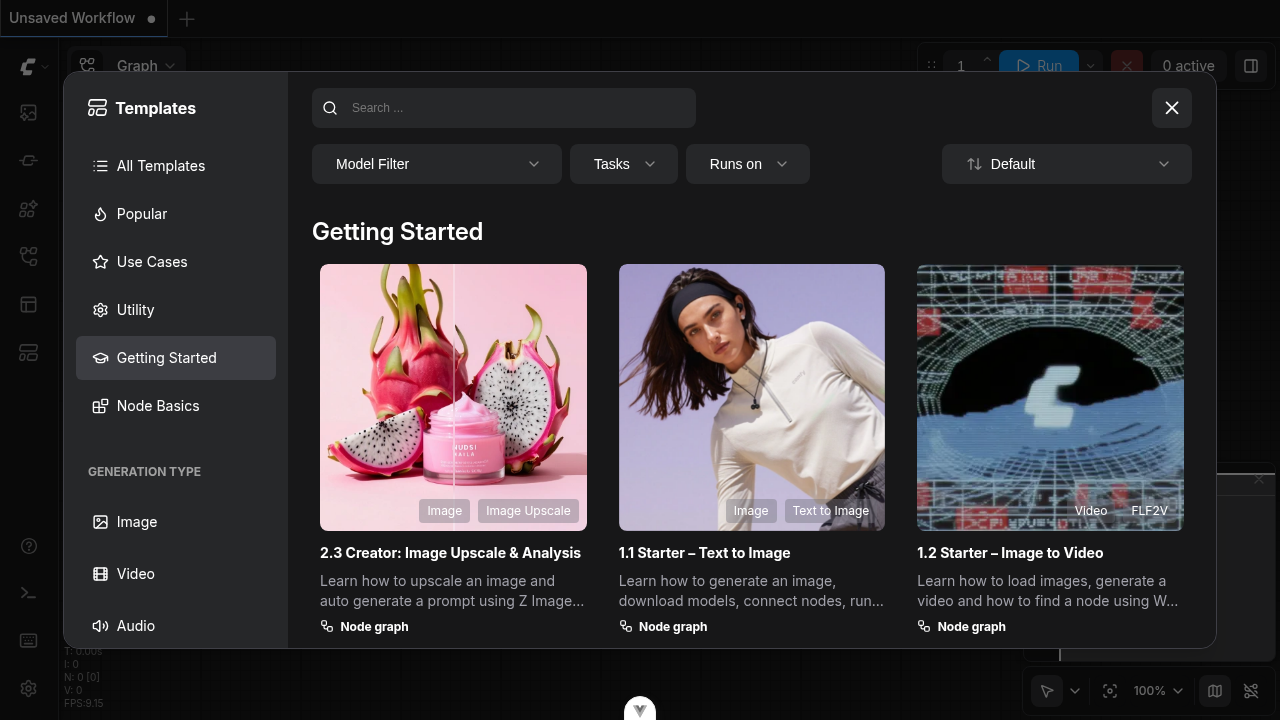
## Screenshots
┆Issue is synchronized with this [Notion
page](https://www.notion.so/PR-11139-feat-add-plum-ink-color-primitives-and-standardize-design-tokens-33e6d73d365081418e13e0efe6161fb5)
by [Unito](https://www.unito.io)
---------
Co-authored-by: Glary-Bot <glary-bot@users.noreply.github.com>
Co-authored-by: github-actions <github-actions@github.com>
Co-authored-by: Amp <amp@ampcode.com>