mirror of
https://github.com/Comfy-Org/ComfyUI_frontend.git
synced 2026-06-07 08:14:42 +00:00
36c7fbfee0ce4caff6affbd7413fccbcdc1940cc
1147 Commits
| Author | SHA1 | Message | Date | |
|---|---|---|---|---|
 jaeone94
|
82bea29dda |
fix: defer node auto-pan until drag starts (#12654)
## Summary Fix a Vue node drag edge case where holding the partially off-screen Advanced inputs button could continuously auto-pan the canvas even though the pointer had not moved into an actual drag. Linear: [FE-938](https://linear.app/comfyorg/issue/FE-938/holding-partially-off-screen-advanced-inputs-causes-continuous) ## Changes - **What**: Move Vue node auto-pan initialization from `startDrag()` to `handleDrag()`, so auto-pan starts only after the pointer interaction has become a real drag. - **What**: Keep the existing auto-pan behavior during active drags by creating the controller on the first `handleDrag()` call, updating its pointer position on later drag frames, and preserving the existing `onPan` position adjustments. - **What**: Add unit coverage for the important drag lifecycle invariants: no auto-pan on pointerdown/startDrag, auto-pan starts on handleDrag, the same controller is reused across handleDrag calls, and cleanup still stops auto-pan on endDrag. - **What**: Add a Playwright regression that places the Advanced inputs button partially beyond the visible canvas edge, holds the pointer down without moving, and verifies the canvas offset stays stable. - **What**: Add `data-testid="advanced-inputs-button"` to the Advanced inputs footer button variants so the regression test does not depend on translated button text. - **Breaking**: None. - **Dependencies**: None. ## Root Cause `useNodeDrag.startDrag()` created and started `AutoPanController` immediately on pointerdown. When the Advanced inputs button was partly outside the canvas bounds, a stationary pointer near the visible canvas edge was enough for auto-pan to begin, even before any drag movement occurred. The pointer interaction layer already distinguishes press/hold from real dragging before calling `handleDrag()`. Deferring auto-pan to `handleDrag()` aligns auto-pan startup with that drag threshold and prevents a plain hold from panning the canvas. ## Review Focus - Auto-pan should not start from `startDrag()`/pointerdown alone. - Auto-pan should still start promptly once `handleDrag()` runs for an actual drag. - Repeated `handleDrag()` calls should reuse the existing controller rather than recreate it. - Existing `onPan` behavior should continue to update drag start positions, selected node start positions, selected groups, and node positions during active drags. - The E2E intentionally asserts the canvas offset, not node bounds, because the reported bug is unintended canvas auto-pan while the pointer is stationary. ## Red-Green Verification - `a00b5d2fb test: add failing advanced button hold pan regression`: adds the Playwright regression and test id plumbing. This was verified red against the pre-fix production code. - `5c207ae28 fix: defer node auto-pan until drag starts`: adds the production fix and unit coverage. The same regression is verified green with the fix. ## Validation - `pnpm format` - `pnpm lint` - `pnpm typecheck` - `pnpm typecheck:browser` - `pnpm test:unit` - `pnpm test:unit src/renderer/extensions/vueNodes/layout/useNodeDrag.test.ts` - `PLAYWRIGHT_SETUP_API_URL=http://127.0.0.1:8188 pnpm test:browser:local browser_tests/tests/vueNodes/interactions/node/move.spec.ts --grep "should not pan while holding the Advanced button without dragging"` - Pre-push hook: `pnpm knip --cache` ## Screenshots (Before / After) Before https://github.com/user-attachments/assets/6080de2d-e2da-4b38-a1ed-1f1f88548c2d After https://github.com/user-attachments/assets/f331271a-9ea1-41ec-92cb-974bc57be56b |
||
|
jaeone94
|
d129f757c0 |
fix: keep connected advanced inputs visible (#12652)
## Summary Keep connected advanced widget inputs visible on Vue-rendered nodes when advanced inputs are collapsed. This fixes Linear [FE-924](https://linear.app/comfyorg/issue/FE-924/bug-connected-advanced-input-parameters-become-hidden-when-advanced), where a user could connect a noodle to an advanced input, collapse advanced inputs, and then lose visual access to the connected parameter even though it was actively used by the workflow. ## Changes - **What**: Treat a widget-backed input as visible when its slot is linked, even if the widget is advanced and the node-level advanced section is collapsed. - **What**: Move Vue node widget rendering to use the processed `widget.visible` value instead of reimplementing visibility in `NodeWidgets.vue`. - **What**: Keep the visibility decision as a single source of truth during widget processing, including the existing deduplication path. - **What**: Add unit coverage for the new linked-widget visibility behavior and the precedence rule that explicit hidden state still wins. - **What**: Add an E2E regression that connects a `PrimitiveFloat` to the advanced `max_shift` input on `ModelSamplingFlux`, collapses advanced inputs, and verifies the connected input remains visible while an unconnected advanced input remains hidden. - **Breaking**: None. - **Dependencies**: None. ## Review Focus The key behavior is that linked advanced widgets should be promoted into the visible widget set only while they are connected. Explicitly hidden widgets must remain hidden even when linked. The fix uses existing slot metadata from `useGraphNodeManager`; no new graph state is introduced. This keeps the change scoped to Vue node widget processing and rendering. ## Red-Green Verification | Commit | Purpose | Local result | | --- | --- | --- | | `4fa5932c6` | Adds the E2E regression only | Red: `max_shift` was not found after collapsing advanced inputs | | `e5d1ee06a` | Adds the production fix and focused unit coverage | Green: targeted E2E passed | ## Test Plan - `pnpm test:unit src/renderer/extensions/vueNodes/composables/useProcessedWidgets.test.ts` - `PLAYWRIGHT_LOCAL=1 PLAYWRIGHT_TEST_URL=http://127.0.0.1:5175 PLAYWRIGHT_SETUP_API_URL=http://127.0.0.1:8188 pnpm test:browser -g "should keep connected advanced widgets visible when advanced inputs are hidden" browser_tests/tests/vueNodes/widgets/advancedWidgets.spec.ts` - `pnpm typecheck && pnpm typecheck:browser` ## Screenshots (Before / After) Before https://github.com/user-attachments/assets/bf1e88f3-2983-4bef-9cef-48ffe6dbfd6d After https://github.com/user-attachments/assets/4dee7766-0252-478f-9b1c-4b801fc20eb2 |
||
|
jaeone94
|
874b486640 |
fix: resolve missing resource error messages (#12646)
## Summary Resolve missing resource error groups through the error catalog so missing nodes, replaceable nodes, missing models, and missing media use consistent panel and single-error overlay copy. ## Changes - **What**: Adds missing-resource resolvers for `missing_node`, `swap_nodes`, `missing_model`, and `missing_media` that provide `displayMessage`, `toastTitle`, and `toastMessage` alongside the existing group titles. The Errors tab now renders a group-level `displayMessage` under non-execution group headers, which gives grouped missing-resource cards the same explanatory message path used by validation/runtime errors without adding per-row detail fields that these grouped cards do not need. - **What**: Moves missing node and swap node explanatory copy out of card-local hardcoded text and into `errorCatalog.missingErrors.*` keys. `MissingNodeCard` and `SwapNodesCard` now focus on rendering their grouped rows and actions, while the shared error group header owns the explanatory copy. - **What**: Adds environment-aware copy for missing node packs and missing models. Cloud messages explain unsupported resources and replacement/import paths without suggesting local execution, while OSS messages point users toward installing or downloading the missing resources. - **What**: Adds single-error overlay/toast copy for missing resources. Missing media uses a concise input-focused title/message, missing models distinguish Cloud unsupported models from OSS missing files, and missing nodes/swap nodes use node-type-aware copy. - **What**: Deduplicates missing node and swap node toast decisions by distinct node type so repeated instances of the same missing/replaceable node do not accidentally switch the single-error copy to plural copy. - **What**: Preserves representative missing media candidate metadata so missing media toast copy can use a human-readable node name such as `Load Image is missing a required media file.` - **What**: Removes unused missing-resource resolver fields such as grouped `displayDetails`, grouped `displayItemLabel`, and the unused `mediaTypes` source parameter after deciding those fields do not fit grouped missing-resource cards. - **Breaking**: None. - **Dependencies**: None. ## Review Focus - Missing resource groups are still grouped cards. This PR intentionally gives them group-level display and toast copy, but does not split missing resources into one error item per underlying candidate. - Missing resource count semantics are intentionally not normalized here. Error overlay totals, store counts, and grouped card counts still follow the existing behavior; a follow-up PR can define those count units separately. - The Cloud/OSS message variants remain explicit in the resolver instead of being abstracted into a generic variant helper. That keeps this PR focused on the messaging behavior and avoids a broader resolver refactor. - Only `src/locales/en/main.json` is updated directly. Other locales should be synced by the existing localization flow. ## Screenshots (if applicable) <img width="668" height="245" alt="스크린샷 2026-06-05 오전 3 16 49" src="https://github.com/user-attachments/assets/98b50ac3-67e1-438d-8c37-e06c7bf465ee" /> <img width="666" height="195" alt="스크린샷 2026-06-05 오전 3 16 58" src="https://github.com/user-attachments/assets/92da95b1-03d6-4739-97e6-c573982bfec9" /> <img width="505" height="358" alt="스크린샷 2026-06-05 오전 3 17 27" src="https://github.com/user-attachments/assets/4d0e1a6e-13b9-4097-9fb5-19fe0c5331dc" /> <img width="507" height="324" alt="스크린샷 2026-06-05 오전 3 17 44" src="https://github.com/user-attachments/assets/054e42f8-0d0c-44b5-8a67-e467fc04f1fc" /> ## Validation - `pnpm format` - `pnpm lint` - `pnpm test:unit src/platform/errorCatalog/errorMessageResolver.test.ts src/components/rightSidePanel/errors/useErrorGroups.test.ts src/components/rightSidePanel/errors/TabErrors.test.ts` - `pnpm typecheck` - push hook: `knip --cache` |
||
|
Matt Miller
|
8a819fa2be |
refactor(assets): read content hash from the canonical hash field (#12638)
## Summary The assets API exposes an asset's content hash as `hash`. An older `asset_hash` field was a deprecated alias carrying the same value. This PR moves the frontend fully onto `hash` and removes `asset_hash` from the frontend entirely. ## Changes - Read `asset.hash` (no `?? asset_hash` fallback) across the asset consumers: - `useMediaAssetActions` — widget-value variants + cloud-mode stored-filename resolution - `assetsStore` — input-asset-by-filename map - `assetMetadataUtils.getAssetUrlFilename` - `missingMedia` resolver/scan and `missingModel` scan hash matching - `useComboWidget` / `useWidgetSelectItems` - `assetPreviewUtil.findOutputAsset` now queries `/assets?hash=` instead of the deprecated `?asset_hash=` param and matches on `a.hash`. - Removed `asset_hash` from the zod asset schema and the local `AssetRecord` type. Responses that still include the alias parse cleanly — zod strips unknown keys — so the declared field protected nothing once the reads were gone. - Purged `asset_hash` from all test fixtures/mocks; tests key on the canonical `hash`. ## Safety / rollout The API currently emits **both** `hash` and `asset_hash` with identical values, so reading `hash` is safe today. This is the frontend half of retiring the alias; the backend stops emitting `asset_hash` only after this ships and old bundles age out, so there is no window where the field the UI reads is absent. ## Verification - `pnpm typecheck`: clean. - Affected unit tests pass (asset utils, store, media/model scans, widget composables). - `grep -rn asset_hash src/`: zero matches. |
||
|
jaeone94
|
f9cbaf750f |
fix: simplify error overlay messaging (#12598)
## Summary Simplifies the error overlay so it presents one clear title, one clear message, and one stable details action instead of rendering a list of per-error messages. ## Changes - **What**: Extracts the error overlay view model into `useErrorOverlayState`, adds focused unit coverage for the overlay copy resolution rules, and updates the overlay E2E coverage to match the new behavior. - **Breaking**: None. - **Dependencies**: None. ### Behavior changes - The overlay body no longer renders a `<ul>` of individual error messages. It now always renders a single paragraph message. - Single-error overlays now prefer toast-specific copy when it exists. For execution errors, the overlay resolves the message in this order: `toastMessage`, `displayMessage`, raw `message`, group `displayMessage`, then group `displayTitle`. The title resolves from `toastTitle`, then `displayTitle`, then the group title. - Single non-execution groups use group-level toast/display copy. This lets grouped error types supply overlay-friendly copy without the overlay needing to understand each card implementation. - Multiple-error overlays now ignore individual error item copy in the overlay itself. The header becomes the pluralized count title, for example `7 errors found`, and the body becomes the fixed guidance message: `Resolve them before running the workflow.` - The overlay is hidden if the store reports an error count but no resolved overlay message exists. This avoids rendering a visible shell with an empty body. - The action button no longer varies by error type in normal app mode. Missing nodes, missing models, missing media, swap nodes, validation errors, and runtime errors all use `View details` instead of labels like `Show missing nodes`, `Show missing models`, `Show missing inputs`, or `See Errors`. - App mode keeps its existing `Show errors in graph` action label. - The overlay width now keeps the previous width as its minimum and allows a wider maximum, reducing avoidable wrapping in longer error headers. - The live region was softened from an assertive alert-style announcement to `role="status"` with `aria-live="polite"` so updates such as count changes are less disruptive. ### Tests - Adds component coverage for the rendered overlay shape and app-mode action label. - Adds composable coverage for single execution errors, runtime errors, grouped missing media errors, multiple-error aggregate copy, hidden empty-message state, and display-copy fallback behavior. - Updates `errorOverlay.spec.ts` so the E2E suite checks the new single-message overlay, the stable `View details` action, and the fixed multiple-error body guidance. - Removes the old type-specific button-label E2E expectations because that branch no longer exists in product behavior. ### Follow-up PR A follow-up PR is stacked on top of this one: `jaeone/fe-816-missing-resource-error-messaging`. That follow-up will wire missing resource error resolvers into the copy model consumed here. It covers missing node packs, missing models, missing media, and swap-node groups, including the group-level `toastTitle`, `toastMessage`, `displayMessage`, `displayDetails`, and item label copy those cards need. This PR intentionally keeps the overlay behavior separate so it can merge first without depending on the missing-resource resolver copy. ## Review Focus - Please check the single-error versus multiple-error overlay behavior, especially the fallback order for execution error copy. - Please check that the `View details` action is now intentionally error-type agnostic in normal app mode while app mode keeps `Show errors in graph`. - Please check the empty-message guard and the requirement that a single-error overlay only resolves a single group when the total error count and group list agree. - Please check the E2E reduction: the old type-specific action-label assertions were removed because the UI branch they tested was removed. ## Screenshots (if applicable) N/A |
||
|
jaeone94
|
4bfb0c36be |
Fix Cloud media input defaults (#12562)
## Summary Fix Cloud media loader widgets so `LoadImage`, `LoadVideo`, and `LoadAudio` resolve their default values from Cloud input assets instead of blindly accepting backend `object_info` combo options. When no matching Cloud input asset exists, the widgets now start empty instead of selecting a server-only value that immediately trips missing-input detection. ## Changes - **What**: Cloud media input widgets now derive their available values from `assetsStore.inputAssets`, filtered to the node's media type and to assets with a valid `asset_hash`. - **What**: Cloud media defaults now prefer an explicit default only when it matches an available Cloud input asset hash or name, then fall back to the first matching Cloud input asset, and otherwise use an empty value. - **What**: The media path keeps the existing model-widget implementation style by resolving Cloud asset state through the store internally, while preserving media-specific hash/name matching because media widgets submit Cloud `asset_hash` values. - **What**: Added regression coverage for adding empty Cloud `LoadImage`, `LoadVideo`, and `LoadAudio` nodes when backend `object_info` advertises server-only media options. - **What**: Expanded media widget unit coverage for image/video/audio inputs, empty defaults, first-asset fallback, default-by-hash matching, default-by-name matching, hashless asset filtering, unrelated media filtering, dynamic values, option labels, lazy input loading, and `control_after_generate` wiring. - **What**: Kept existing OSS and Cloud runtime missing-media E2E coverage, with Cloud fixtures consistently using the local setup backend for `object_info` so tests do not depend on live Cloud backend startup details. - **Breaking**: None. - **Dependencies**: None. ## Review Focus - Cloud media loader defaults should no longer be sourced from backend file lists unless the value also corresponds to a Cloud input asset. - Empty Cloud input-asset libraries should produce empty media widget values, not missing-input errors at node creation time. - Model asset-browser behavior is intentionally unchanged. The media path mirrors the store-access style, but media defaults still resolve to asset hashes because those are the values submitted by Cloud media widgets. - The Cloud E2E fixture stubs bootstrap endpoints and routes `object_info` through the local setup backend. This keeps the test focused on frontend behavior while still using realistic node definitions. ## Testing - `pnpm exec oxfmt browser_tests/tests/propertiesPanel/errorsTabMissingMediaRuntime.spec.ts src/renderer/extensions/vueNodes/widgets/composables/useComboWidget.test.ts src/renderer/extensions/vueNodes/widgets/composables/useComboWidget.ts` - `pnpm lint` - `pnpm typecheck` - `pnpm typecheck:browser` - `pnpm exec vitest run src/renderer/extensions/vueNodes/widgets/composables/useComboWidget.test.ts` - `PLAYWRIGHT_TEST_URL=http://127.0.0.1:5174 PLAYWRIGHT_SETUP_API_URL=http://127.0.0.1:8188 pnpm exec playwright test browser_tests/tests/propertiesPanel/errorsTabMissingMediaRuntime.spec.ts --project=chromium --workers=1` - `PLAYWRIGHT_TEST_URL=http://127.0.0.1:5175 PLAYWRIGHT_SETUP_API_URL=http://127.0.0.1:8188 pnpm exec playwright test browser_tests/tests/propertiesPanel/errorsTabMissingMediaRuntime.spec.ts --project=cloud --workers=1` - `git diff --check` - `pnpm knip` - `.claude/skills/reviewing-unit-tests/SKILL.md` red-flag review ## Screenshots Before https://github.com/user-attachments/assets/5df04036-d15c-4f94-bdcd-df8b26a29329 After https://github.com/user-attachments/assets/abe7caf5-a83b-4960-aa6f-65a377424a85 |
||
|
Dante
|
f86ffbb05f |
fix(assets): dedupe outputs by composite key to prevent media asset panel scroll-duplication (#11716)
## Summary

When the cloud `getJobDetail` returns two output records that resolve to
the same composite key `${nodeId}-${subfolder}-${filename}`,
`mapOutputsToAssetItems` in
`src/platform/assets/utils/outputAssetUtil.ts` produces two `AssetItem`s
with the same synthetic id. The Vue `v-for :key="item.key"` in
`src/components/common/VirtualGrid.vue:10` collides, Vue reuses one DOM
node for the colliding rows, and the user sees one asset visibly
duplicate and progressively replace its neighbours while scrolling
through an expanded large job in the media asset panel — symptom matches
FE-297 in both list and grid views (both views derive from the same
`displayAssets` populated by `resolveOutputAssetItems`).

Fix tracks composite keys per resolved job and skips subsequent records
that collide on the same key. Treats the composite key as the canonical
identity of an output, so each rendered row is unique in both views
without changing public id semantics for non-colliding inputs.

- Fixes FE-297
- Source: [Slack
#bug-dump](https://comfy-organization.slack.com/archives/C0A4XMHANP3/p1777047001770899)

## Red-Green Verification (unit)

| Commit | Purpose | CI |
| --- | --- | --- |
|
[`b263af29b`](https://github.com/Comfy-Org/ComfyUI_frontend/pull/11716/commits/b263af29b)
test: FE-297 add failing test for asset id collision on duplicate output
key | Proves the test catches the regression | 🔴 [Red run
25038514049](https://github.com/Comfy-Org/ComfyUI_frontend/actions/runs/25038514049)
— `FE-297: deduplicates outputs that share the same composite output
key` failed with `expected length 2 but got 3` |
|
[`af38cad1d`](https://github.com/Comfy-Org/ComfyUI_frontend/pull/11716/commits/af38cad1d)
fix(assets): dedupe outputs by composite key to prevent visual collapse
on scroll | Proves the fix resolves it | 🟢 [Green run
25038832343](https://github.com/Comfy-Org/ComfyUI_frontend/actions/runs/25038832343)
— all unit tests pass |

Local verification (`pnpm vitest run
src/platform/assets/utils/outputAssetUtil.test.ts`):
- On red commit: `FE-297: deduplicates outputs that share the same
composite output key` fails with `expected length 2 but got 3`.
- On green commit: all 8 tests pass; broader `pnpm vitest run
src/platform/assets/` reports 390/390 pass.

## Browser-level Verification (e2e)


[`c5f80e225`](https://github.com/Comfy-Org/ComfyUI_frontend/pull/11716/commits/c5f80e225)
adds `browser_tests/tests/sidebar/assets-fe297-dedupe.spec.ts`. The spec
mocks `/api/jobs` + `/api/jobs/{jobId}` so the assets sidebar receives a
5-output stack job whose detail payload contains two records sharing
`9--duplicate_00002_.png`. It expands the stack into folder view and
reads the underlying `VirtualGrid` row total from the top/bottom spacer
heights so the assertion does not depend on viewport size, scroll
virtualization, or Vue's same-key DOM reuse.

Locally validated red→green (`pnpm dev` + local ComfyUI on :8188, `pnpm
exec playwright test … --project=cloud`):

| Source | `totalRows` | rendered tile labels | result |
| --- | --- | --- | --- |
| Red (dedup removed from `mapOutputsToAssetItems`) | **5** |
`[duplicate_00002_.png, duplicate_00002_.png, distinct_00004_.png]` (two
adjacent collisions) | 🔴 `Expected: 4 / Received: 5` |
| Green (HEAD) | **4** | `[duplicate_00002_.png, distinct_00004_.png,
distinct_00003_.png]` (no collisions) | 🟢 `1 passed` |

Manual repro of the same flow against the running dev server (Chrome
DevTools, runtime `fetch` interceptor for `/api/jobs/<id>`) reproduces
the FE-297 symptom directly: with the fix removed, the folder view
renders **two consecutive cards both labelled `duplicate_00002_.png`**;
with the fix applied that second slot is replaced by the next distinct
file.

## Cloud Prod Verification (unmocked)

Verified against a real cloud prod job
(`22dda683-1634-4120-8a7d-233cff28e07e`) whose `/api/jobs/{id}` payload
organically contains the FE-297 trigger condition.

Raw cloud response analysis: **35 output records across 27 nodes, 34
unique composite keys, 1 colliding key**
(`103--cbbce08934d17e85987b09824ae519822e4462b4294fc52fc40dca8d5b096323.png`
appears twice — same nodeId/subfolder/filename emitted from two distinct
output records).

Expanded folder view on local FE running this branch against cloud prod
backend:

| Measurement | Value | Expectation |
| --- | --- | --- |
| `outputCount` (backend) | 35 | — |
| Unique composite keys (backend) | 34 | (35 - 1 collision) |
| VirtualGrid rendered cells (`totalRows * colCount` via spacer height)
| **34** | matches dedupe target |
| Simultaneously-visible duplicate labels | 0 | no Vue `:key` collision
|

This is the first visual confirmation of FE-297 against actual prod data
rather than synthetic/mocked payloads. The block had been pending on
FE-844 — cloud `/api/jobs/{id}` returns `text: [null]` for empty
subgraph promoted text outputs, which the FE Zod schema rejects, causing
`fetchJobDetail` to return `undefined` and the folder view to collapse
to the cover preview only. With [PR
#12449](https://github.com/Comfy-Org/ComfyUI_frontend/pull/12449)
(FE-844) applied locally, the job-detail response reaches
`resolveOutputAssetItems`, FE-297's dedupe runs, and the 35→34 collapse
is observable end-to-end.

## Test Plan

- [x] New unit regression covering composite-key collision in
`mapOutputsToAssetItems`
- [x] Existing `outputAssetUtil` tests still pass (`job-1-1-sub-a.png`
etc. id format unchanged for non-colliding inputs)
- [x] Broader asset platform suite (`src/platform/assets/`) passes
- [x] CI red-green sequence captured (links above)
- [x] Browser-level e2e (`assets-fe297-dedupe.spec.ts`) red→green
validated locally; will run in CI on this commit
- [x] Manual repro on dev server confirms the duplicate-card symptom
disappears with the fix
- [x] Unmocked cloud-prod repro: real 35-output job with 1 organic
composite-key collision renders 34 cells, 0 duplicate labels
simultaneously visible (requires
[#12449](https://github.com/Comfy-Org/ComfyUI_frontend/pull/12449) for
job-detail fetch to succeed)
|
||
|
Alexander Brown
|
488bc33288 |
refactor: drop primevue/colorpicker from settings form and customization selector (FE-804) (#12391)
*PR Created by the Glary-Bot Agent*
---
## Summary
The node-canvas COLOR widget (`WidgetColorPicker.vue`) already migrated
off PrimeVue; this PR finishes FE-804 by porting the two remaining
`primevue/colorpicker` consumers — `FormColorPicker.vue` (settings form
`type: 'color'`) and `ColorCustomizationSelector.vue`
(folder-customization dialog) — to the in-house Reka-UI based
`ColorPicker`. The now-dead PrimeVue overlay workaround in
`CustomizationDialog.vue` is removed.
After this lands there are **zero `primevue/colorpicker` imports left**
in `src/`.
## Changes
- **What**: `FormColorPicker.vue` swaps `primevue/colorpicker` +
`primevue/inputtext` for the in-house `ColorPicker` + `Input`. The
legacy "hex without `#`" storage contract (e.g. `load3d`'s
`BackgroundColor` default `'282828'`) is preserved on read and on write.
- **What**: The text input now uses a separate draft value and only
commits on blur / Enter when the input is a complete 6- or 8-digit hex.
This fixes the "type `#f` and watch it snap to black" regression that a
naive shared-`v-model` implementation re-introduces.
- **What**: `disabled`, `id`, and `aria-labelledby` are now explicit
props on `FormColorPicker` and are forwarded to both children. The
custom `ColorPicker` learned a `disabled` prop that propagates to its
`<PopoverTrigger>` button.
- **What**: `ColorCustomizationSelector.vue` swaps
`primevue/colorpicker` for the in-house `ColorPicker` (still uses
`primevue/selectbutton` — intentionally out of scope per FE-804's title;
`SelectButton` migration is a separate effort).
- **What**: `CustomizationDialog.vue` drops the `.p-colorpicker-panel,
.p-overlay, .p-overlay-mask` `pointer-down-outside` guard. With PrimeVue
ColorPicker gone, no descendant of this dialog teleports an overlay to
`<body>` anymore.
- **What**: Updates two affected browser tests — `extensionAPI.spec.ts`
(the `disabled` attr smoke check) and `sidebar/nodeLibrary.spec.ts` (the
bookmark color customization flow) — to target the new picker via stable
accessible names (`role="slider"` + i18n aria-label `Color saturation
and brightness`) and the `.color-picker-wrapper > button` trigger. The
disabled-attr eval helper now handles `HTMLButtonElement` in addition to
`HTMLInputElement`.
- **What**: Adds `FormColorPicker.test.ts` with focused regression
coverage for the manual-entry contract: legacy no-`#` storage
round-trip, no commit on partial hex, revert on partial-then-Enter,
8-digit alpha hex, and `disabled` propagation.
- **Dependencies**: none added; removes two PrimeVue imports.
- **Breaking**: no breaking change to the documented FormItem `'color'`
setting contract. Manual-entry semantics change: typing partial hex no
longer immediately writes mangled state — it commits on blur or Enter
when the value fully parses. Existing settings values are unaffected.
## Verification
- `pnpm typecheck` clean
- `pnpm typecheck:browser` clean
- `pnpm exec eslint` on every touched file clean
- `pnpm test:unit` over the affected directories — **216 passed**
- Manual QA via Playwright against the running dev server:
- Registered a test extension with `type: 'color'` + a `disabled: true`
variant
- Confirmed the new picker renders, opens its Reka popover, and the
disabled row has `button.disabled === true` and `input.disabled ===
true`
- Confirmed partial hex (`#ab`) does **not** clobber the swatch
- Confirmed `#1133aa` + blur commits and round-trips through the picker
## Review focus
1. The manual-entry commit gate in `FormColorPicker.vue`
(`commitDraft()` + `FULL_HEX`) — is the regex strict enough? Should
3/4-digit shorthand hex be accepted on commit too? PrimeVue accepted
3-digit shorthand; the existing `toHexFromFormat()` already does, so
adding `|[0-9a-f]{3}|[0-9a-f]{4}` is a one-line change if reviewers want
parity.
2. Disabled-attr E2E selector swap (`.p-colorpicker-preview` →
`.color-picker-wrapper > button`) + the eval-helper update that now
handles `HTMLButtonElement` in addition to `HTMLInputElement`. The
structural selector matches what PrimeVue had; happy to add a
`data-testid` if reviewers prefer.
3. `ColorPicker.vue` gained a `disabled` prop — kept explicit (peer of
`class`) to match the existing prop shape rather than forwarding through
`$attrs`.
## Follow-up (NOT in this PR)
Discussed in-thread — the **Reka-UI `ColorField` migration** (full
picker rebuild) and the **Kijai regression suite** for alpha-disabled +
manual-entry on the node-canvas COLOR widget belong in a separate,
scoped PR alongside the `ColorInputSpec` schema additions (`hasAlpha`,
`format`). The custom picker also has a known lossy HSV-percent
quantization (e.g. `#1133aa` round-trips to `#1033a9`) that pre-dates
this PR and would be addressed by the Reka primitives.
- Fixes FE-804
## Screenshots
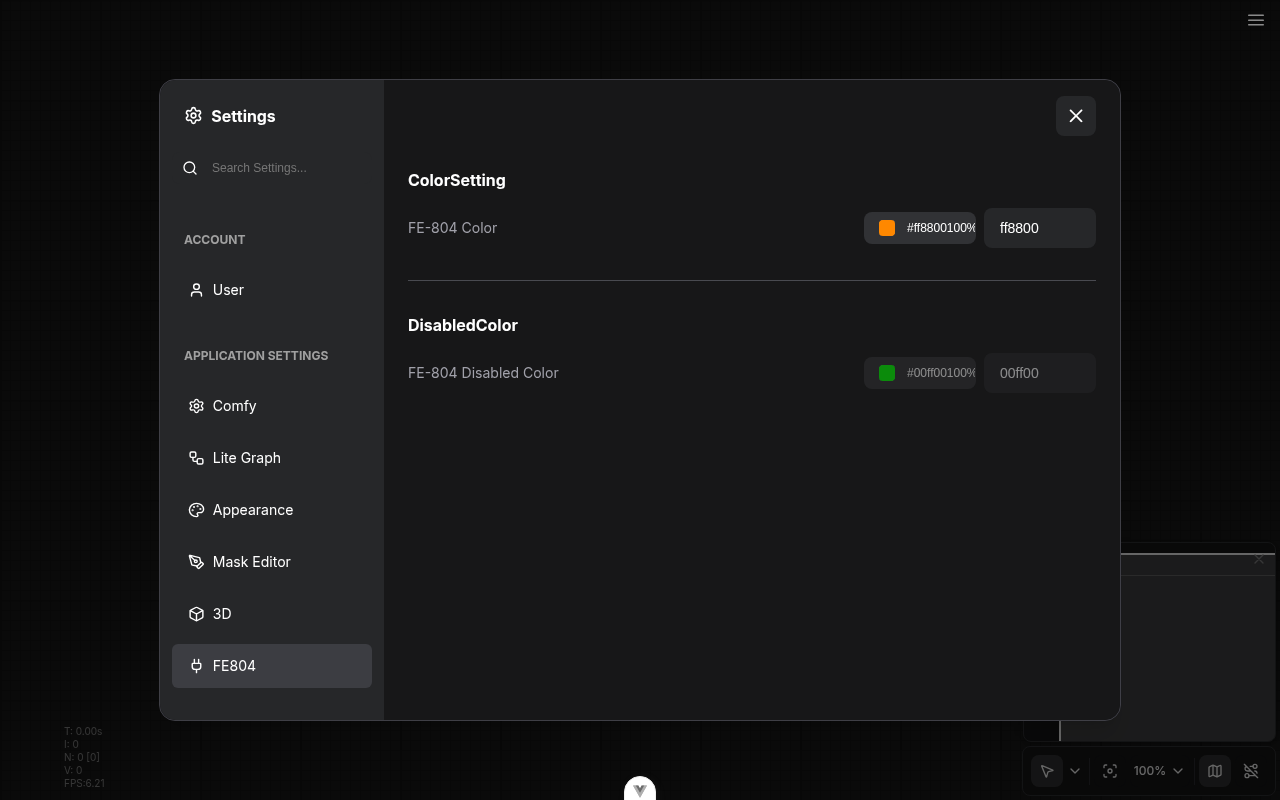
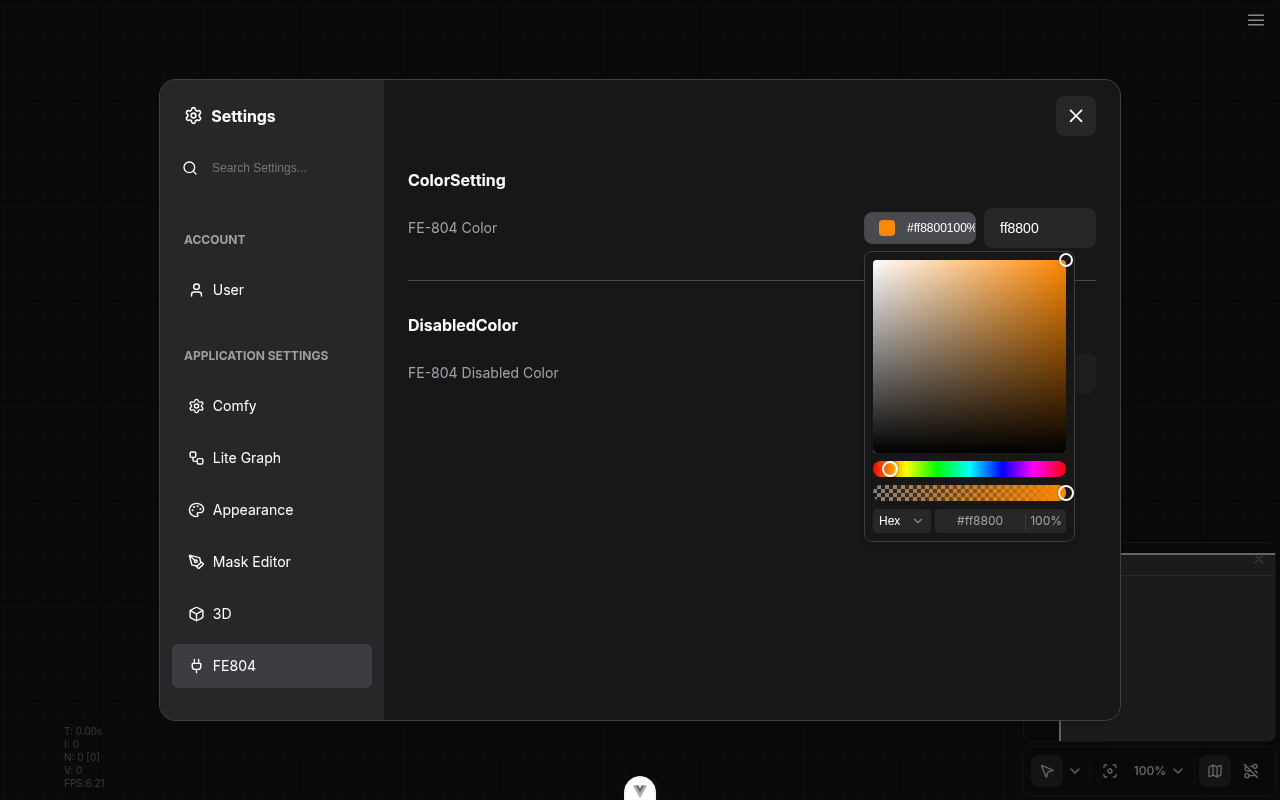
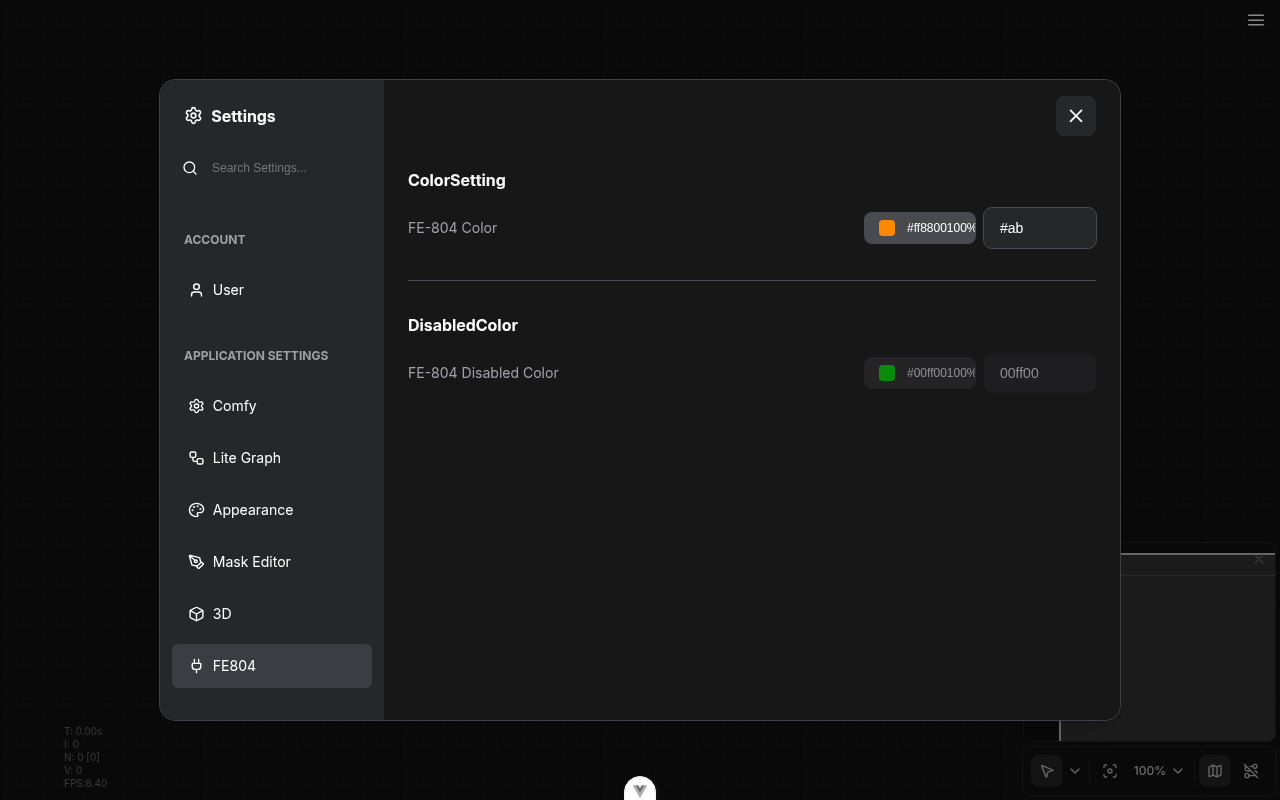
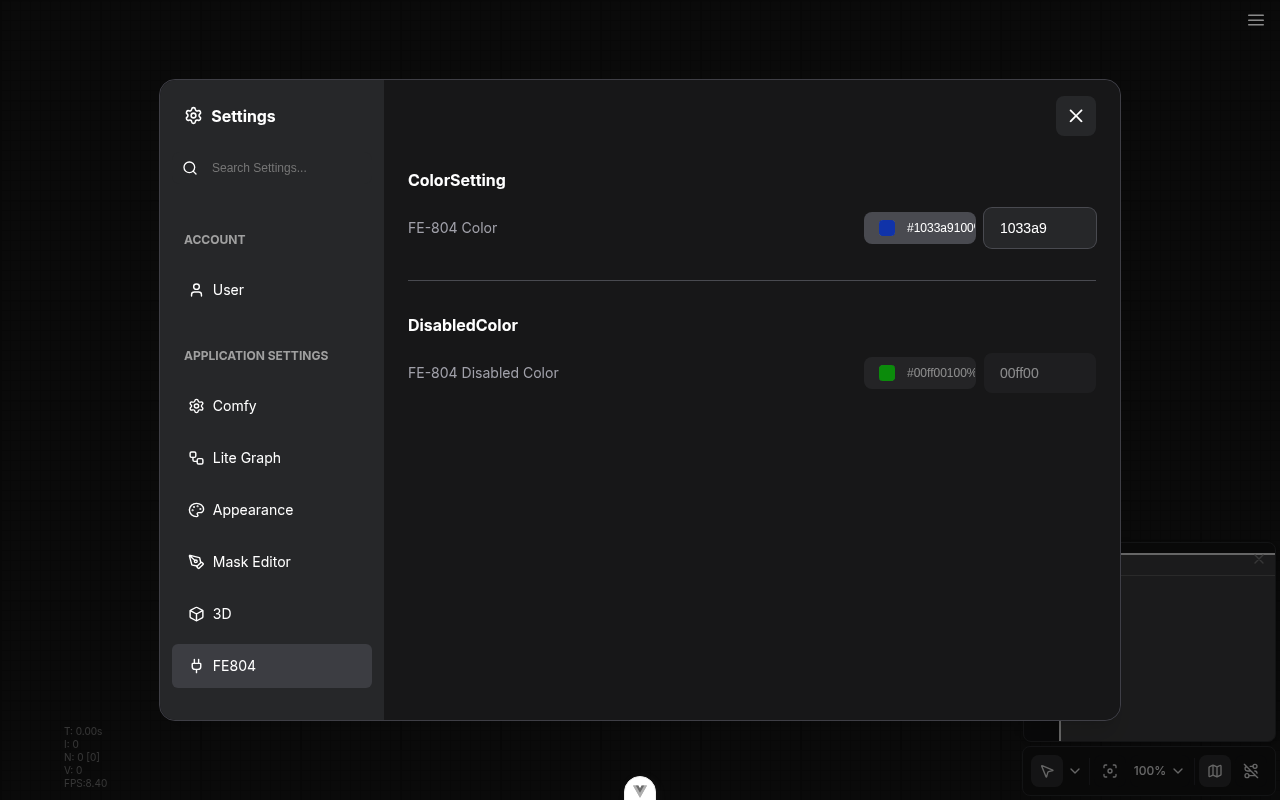
---------
Co-authored-by: Glary-Bot <glary-bot@users.noreply.github.com>
|
||
|
Dante
|
60a4dc3001 |
fix: dedupe Bypass context-menu items via state-aware legacy label (FE-720) (#12500)
## Summary Right-clicking a bypassed node showed two bypass-related items in the Vue "More Options" context menu (FE-720): - Plain `Bypass` from the legacy LiteGraph `getExtraMenuOptions` hook in `litegraphService.ts` - `Remove Bypass` (with `Ctrl+B` and an icon) from the Vue `getBypassOption` composable The Vue menu's exact-label deduplicator in `contextMenuConverter.ts` collapsed the unbypassed case (both emit `Bypass` → Vue source wins) but not the bypassed case (`Bypass` vs `Remove Bypass`), so the duplicate leaked through whenever the node was bypassed. ### before <img width="1920" height="958" alt="fe-720-before" src="https://github.com/user-attachments/assets/ef001aca-d70e-4798-ac61-01cc34c31e44" /> ### after <img width="1920" height="958" alt="fe-720-after" src="https://github.com/user-attachments/assets/d6d2bf4b-cb98-4b30-9dac-9bd4b68a7e36" /> #### single active node (KSampler) <img width="1920" height="958" alt="fe-720-1-unbypassed-node-menu" src="https://github.com/user-attachments/assets/bec9cd47-2f2d-4adb-b95b-266e7969a36c" /> #### single bypassed node (Load Checkpoint) <img width="1920" height="958" alt="fe-720-2-bypassed-node-menu" src="https://github.com/user-attachments/assets/91f80157-836d-4fce-adad-474f31baff04" /> #### KSampler + bypassed Load Checkpoint <img width="1920" height="958" alt="fe-720-3-mixed-selection-menu" src="https://github.com/user-attachments/assets/e4780b16-08e5-4f87-80e9-3ff65a5acdae" /> ## Root cause `src/services/litegraphService.ts` pushes a `Bypass` entry from its legacy `getExtraMenuOptions` hook in addition to the Vue `getBypassOption`. In Vue-menu mode both reach the menu; the exact-label dedup in `contextMenuConverter.ts` only collapses them when the labels match, which fails once the node is bypassed and the Vue side switches to `Remove Bypass`. ## Fix Add `Bypass` and `Remove Bypass` to the `HARD_BLACKLIST` in `contextMenuConverter.ts`. The blacklist filters the legacy emission out of the Vue conversion pipeline (`convertContextMenuToOptions`) before it is ever merged, so Vue's `getBypassOption` is the single source of the bypass item in every node state — no duplicate is created in the first place. This is the established convention for legacy items that the Vue menu replaces (`Properties`, `Colors`, `Shapes`, `Title`, `Mode`, `Properties Panel`, `Copy (Clipspace)`); Bypass is the same category. `litegraphService.ts` reverts to a plain `content: 'Bypass'` and no longer imports `areAllSelectedNodesInMode` or i18n keys for this entry. The Vue `getBypassOption` label is still derived from the same selection-aware predicate (`areAllSelectedNodesInMode`) that `toggleSelectedNodesMode` uses, so on mixed selections the label stays in sync with the action — it shows `Bypass` when clicking would bypass the rest, rather than `Remove Bypass`. **Trade-off:** the classic LiteGraph canvas menu (`Comfy.VueNodes.Enabled: false`) renders `litegraphService`'s options directly without going through `convertContextMenuToOptions`, so it shows a plain `Bypass` regardless of node state. This matches the pre-PR behavior (the legacy push was already a hardcoded `Bypass`), so it is not a regression. ## Considered and rejected - **`equivalents` map** (`bypass: ['bypass', 'remove bypass']`) — would collapse `Bypass` and `Remove Bypass` as synonyms, which is semantically wrong: they are distinct actions that must stay distinguishable, and the rule would also misfire on the unbypassed case. A converter test locks in that they are not treated as equivalents. - **State-aware label on the legacy push** (matching the Vue label so the exact-label dedup collapses them) — works, and additionally gives the classic canvas menu a state-aware label, but it couples `litegraphService` to the selection predicate and i18n keys solely to keep a downstream dedup load-bearing. `HARD_BLACKLIST` removes the duplicate at the source instead of creating, converting, then collapsing it. The only thing lost is the classic-menu state-aware label, which was never present pre-PR. - **Gating the legacy push on `Comfy.UseNewMenu === 'Disabled'`** — the setting that selects the legacy vs Vue context menu is `Comfy.VueNodes.Enabled`, not `Comfy.UseNewMenu` (an unrelated top-menu-bar toggle). Gating on `UseNewMenu` would drop the Bypass entry from the legacy canvas menu for the OSS default (`VueNodes.Enabled: false` + `UseNewMenu: 'Top'`). - **Suppressing the legacy callback via `SUPPRESSED_LITEGRAPH_CALLBACKS`** — matches by callback identity and adds cross-file coupling for what is a simple label-based filter that `HARD_BLACKLIST` already expresses. ## Cleanups (review feedback) - Removed the now-dead `NodeSelectionState.bypassed` field and its producer (no consumers after the label switch). - Replaced the `vue-i18n` mock in `useNodeMenuOptions.test.ts` with a real `createI18n` instance per `docs/testing/vitest-patterns.md`; removed a `ts-expect-error` via a typed hoisted `app` mock. - Simplified `getSelectedNodeArray` to `Object.values(app.canvas.selected_nodes ?? {})`. ## Tests - `useSelectedLiteGraphItems.test.ts` — `areAllSelectedNodesInMode`: all-bypassed → true, mixed → false, empty → false. - `useNodeMenuOptions.test.ts` — Vue label is `Bypass` (active / mixed) and `Remove Bypass` (all bypassed). - `contextMenuConverter.test.ts` — the legacy `Bypass` push is filtered by `HARD_BLACKLIST` so the Vue item is the only bypass entry (keeps shortcut/source); `Bypass` and `Remove Bypass` are not treated as label equivalents. - `browser_tests/tests/vueNodes/interactions/node/contextMenu.spec.ts` — e2e regression: exactly one bypass-family item per node state. Verified live on a bypassed Load Checkpoint: single `Remove Bypass` → toggle un-bypasses → single `Bypass`; no duplicate, rest of the menu intact. - Fixes FE-720 --------- Co-authored-by: Alexander Brown <drjkl@comfy.org> |
||
|
Alexander Brown
|
c4c1dfa58a |
Remove drag node test from interaction.spec.ts (#12579)
It's flaky. |
||
|
AustinMroz
|
1938ba809b |
Track undo state on subgraph conversion (#12575)
When converting to subgraph, `beforeChange` and `afterChange` were being called, but these functions exclusively called vestigial change handlers that don't actually affect change tracking. Consequentially, if you made a change to the graph (updating a widget), converted a node to a subgraph using the selectionToolbox, and then pushed Ctrl+Z before performing any other canvas interaction, it would incorrectly undo the prior widget edit as well. This is resolved by calling the important handlers directly. Adding them to `beforeChange`/`afterChange` was considered, but caused breakage in other functions (`connect`) which failed to even attempt symmetric calls of the function. |
||
|
Dante
|
e16a0bfe82 |
fix(knip): narrow Playwright entrypoints so browser-test dead exports are reported (FE-717) (#12496)
## Summary Narrow Knip's Playwright `entry` to actual spec files so dead exports in browser-test fixtures are reported instead of being hidden by treating every helper as an entrypoint. ## Changes - **What**: - `knip.config.ts`: Playwright `entry` changed from the broad `['**/*.@(spec|test)…', 'browser_tests/**/*.ts']` to `['browser_tests/**/*.@(spec|test).?(c|m)[jt]s?(x)']`. `globalSetup`/`globalTeardown` stay covered via Knip's playwright config resolution; fixtures remain in the project graph so their unused exports surface. - Resolved the 54 dead findings this exposed: over-exported symbols used only within their own module are now module-private (dropped `export`, no behavioral change); genuinely unreferenced fixtures were deleted (asset/template `ALL_*` aggregators + orphaned `STABLE_*` data, `TemplateHelper` distribution helpers + `generateTemplates`, dead types/utils, and the unused `nodeDefinitions.ts` module). - **Breaking**: none — test-only changes. ## Review Focus - Deletions are limited to fixtures with zero importers on `main` (verified via `pnpm knip`); the bulk of the diff is `export`-keyword removal. - Verified: `pnpm knip` (browser_tests clean), `pnpm typecheck`, `pnpm typecheck:browser`, oxfmt/oxlint/eslint all pass. Linear: FE-717 |
||
|
Dante
|
3a8ddfb6f1 |
fix: wrap long workflow name in Open shared workflow dialog (FE-828) (#12540)
## Summary The "Open shared workflow" dialog rendered the workflow name in an `<h2>` with no wrapping control. A long, space-free name (e.g. a content-hash filename) is a single unbreakable "word", so with the default `overflow-wrap: normal` it could not wrap. It overflowed its box and, because PrimeVue's `.p-dialog-content` is `overflow-x: auto`, the dialog scrolled horizontally instead of wrapping. CDP measurement on the unfixed build (96-char name): dialog content `scrollWidth 1336` vs `clientWidth 702` -> horizontal scroll. After adding `wrap-anywhere` to the heading: `scrollWidth 702 == clientWidth 702`, name wraps to multiple lines, full name still in the DOM. ### before <img width="704" height="295" alt="before-dialog" src="https://github.com/user-attachments/assets/ea05ab32-a80d-4210-951c-f43d595bd6eb" /> ### after <img width="704" height="359" alt="after-dialog" src="https://github.com/user-attachments/assets/cbf3019e-5e71-4dba-a1fd-ea3586dd995a" /> ## Changes - `OpenSharedWorkflowDialogContent.vue`: add `wrap-anywhere` to the workflow-name `<h2>` so a long unbreakable name wraps within the dialog bounds instead of forcing horizontal scroll. The parent already has `min-w-0`. - Breaking: none ## Red-Green Verification | Commit | CI | Purpose | |--------|-----|---------| | [`test:` |
||
|
AustinMroz
|
e97c4b6ab9 | Remove flake screenshot (#12529) | ||
|
jaeone94
|
fb58a76a53 |
fix: preserve validation errors on execution start (#12493)
## Summary Preserve validation node errors and their overlay when a valid active root starts execution, so partial workflow runs no longer hide validation failures. ## Changes - **What**: Split execution-start clearing from full error clearing; `execution_start` now clears transient execution/prompt state without clearing validation `lastNodeErrors`. - **What**: Keep the ErrorOverlay open when validation errors are still present, and show it for successful prompt responses that include `node_errors`. - **Dependencies**: None. ## Review Focus Please check the error-clearing boundary between prompt submission/workflow changes and WebSocket `execution_start`. Full clearing still happens through `clearAllErrors`; execution start now uses the narrower clearing path and only dismisses the overlay when there are no validation node errors to show. Linear: FE-851 ## Red-Green Verification - Red: `76bcf34c4 test: add failing validation error preservation e2e` - Green: `9766172ea fix: preserve validation errors on execution start` - Follow-up: `321c95aba fix: keep validation error overlay during execution start` - Coverage: `7b5fab577 test: cover prompt node error overlay` ## Test Plan - `pnpm exec vitest run src/scripts/app.test.ts` - `pnpm exec vitest run src/stores/executionStore.test.ts` - `pnpm exec vitest run src/scripts/app.test.ts src/stores/executionStore.test.ts --coverage` - `pnpm format:check -- src/stores/executionErrorStore.ts src/stores/executionStore.ts src/stores/executionStore.test.ts src/scripts/app.ts src/scripts/app.test.ts browser_tests/fixtures/helpers/ExecutionHelper.ts browser_tests/tests/execution.spec.ts` - `pnpm exec oxlint src/stores/executionErrorStore.ts src/stores/executionStore.ts src/stores/executionStore.test.ts src/scripts/app.ts src/scripts/app.test.ts browser_tests/tests/execution.spec.ts --type-aware` - `pnpm typecheck` - `PLAYWRIGHT_LOCAL=1 PLAYWRIGHT_TEST_URL=http://127.0.0.1:5175 pnpm exec playwright test browser_tests/tests/execution.spec.ts:132` ## Screenshots (Before/After) Before https://github.com/user-attachments/assets/04a212b6-66f9-4c77-9056-58bdc642d96e After https://github.com/user-attachments/assets/db7813c7-bf8a-4e19-9b66-7f49fd01c305 |
||
|
AustinMroz
|
b7990f7645 |
Fix ghost links on IO remove slot (#12473)
Context menu operations on subgraph IO slots only set the foreground canvas as dirty, so links would visually persist until a different operation caused a background draw. |
||
|
Dante
|
c57944f315 |
fix: hide duplicate LiteGraph Resize/Collapse/Expand entries from Vue node menu (FE-867) (#12487)
## Summary https://linear.app/comfyorg/issue/FE-867/bug-node-expand-menu-doesnt-work-nodes-immediately-collapse-after Recreates #12175 on a fresh `main` base (original branch's CI failed only because its `frontend-dist` artifact had expired — not a code issue). Original work by @christian-byrne / Glary-Bot, cherry-picked here so it can land while he's offline. The Vue right-click "More Options" node menu shows duplicates for collapse/expand functionality: - **Vue source**: `Minimize Node` / `Expand Node` (works) - **LiteGraph source**: `Resize`, `Collapse`, `Expand` (silently no-op in this menu — the converter wrapper invokes `LGraphCanvas.onMenuNodeCollapse` without the `node` arg it expects) Suppress the LiteGraph duplicates in `convertContextMenuToOptions` by matching the built-in **callback identity** (`LGraphCanvas.onMenuResizeNode`, `LGraphCanvas.onMenuNodeCollapse`), not the raw label. Matching by identity avoids accidentally hiding extension-provided items that share those labels. Also align `CORE_MENU_ITEMS` / `MENU_ORDER` on the Vue label `Expand Node` so the toggled Minimize/Expand pair sorts correctly. ## Scope of suppression Only the Vue node menu (via `convertContextMenuToOptions`) is affected. The raw `LGraphCanvas.getNodeMenuOptions` output is untouched, so: - The legacy right-click menu (`Comfy.UseNewMenu` disabled) still has `Collapse` / `Resize`. - `useLoad3d.ts`, which calls `new LiteGraph.ContextMenu(app.canvas.getNodeMenuOptions(node), ...)`, is unaffected. - Extensions that monkey-patch `getNodeMenuOptions` continue to receive the full option list. ## Tests - `contextMenuConverter.test.ts`: covers both that built-in entries are dropped by identity AND that extension-provided items with the same labels survive. - E2E `selectionToolboxMoreActions.spec.ts`: asserts the Vue "More Options" menu shows `Minimize Node` but no `Resize`/`Collapse`/`Expand`. - `pnpm typecheck` clean. Supersedes #12175. --------- Co-authored-by: Glary-Bot <glary-bot@users.noreply.github.com> |
||
|
jaeone94
|
d86483a6af |
refactor: consolidate middle-button pan handling (#12491)
## Summary Refactors middle mouse button pan handling around the intent of #11409, dropping the outdated implementation details from that PR and aligning the core behavior with the current main branch. ## Changes - **What**: Centralized phase-specific middle mouse button handling in `src/base/pointerUtils.ts`, added a shared Vue widget forwarding helper, and updated canvas, LiteGraph, Vue node, and mask editor call sites to use the same semantics. - **Breaking**: None expected. This keeps existing middle-click pan behavior while making pointerdown, pointermove, pointerup, and auxclick checks explicit for their event phases. - **Dependencies**: None. ## Review Focus This PR is intentionally narrower than #11409. That PR had the right goal, but its implementation became outdated against main: mask editor tests now have helper coverage on main, Vue node/widget code has shifted, and a blanket replacement with `isMiddlePointerInput` would lose the bitmask behavior needed during pointermove drags. The core difference is that this PR preserves the useful part of #11409, namely removing scattered ad-hoc MMB checks, while avoiding stale changes that no longer fit the current codebase. Key behavior changes: - `isMiddlePointerInput` is the conservative pointerdown-style check: changed middle button or strict middle-only `buttons === 4`. - `isMiddleButtonHeld` handles pointermove-style held-button bitmasks so chorded drags with the middle button still pan. - `isMiddleButtonEvent` handles pointerup/auxclick-style changed-button events. - Call sites now choose the phase-specific helper directly instead of routing through an event-type dispatcher. - String and markdown widgets now share `forwardMiddleButtonToCanvas(...)` instead of duplicating three pointer listeners each. - The widget helper intentionally keeps the existing `app.canvas.processMouseDown/Move/Up` forwarding route and only centralizes the duplicated listener logic. - Mask editor pan handling, Vue node pointer forwarding, graph canvas pan forwarding, LiteGraph middle-click checks, input indicators, and transform settling now use the centralized helpers. Coverage added or updated: - Unit coverage for middle-button helper semantics, including chorded pointermove drags and pointercancel held-bit behavior. - Unit coverage for widget forwarding helper down/move/up routing. - Regression coverage for canvas, mask editor, Vue node media preview, and transform-settling pointer handling. - Browser coverage for middle-click drag panning on a Vue node, a multiline string widget, and the mask editor canvas. Validation run: - `pnpm format` - `pnpm lint` - `pnpm typecheck` - `pnpm test:unit src/base/pointerUtils.test.ts src/renderer/extensions/vueNodes/widgets/utils/forwardMiddleButtonToCanvas.test.ts src/renderer/extensions/vueNodes/widgets/composables/useStringWidget.test.ts src/renderer/extensions/vueNodes/widgets/composables/useMarkdownWidget.test.ts src/renderer/core/canvas/useCanvasInteractions.test.ts src/composables/maskeditor/useToolManager.test.ts src/renderer/core/layout/transform/useTransformSettling.test.ts src/composables/node/useNodeImage.test.ts src/composables/node/useNodeAnimatedImage.test.ts src/components/graph/SelectionToolbox.test.ts src/lib/litegraph/src/LGraphCanvas.slotHitDetection.test.ts` - `pnpm typecheck:browser` - `pnpm test:browser:local browser_tests/tests/vueNodes/interactions/canvas/pan.spec.ts browser_tests/tests/vueNodes/widgets/text/multilineStringWidget.spec.ts browser_tests/tests/maskEditor.spec.ts --project chromium --grep "Middle-click drag"` - Commit hook: staged file format/lint, `pnpm typecheck` ## Screenshots (if applicable) Not applicable; this is interaction behavior covered by unit and browser tests. |
||
|
Alexis Rolland
|
dc1bc4c9f8 |
Update utils category to utilities (#12498)
## Summary Update frontend only nodes categories to consolidate utility nodes into a `utilities` category (instead of utils). Paired with changes done in the core repo here: https://github.com/Comfy-Org/ComfyUI/pull/14145 ## Changes - **What**: - Rename frontend only nodes category from `utils` to `utilities` - Move frontend only Primitive node from `utils` to `utilities/primitive` ## Screenshots <img width="563" height="352" alt="image" src="https://github.com/user-attachments/assets/a768ec48-fb87-4fa3-934a-bd593bb35f3d" /> <img width="1181" height="773" alt="image" src="https://github.com/user-attachments/assets/a3e09e25-3412-4d23-abe8-220948b87258" /> |
||
|
AustinMroz
|
767bd17077 |
Fix "open tutorial button" not working in templates (#12511)
The "open tutorial" button only existed in the DOM when the template card as actively hovered. For reasons I can not comprehend (probably overzealous pointer handlers somewhere), the act of clicking on the button would fire a mouseleave event. This caused the button to disappear for the exact moment it was clicked alike to a mischievous dondurma vendor. This is resolved by keeping the button always in DOM, but making it invisible when the card isn't hovered. The PR also removes a deeply nested `v-bind='$attrs'`. I'm assuming it must be a mistake that attributes applied to the entire template selector dialogue would be bound to every deeply nested tutorial button on individual workflow cards. |
||
|
jaeone94
|
dc8471c6d3 |
fix: show workflow refresh loading state (#12509)
## Summary Adds visible loading feedback to the Workflows sidebar refresh button so users can tell when a workflow sync request is in flight. ## Changes - **What**: Exposes `isSyncLoading` from the workflow store and binds the Workflows sidebar refresh button to disabled, `aria-busy`, and spinning icon states while sync is pending. - **What**: Adds stable E2E selectors for the workflows refresh button and covers the loading state with unit and browser tests. - **Dependencies**: None. ## Review Focus Please verify the refresh control behavior while `/api/userdata?dir=workflows` is pending, especially that the button is disabled, exposes busy state, and returns to idle after sync completes. ## Validation - `pnpm format` - `pnpm test:unit src/components/sidebar/tabs/BaseWorkflowsSidebarTab.test.ts` - `pnpm test:browser:local browser_tests/tests/sidebar/workflows.spec.ts -g "Shows loading state while refreshing workflows"` - `pnpm lint` - Commit hooks: `oxfmt`, `oxlint`, `eslint`, `typecheck`, `typecheck:browser` ## Screenshots (if applicable) https://github.com/user-attachments/assets/e8b893ae-a91d-45c9-81ea-adaf164de227 |
||
|
Christian Byrne
|
8206022982 |
fix(subgraph): validate URL hash and redirect to root when subgraph missing (#12169)
*PR Created by the Glary-Bot Agent*
---
## Summary
Fix FE-559: browser forward/back to a deleted subgraph used to leave the
canvas on stale state (and sometimes triggered unrelated tab navigation)
because the subgraph id in the URL hash was looked up with no validation
or fallback.
## Changes
- **What**:
- Added `src/schemas/subgraphIdSchema.ts` — `zSubgraphId =
z.string().uuid()` + `isValidSubgraphId(value)` type guard, matching how
subgraph ids are persisted in `workflowSchema.ts` and generated by
`createUuidv4()`.
- `subgraphNavigationStore.navigateToHash()` now (a) validates the hash
with `isValidSubgraphId` before any lookup, (b) redirects to the root
graph (`router.replace('#' + root.id)` + `canvas.setGraph(root)`) when
the locator is malformed, missing from `root.subgraphs`, or still
unresolved after a workflow-load attempt.
- Replaced the `console.error('subgraph poofed after load?')` dead-end
with the same redirect helper.
- Re-ordered the "already on this graph" short-circuit so a stale canvas
reference to a now-deleted subgraph doesn't suppress the redirect.
## Review Focus
- TDD: 6 new tests in `subgraphNavigationStore.navigateToHash.test.ts`
cover valid navigation, deleted-subgraph hash, malformed (non-UUID)
hash, no-op when target equals current, empty-hash root case, and
stale-canvas recovery. 15 new tests in `subgraphIdSchema.test.ts` lock
down the validator.
- `redirectToRoot()` toggles `blockHashUpdate` while calling
`router.replace`, so the new redirect doesn't re-trigger `updateHash()`
and clobber the canvas state.
- Generalized validation: the new schema lives in `src/schemas/` and can
be reused anywhere a subgraph id crosses an untrusted boundary (URL,
IPC, etc.).
## Manual Verification
Ran ComfyUI backend (`--cpu --port 8188`) + frontend dev server, then
drove Playwright through three scenarios:
| Input hash | Result | Console |
|---|---|---|
| `#11111111-2222-4333-8444-555555555555` (UUID-shaped, non-existent) |
URL replaced with `#<root-id>` | `[subgraphNavigation] subgraph not
found: 11111111-…; redirecting to root graph` |
| `#not-a-valid-uuid` (malformed) | URL replaced with `#<root-id>` |
`[subgraphNavigation] invalid subgraph id in hash: not-a-valid-uuid;
redirecting to root graph` |
| `#aaaaaaaa-bbbb-4ccc-8ddd-eeeeeeeeeeee` (UUID-shaped, non-existent) |
URL replaced with `#<root-id>` | (same redirect message) |
Screenshot below shows the redirected viewport.
Fixes FE-559
## Screenshots
┆Issue is synchronized with this [Notion
page](https://www.notion.so/PR-12169-fix-subgraph-validate-URL-hash-and-redirect-to-root-when-subgraph-missing-35e6d73d3650819f840af1475b9f44d4)
by [Unito](https://www.unito.io)
---------
Co-authored-by: Glary-Bot <glary-bot@users.noreply.github.com>
Co-authored-by: jaeone94 <89377375+jaeone94@users.noreply.github.com>
|
||
|
Dante
|
a931acadd3 |
feat(dialog): migrate Settings dialog to Reka-UI (Phase 3) (#12182)
## Summary Phase 3 of the dialog migration. Closes the parity gaps in the Reka renderer (maximize affordance, headless layout mode, overlay-class plumbing), then flips `useSettingsDialog` onto the Reka path. Public API of `useDialogService` / `dialogStore` is unchanged. Parent: [FE-571](https://linear.app/comfyorg/issue/FE-571/dialog-system-migration-primevue-reka-ui-parent) This phase: [FE-575](https://linear.app/comfyorg/issue/FE-575/phase-3-migrate-settings-dialog-workspace-non-workspace-designer) Predecessors: #11719 (Phase 0, merged), #12041 (Phase 1, merged), #12109 (Phase 2, **stacked PR base**) > **Stacked on Phase 2**: this PR targets `jaewon/dialog-reka-migration-phase-2`. Rebase onto `main` after #12109 lands. ## Changes ### Reka primitives — parity gaps closed | File | Change | | --- | --- | | `src/components/ui/dialog/dialog.variants.ts` | New `maximized` variant. `false` keeps the centered/sized layout; `true` switches to `inset-2 top-2 left-2 size-auto max-h-none max-w-none sm:max-w-none` for full-screen mode | | `src/components/ui/dialog/DialogContent.vue` | Accepts `maximized` prop, forwards to variants | | `src/components/ui/dialog/DialogMaximize.vue` **(new)** | Icon-only button toggling `lucide--maximize-2` / `lucide--minimize-2`; emits `toggle`; uses `g.maximizeDialog` / `g.restoreDialog` i18n | | `src/stores/dialogStore.ts` | Adds `overlayClass?: HTMLAttributes['class']` to `CustomDialogComponentProps` (Reka-only; PrimeVue path uses `pt.mask`) | | `src/components/dialog/GlobalDialog.vue` | (a) Forwards `overlayClass` to `DialogOverlay`; (b) passes `:maximized` to `DialogContent`; (c) renders `DialogMaximize` in the header when `maximizable`, wired to a local `toggleMaximize`; (d) when `headless: true`, skips the inner `flex-1 overflow-auto px-4 py-2` wrapper so layout dialogs control their own chrome | ### Settings flip | File | Change | | --- | --- | | `src/platform/settings/composables/useSettingsDialog.ts` | Adds `dialogComponentProps: { renderer: 'reka', size: 'full', contentClass: '\<...\>', overlayClass }`. `contentClass` is `w-[90vw] max-w-[960px] sm:max-w-[960px] h-[80vh] max-h-none rounded-2xl overflow-hidden` — matches the previous `BaseModalLayout size="sm"` (960px × 80vh). `overlayClass: 'p-8'` only when `isCloud && teamWorkspacesEnabled` (preserves the workspace breathing-room contract) | | `src/components/dialog/GlobalDialog.vue` | Drops the now-dead `getDialogPt` workspace special case and the orphan `.settings-dialog-workspace` CSS. Removes unused imports (`merge`, `computed`, `useFeatureFlags`, `isCloud`, `DialogPassThroughOptions`) | ### Tests - `src/platform/settings/composables/useSettingsDialog.test.ts` **(new)** — 5 tests: renderer flip + sizing, workspace `overlayClass` toggle, panel forwarding, `showAbout()` ## Quality gates - [x] `pnpm typecheck` — clean - [x] `pnpm lint` — 0 errors (3 pre-existing warnings unrelated to this PR) - [x] `pnpm format` — applied - [x] `pnpm test:unit` (touched + adjacent areas): - `useSettingsDialog.test.ts` — 5/5 - `dialogService.renderer.test.ts` — 5/5 - `GlobalDialog.test.ts` — 9/9 - All `src/components/dialog/` — 73/73 - All `src/platform/settings/` — 75/75 - `CustomizationDialog.test.ts` — 4/4 - [ ] CI Playwright matrix - [ ] Manual verification on a backend ## Screenshots End-to-end verification of the Reka flip on a local dev server: | | | | --- | --- | | Settings dialog rendered via Reka (non-modal, focus stays in dialog body) | 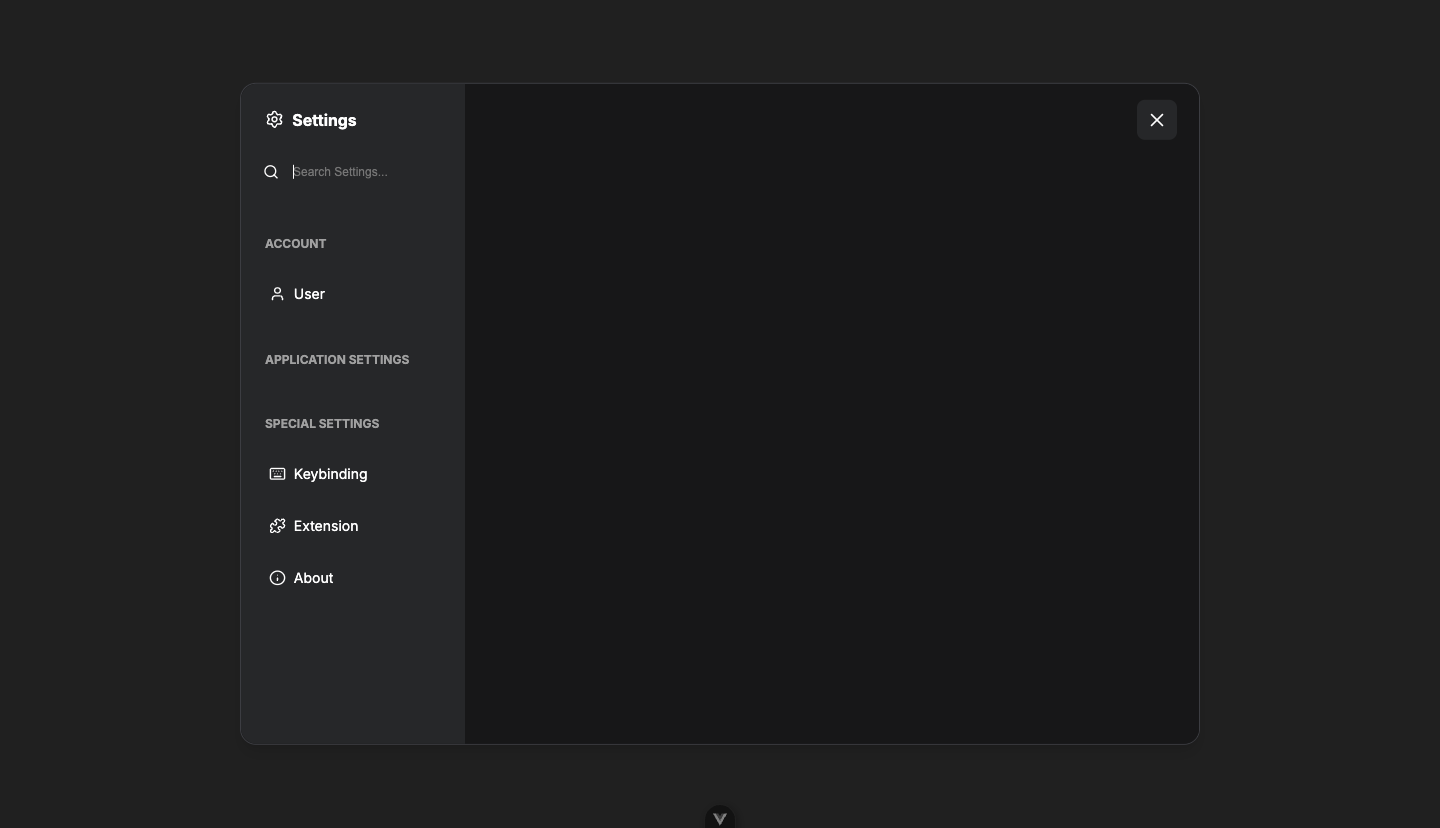 | | Keybinding panel inside the Reka Settings dialog | 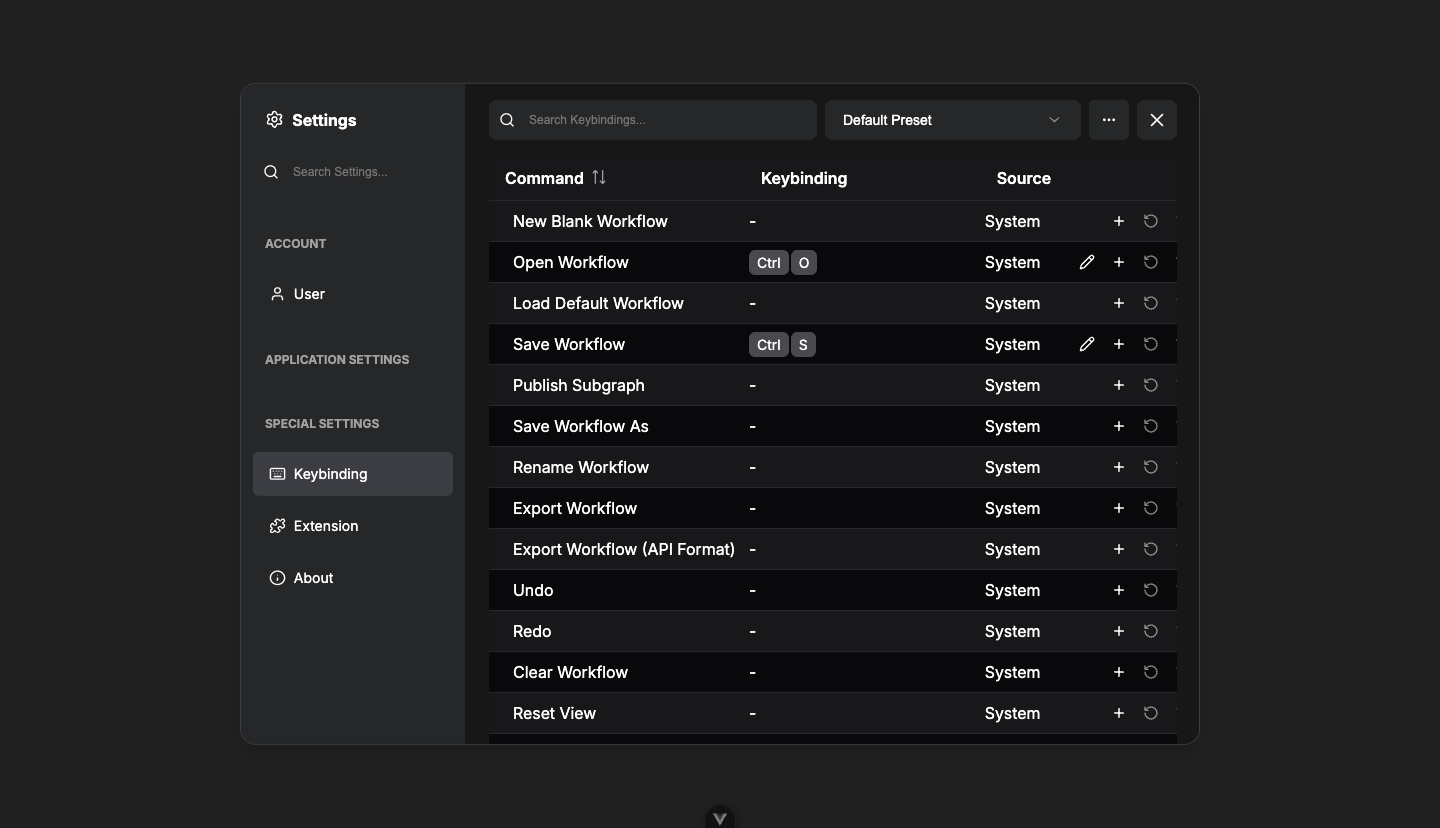 | | Nested PrimeVue **Modify keybinding** dialog stacked on top — `document.activeElement` is the `<input autofocus>`, proving the focus-trap fix | 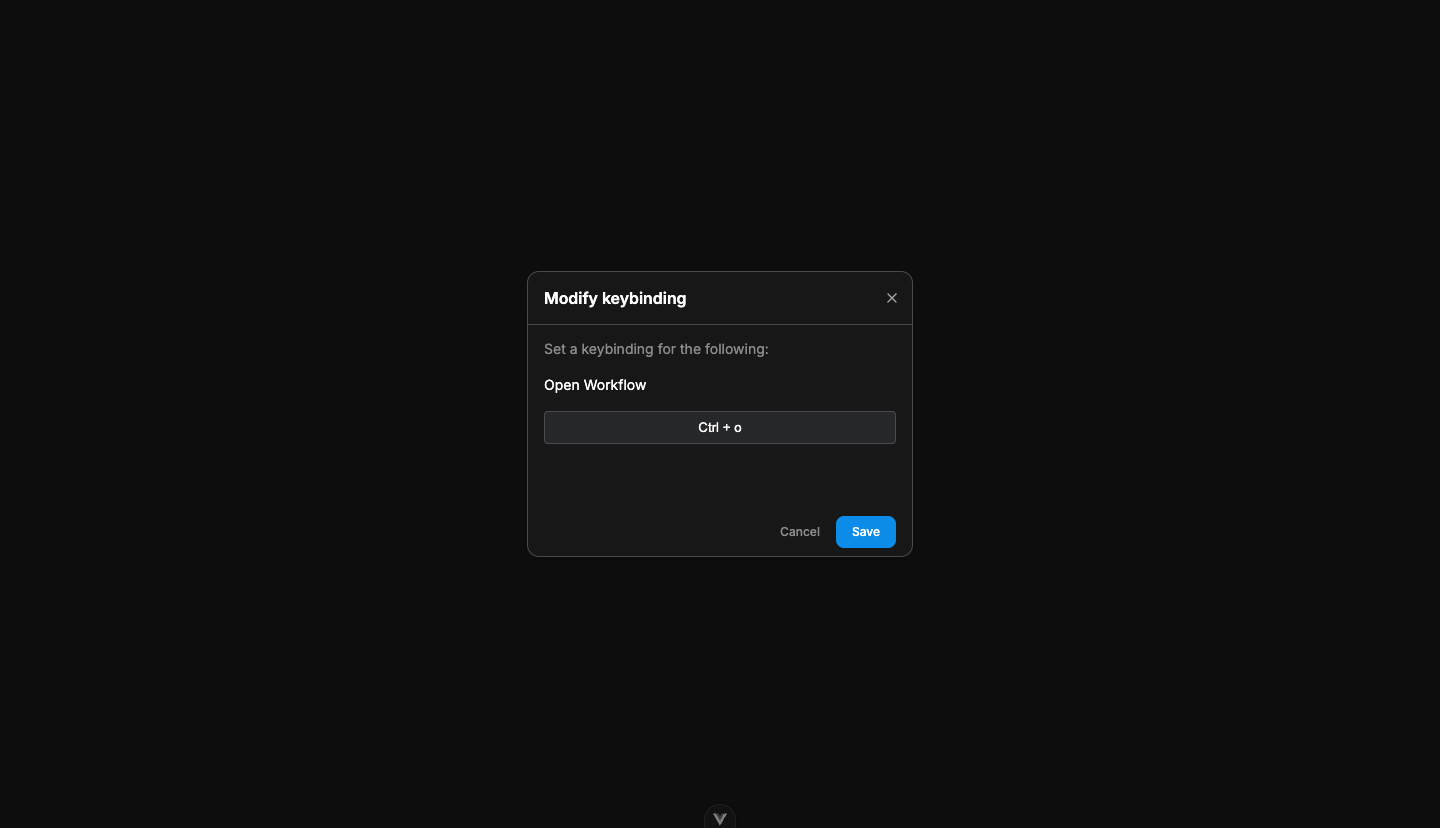 | ## Public API impact None. `useSettingsDialog().show()` keeps the same signature. Reka primitives gain optional `maximized` prop and `overlayClass` field — additive, non-breaking. ## Out of scope (later phases) - Manager dialog — Phase 4 (FE-576) — will consume the new `maximizable` affordance - `ConfirmDialog` callers — Phase 5 (FE-577) - Removing PrimeVue `Dialog`/`<style>` overrides in `GlobalDialog.vue` — Phase 6 (FE-578) ## Review focus 1. **Sizing strategy** — `contentClass` overrides Reka's default content sizing (matching the existing `BaseModalLayout size="sm"` of 960 × 80vh). Worth a designer pass per FE-575's acceptance criteria. 2. **`overlayClass: 'p-8'` workspace mode** — Reka's `DialogContent` is positioned with viewport coordinates, so overlay padding does not constrain it the way the old PrimeVue `mask.p-8` did. Cosmetic gutter only. If designer flags missing breathing room, follow-up by shrinking `contentClass` in workspace mode. 3. **`headless: true` semantics for Reka** — now skips the inner padding wrapper. Existing migrated dialogs (Phases 1–2) all set a header, so no visible impact. The Reka-headless path is new with this PR. 4. **Maximize wiring** — `toggleMaximize` mutates `item.dialogComponentProps.maximized` directly (Pinia deep-reactive proxy). The store's `onMaximize` / `onUnmaximize` callbacks are still wired for the PrimeVue path; not double-fired. ## Test plan - [x] Unit: 102/102 across touched + adjacent areas - [ ] CI: full Vitest + Playwright matrix - [ ] Manual on a backend: - Open Settings via gear icon / keyboard shortcut → renders through Reka, search works, panel navigation works, ESC closes - Open Settings → trigger a reset confirmation (stacked confirm) → confirm renders above Settings, ESC closes only the confirm - Cloud workspace mode: Settings opens with workspace panel; `overlayClass` applied - Cloud non-workspace mode: Settings opens without workspace panel; no `overlayClass` ┆Issue is synchronized with this [Notion page](https://www.notion.so/PR-12182-feat-dialog-migrate-Settings-dialog-to-Reka-UI-Phase-3-35e6d73d36508144bb4af88f83c5ab20) by [Unito](https://www.unito.io) --------- Co-authored-by: github-actions <github-actions@github.com> Co-authored-by: GitHub Action <action@github.com> |
||
|
AustinMroz
|
b89940134f |
Better preview grid tiling (#12463)
The previous image preview tiling code was less than ideal. It had fixed breakpoints based on the number of images. Outputs with many images would become comically long. This PR instead tiles images to fill the available space. | Before | After | | ------ | ----- | | <img width="360" alt="before" src="https://github.com/user-attachments/assets/e793ce65-8efc-44ca-b049-98f066a65b7d" /> | <img width="360" alt="after" src="https://github.com/user-attachments/assets/ca891ce2-335f-42ce-aeec-a99579f669c8" />| |
||
|
Christian Byrne
|
7ac1cbbd53 |
test: add E2E coverage for NE, SW, NW corner node resizing (#11408)
*PR Created by the Glary-Bot Agent*

---

## Summary

- Adds parameterized Playwright E2E tests covering all non-SE resize
corners (NE, SW, NW), closing the coverage gap in the `useNodeResize.ts`
switch statement
- Adds `resizeFromCorner()` and `getResizeHandle()` to `VueNodeFixture`
for reuse across tests
- Test cases are derived from the production `RESIZE_HANDLES` config so
they stay in sync with the actual handle definitions

## Test Groups (8 new tests)

| Group | Tests | Coverage |
|-------|-------|----------|
| Corner resize directions | NE, SW, NW — size increases and correct
edges shift | Lines 110-124, 184 |
| Opposite edge anchoring | NE, SW, NW — opposite corner stays fixed |
Position compensation end-to-end |
| Minimum size enforcement | SW width clamp (≥ MIN_NODE_WIDTH), NE
height clamp | Lines 162-176 |

## Design Decisions

**Locator-based handle discovery**: `resizeFromCorner()` finds handles
via `getByRole('button', { name: ariaLabel })` instead of coordinate
offsets. The resize handles have `opacity-0 pointer-events-auto`,
meaning they're always interactive even when visually transparent —
Playwright considers elements with `opacity: 0` as visible (it only
gates on `visibility: hidden` / `display: none` / zero-size bounding
box). If this approach turns out to be flaky in CI due to handle
discoverability, we can fall back to coordinate-based targeting
(computing offsets from the node's bounding box corners), which is what
the original SE-corner test uses.

**Parameterization from production config**: Tests import
`RESIZE_HANDLES` from `resizeHandleConfig.ts` and derive test case data
(drag direction, which axes move) from the corner name. An upfront guard
throws if any expected corner is missing from the config, preventing
silent coverage loss.

**Aria-label coupling**: `RESIZE_HANDLE_LABELS` in `VueNodeFixture`
hardcodes the English aria-label strings. This is intentional — tests
run in English locale, and aria-labels are the accessibility interface
contract. If a more stable hook is needed (e.g., `data-testid` per
handle), that can be added to `LGraphNode.vue` in a follow-up.

**Frame settlement**: `resizeFromCorner()` calls `nextFrame()` after the
mouse-up to ensure layout settles before assertions run, per
`FLAKE_PREVENTION_RULES.md`.

┆Issue is synchronized with this [Notion
page](https://www.notion.so/PR-11408-test-add-E2E-coverage-for-NE-SW-NW-corner-node-resizing-3476d73d3650818d8a5ce5d6d535b38c)
by [Unito](https://www.unito.io)

---------

Co-authored-by: Glary-Bot <glary-bot@users.noreply.github.com>
Co-authored-by: jaeone94 <89377375+jaeone94@users.noreply.github.com>
Co-authored-by: Connor Byrne <c.byrne@comfy.org>
|
||
|
Alexander Brown
|
0157b47024 |
feat(subgraph): Subgraph Link Only Promotion (ADR 0009) + migration/store hygiene (#12197)
## Summary Introduces **Subgraph Link Only Promotion** (ADR 0009) — a new model for surfacing inner subgraph widgets on the parent SubgraphNode by *promoting through links* rather than by duplicating widget state on the host. Ships with the hygiene/refactor pass on the migration, store, and event layers that the new model depends on. ## What changes ### Subgraph Link Only Promotion (ADR 0009) Promoted widgets are defined by the link from a SubgraphNode input to the interior node, not by a duplicated widget instance on the host. Consequences: - A SubgraphNode renders inner widgets purely as a **projection** of the interior widgets and links — no host-side state to drift. - **Per-host independence**: multiple instances of the same SubgraphNode render and edit their own values without cross-talk. - **Reversible promote/demote**: structural link operation, so demote preserves host slots and external connections (#12278). ### Supporting refactors - **Migration** — Planner/classifier/repair/quarantine helpers collapsed into a single `proxyWidgetMigration` entry point with black-box round-trip coverage. Honors the source-node-id disambiguator on `proxyWidgets`, so deduplicated names (e.g. `text`, `text_1`) resolve to the right interior widget. - **Widget identity** — `appMode` unified on `WidgetEntityId`; promoted widget state is keyed by entityId across the store, DOM, and migration paths. - **SubgraphNode** — 3-key promoted-view cache replaced with a single version counter + explicit `invalidatePromotedViews()` at mutation sites; `id === -1` sentinel removed. - **Events** — `LGraph.trigger()` now dispatches node trigger payloads through `this.events`, replacing a leaky `onTrigger` monkey-patch. `SubgraphEditor` reactivity is driven from subgraph events instead of imperative refresh. - **Stores** — `appModeStore` migration helpers collapsed into `upgradeAndValidateInput`; `nodeOutputStore.*ByExecutionId` derived from the locator index; `previewExposureStore` cleanup and cycle-detection double-warn fix. - **Misc** — `Outcome` types consolidated; mutable accumulators replaced with `flatMap`; new ESLint rule forbids litegraph imports under `src/world/`. ### Tests - Browser tests for promoted widgets retagged `@vue-nodes` and rewritten to assert against the rendered Vue node DOM (via `getNodeLocator` / `getByRole('textbox')` / `enterSubgraph`) instead of `page.evaluate` graph introspection. - Per-host widget independence asserted via DOM. - Migration coverage moved to black-box round-trip tests. - Added coverage for duplicate-named promoted widget identity (ADR 0009) and the per-parent demote branch in `WidgetActions`. ## Review focus - ADR 0009 conformance of the link-only promotion model. - Disambiguator resolution path in `proxyWidgetMigration`. - Single-version-counter promoted-view cache and its `invalidatePromotedViews()` call sites. - `LGraph.trigger()` event dispatch and the `AppModeWidgetList.vue` migration off `onTrigger` (FE-667 tracks the remaining `useGraphNodeManager` conversion). ## Breaking changes None for users. Internal subgraph promotion APIs changed — see ADR 0009. ┆Issue is synchronized with this [Notion page](https://www.notion.so/PR-12197-feat-subgraph-link-only-widget-promotion-migration-store-hygiene-35e6d73d365081fd882cf3a69bc09956) by [Unito](https://www.unito.io) --------- Co-authored-by: Amp <amp@ampcode.com> Co-authored-by: GitHub Action <action@github.com> Co-authored-by: github-actions <github-actions@github.com> Co-authored-by: Glary-Bot <glary-bot@users.noreply.github.com> Co-authored-by: AustinMroz <austin@comfy.org> |
||
|
AustinMroz
|
876ed502c9 |
Mock sign-in request in test (#12482)
Mock the sign in request in e2e tests to ensure tests success isn't tied to external variables. |
||
|
AustinMroz
|
c638ad194b |
Fix restoring values to dynamic combos (#12211)
`DynamicCombo`s redefined `widget.value` without going through the store. This would result in desync of state. Most noticeably, swapping to and from a workflow would break vue reactivity and cause the default option to display visually ┆Issue is synchronized with this [Notion page](https://www.notion.so/PR-12211-Fix-restoring-values-to-dynamic-combos-35f6d73d3650814ba12ccda42615239a) by [Unito](https://www.unito.io) |
||
|
AustinMroz
|
bbaaa82125 |
Fix missing value control on 'Primitive Int' (#12431)
#8505 added support for specifying default values for `control_after_generate`. Unbeknown to me, this exact same format of assigning `control_after_generate` to a string in the schema already served a function of renaming the control widget. As a result, control widgets with a default value set would use a different internal name, but due to other overlapping systems, would either have a label of `control_after_generate` or `control_before_generate`. The fix here, is incredibly simple and low scope. Instead of trying to filter control widgets by name, the dedicated `IS_CONTROL_WIDGET` symbol is used. | Before | After | | ------ | ----- | | <img width="360" alt="before" src="https://github.com/user-attachments/assets/5917e093-124a-4923-80ff-321fc0a94ef3" /> | <img width="360" alt="after" src="https://github.com/user-attachments/assets/c6d95b5a-2764-4e71-a09f-dcae5ddcfdbb" />| |
||
|
Alexander Brown
|
8d1a170136 |
feat: remove ability to create Group Nodes (#12347)
*PR Created by the Glary-Bot Agent* --- Group Nodes are a legacy feature superseded by Subgraphs. This PR removes every UI entry point for *creating* a new Group Node while keeping the loading, ungrouping, and management code intact so existing workflows that contain Group Nodes continue to load and can still be unpacked or managed. ## Removed creation entry points - `Comfy.GroupNode.ConvertSelectedNodesToGroupNode` command - `Alt+G` keybinding - "Convert to Group Node (Deprecated)" canvas and node right-click menu items (`groupNode.ts` `getCanvasMenuItems` / `getNodeMenuItems`) - "Convert to Group Node" entry in the Vue selection menu (`useSelectionMenuOptions.ts`) - Associated `MENU_ORDER` entry in `contextMenuConverter.ts` - `convertSelectedNodesToGroupNode` / `convertDisabled` helpers in `groupNode.ts` - `BadgeVariant.DEPRECATED` enum member (no remaining consumers; knip-clean) - Matching `en` locale strings in `main.json` (`contextMenu.Convert to Group Node`, `commands.Convert selected nodes to group node`) and `commands.json` (`Comfy_GroupNode_ConvertSelectedNodesToGroupNode`) - Browser-test helpers `convertToGroupNode` / `convertAllNodesToGroupNode` and the three tests that exercised the creation flow ## Preserved (intentionally) - `GroupNodeHandler`, `GroupNodeConfig`, `GroupNodeBuilder`, `ManageGroupDialog` - `beforeConfigureGraph` / `nodeCreated` hooks that load and initialize Group Nodes from saved workflows - "Manage Group Nodes" canvas menu item, the `Comfy.GroupNode.ManageGroupNodes` command, and the per-node "Manage Group Node" / "Convert to nodes" options on existing group node instances - "Ungroup selected group nodes" command + `Alt+Shift+G` keybinding so users can disassemble existing group nodes in legacy workflows - Reduced `browser_tests/tests/groupNode.spec.ts` covering surviving behaviors: workflow loading (legacy `/` separator, hidden-input config, v1.3.3 fixture), copy/paste of already-loaded group nodes across workflows, and opening the Manage Group Node dialog ## Verification - `pnpm typecheck` clean - `pnpm typecheck:browser` clean - `pnpm format` clean - `pnpm knip` clean (no new findings; pre-existing flac.ts tag warning unchanged) - `pnpm test:unit` — 796 files, 10,789 tests pass (8 pre-existing skipped); includes a regression test in `useSelectionMenuOptions.test.ts` asserting the Vue selection menu no longer offers a Convert to Group Node option - Pre-commit hooks (oxfmt, oxlint, eslint, typecheck, typecheck:browser) passed - Manual verification against a live dev server: programmatically inspecting the GroupNode extension showed `getCanvasMenuItems` returns only `[Manage Group Nodes]`, `getNodeMenuItems` returns `[]`, and the `ConvertSelectedNodesToGroupNode` command + Alt+G keybinding are absent from the registries. Visually captured the node right-click menu (attached screenshot) — "Convert to Subgraph" remains, no "Convert to Group Node" entry - Browser E2E suite not executed locally (sandbox has no GPU and Playwright requires a full backend; the reduced spec will run in CI) - Non-English locales not modified — per `src/locales/CONTRIBUTING.md` they are regenerated by CI ## Notes for reviewers - This is a surgical removal of creation only; loading any older workflow that already contains group nodes will continue to work. - If you'd like to also remove the management UI (`Manage Group Nodes` command/menu/dialog) or the ungroup command in a follow-up, happy to open a separate PR. ## Screenshots 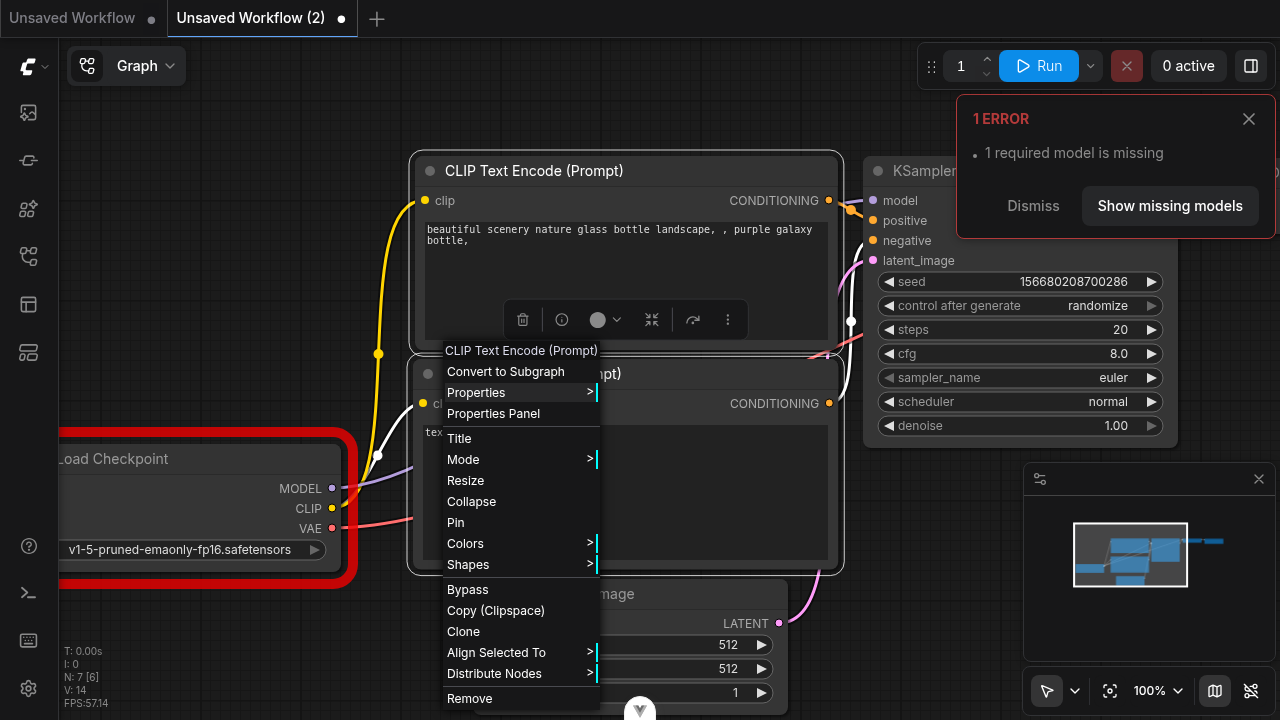 ┆Issue is synchronized with this [Notion page](https://www.notion.so/PR-12347-feat-remove-ability-to-create-Group-Nodes-3656d73d365081d488bfd98ffd7545c0) by [Unito](https://www.unito.io) --------- Co-authored-by: Glary-Bot <glary-bot@users.noreply.github.com> Co-authored-by: github-actions <github-actions@github.com> Co-authored-by: Amp <amp@ampcode.com> |
||
|
AustinMroz
|
fb5b4a62ba |
Fix mask editor sometimes showing wrong image (#12413)
Mask editor checks `node.images` to determine the image which is edited. If the user generates an output image in litegraph mode, swaps to vue mode, then generates a new image, the mask editor will incorrectly display the image last shown in litegraph mode. This is resolved by having `syncLegacyNodeImgs` also synchronize node outputs to `node.images`. |
||
|
Dante
|
d405002127 |
fix(widgets): collapse duplicate COLOR widget rendering on Color to RGB Int (FE-842) (#12447)
## Summary Fix the duplicate \`<WidgetColorPicker>\` rendering on the \`Color to RGB Int\` node (and any other COLOR-using V3 node that the runtime double-registers a widget for). <img width="480" alt="after-fix-dedupe-proof" src="https://github.com/user-attachments/assets/5c801806-ed5d-493f-92b6-e0b99dd8e408" /> ## Changes - **What**: - \`useProcessedWidgets.getWidgetIdentity\`: fall back to the host \`nodeId\` parameter for the dedupe identity root when neither \`storeNodeId/widget.nodeId\` nor \`sourceExecutionId\` is set. Normal root-graph widgets now dedupe identically to promoted/execution-scoped widgets, so any duplicate same-name+same-type widget collapses to one render. \`sourceExecutionId\` precedence is preserved. - \`useColorWidget\`: read top-level \`default\` from the V2 spec (falls back to nested \`options.default\` for hand-authored V2 specs), and short-circuit if a same-name color widget already exists on \`node.widgets\` so a second \`addWidget('color', …)\` call from upstream hooks (or a \`configure\` round-trip) no longer duplicates the row. - **Tests**: - New \`useColorWidget.test.ts\` covers top-level default, nested-options fallback, no-default fallback, and the idempotency guard. - \`useProcessedWidgets.test.ts\` gets a regression case for two identical color widgets on the same node collapsing to one render, plus an updated \`getWidgetIdentity\` case for the host-nodeId fallback. ## Review Focus - \`getWidgetIdentity\` precedence change. The fallback only fires when none of \`storeNodeId\`, \`widget.nodeId\`, or \`sourceExecutionId\` are present, so promoted/exec-scoped widgets (incl. the \"unresolved same-name promoted entries distinct by source execution identity\" \`NodeWidgets\` test) are unaffected. - \`useColorWidget\` idempotency guard is defensive — the root cause of the second \`addWidget\` call (cloud-only hook or persisted \`info.widgets\` configure round-trip) is not in this diff; that's tracked separately. Fixes [FE-842](https://linear.app/comfyorg/issue/FE-842/color-to-rgb-int-node-shows-duplicate-color-widgets) |
||
|
pythongosssss
|
abd233d10d |
feat: default search to essentials when graph is empty (#12377)
## Summary Currently, when opening node search on an empty graph, the default view shows "Most Relevant" nodes, which includes nodes like CLIP and VAE. For users building from scratch, these nodes are not necessarily the most helpful starting point. ## Changes - **What**: - Update default mode to Essentials when graph is empty ┆Issue is synchronized with this [Notion page](https://www.notion.so/PR-12377-feat-default-search-to-essentials-when-graph-is-empty-3666d73d3650816d9d5ae3ed602a30ec) by [Unito](https://www.unito.io) |
||
|
jaeone94
|
91d2df45a1 |
Fix V2 draft lifecycle persistence (#12269)
## Summary This PR fixes the remaining FE-367 workflow persistence gap by moving the workflow draft lifecycle callers from the legacy V1 draft store to `workflowDraftStoreV2`, following the core design from #10367 while omitting unrelated changes. It keeps the change focused on saved workflow tab restore and V2 draft lifecycle behavior: - save active workflow drafts through V2 before loading a new graph - load, save, save-as, close, rename, and delete workflows against V2 draft storage - prefer a fresh V2 draft when loading a saved workflow, and discard stale drafts when the remote workflow is newer - restore saved open tabs from persisted tab state instead of letting stale active-path state win - preserve V2 draft payload timestamps when moving or refreshing draft recency - remove the now-unused V1 draft store/cache implementation instead of suppressing knip; the raw V1 on-disk migration path remains for existing users Co-authored-by: xmarre <xmarre@users.noreply.github.com> ## Test coverage Added unit coverage for V2 draft load, stale draft discard, rename/close lifecycle cleanup, tab restore ordering, metadata-load waiting/fallback, draft recency updates, quota eviction retry, and persistence-disabled reset behavior. Updated the workflow persistence composable tests to use a real `vue-i18n` plugin host instead of mocking `vue-i18n`. Added an E2E regression test that saves two workflows, edits an inactive saved tab draft, makes the active-path pointer stale, reloads, and verifies the saved tab order, active tab, and inactive draft restoration. ## Validation - `pnpm format` - `pnpm lint` - `pnpm typecheck` - `pnpm test:unit` - pre-push `pnpm knip` (passes with the existing flac tag hint) ┆Issue is synchronized with this [Notion page](https://www.notion.so/PR-12269-Fix-V2-draft-lifecycle-persistence-3606d73d365081b4a84feb1696ed88bb) by [Unito](https://www.unito.io) --------- Co-authored-by: xmarre <xmarre@users.noreply.github.com> |
||
|
AustinMroz
|
ee286291d4 |
Fix reactivity on matchType output slots (#12397)
Relevant: #9935. A PR claimed to solve the same issue (and was approved by me), but the issue persists. Even when checking out that exact commit, the issue does not appear affected. This PR is somewhat heavier. It converts the outputs into shallowReactive. Since there is no individual moment of registration for outputs, this conversion happens on type change and leverages that calling `shallowReactive` on a shallow reactive is low cost and reflexive. It also adds a test to ensure that regression can not happen in the future. | Before | After | | ------ | ----- | | <img width="360" alt="before" src="https://github.com/user-attachments/assets/3e4f4a0a-906f-4539-95b6-b2e80de7ceff" /> | <img width="360" alt="after" src="https://github.com/user-attachments/assets/1a29ac66-ed5e-4874-82dc-ce9f6135dea5" />| |
||
|
pythongosssss
|
b3ba6c9344 |
fix: select node after adding from library (#12404)
## Summary When adding a node from the library sidebar, the node was not correctly selected upon placing it. This was due to the canvas capturing the node under the cursor on mouse down, however the node had not yet been comitted to the graph at that point, and so selection was then cleared on mouse up. ## Changes - **What**: - add `blockCommitPointerDown` so if the cursor is over the canvas stop propagation to prevent LiteGraph adding the mouse handler to clear the selection ## Review Focus Alternative approaches considered were blocking the event in endDrag however this then required manual cleanup of LiteGraph handlers or overriding the `pointer.onClick` function to force selection of our node, both felt worse than this approach. ## Screenshots (if applicable) https://github.com/user-attachments/assets/a2eb154e-5178-4a1e-b5c7-884efd7a10c6 |
||
|
AustinMroz
|
a50b3d16da |
Persist splash until graph load completes (#12387)
When an app mode workflow is opened on fresh page load, either from a template url, or a persisted in browser cache, the UI would briefly display the graph view prior to swapping to app mode. This is fixed by continuing to display the splash screen until workflow state has loaded. Share by url brings unique difficulties. The function call does not return until a user has responded to a dialogue. If the splash screen were blocked by this, the user would never be able to see the dialogue. Consequentially, this change is not applied to shared workflow urls and the (very unlikely) url including both a template url and a share url will now prioritize the template url. A best effort e2e test is included, but is a little clunky. ┆Issue is synchronized with this [Notion page](https://www.notion.so/PR-12387-Persist-splash-until-graph-load-completes-3666d73d3650813495e4ccad6052c1e4) by [Unito](https://www.unito.io) |
||
|
AustinMroz
|
3ce0c07af2 |
Use utility function to add node with V2 search (#12382)
Default search box settings are a little inconvenient to work with. This PR introduces a new `addNode` utility function to the V2 search fixture that handles all the steps of opening search and adding a node that a user would perform. It then migrates several PRs I have recently written to use this new fixture. See also #12029 ┆Issue is synchronized with this [Notion page](https://www.notion.so/PR-12382-Use-utility-function-to-add-node-with-V2-search-3666d73d3650817c8c73c9104b1113bf) by [Unito](https://www.unito.io) |
||
|
jaeone94
|
f1f65cff61 |
feat: select top asset widget FormDropdown result on Enter (#12209)
## Summary Allow asset/media FormDropdown searches to select the top filtered result when the user presses Enter. This covers image, video, audio, mesh, model-like asset selects, and other `WidgetSelectDropdown`-backed media widgets. ## Implementation Scope This PR implements a **top-result Enter shortcut** for the custom asset/media dropdown path only: - In scope: `WidgetSelectDropdown` -> `FormDropdown` asset/media widgets. - In scope: while the dropdown is open, single-select, and the search text is non-empty, the first current search result becomes the Enter candidate. - In scope: pressing Enter in the search input selects that candidate/top result through the existing selection path. - In scope: candidate feedback for this shortcut, including visual candidate styling and a polite screen-reader announcement for the current top result. - In scope: stale async search protection, empty-query/no-result no-op behavior, multi-select guard behavior, and focus return to the trigger after Enter selection closes the menu. - Out of scope: plain combo widgets (`WidgetSelectDefault` / `SelectPlus`). That path is PrimeVue-based and should be handled separately from this focused asset-widget PR. - Out of scope: full combobox/listbox keyboard navigation, including Tab-to-list focus, ArrowUp/ArrowDown candidate movement, Home/End behavior, scroll-to-active-item behavior, and a full ARIA combobox/listbox refactor. Follow-up arrow-key navigation should validate the interaction model separately. This PR keeps the candidate state narrow and localized so that future work can either extend it into movable active-item state or replace it as part of a fuller combobox/listbox implementation. ## Changes - **What**: Added an explicit Enter event from `FormSearchInput`, routed it through the FormDropdown menu actions, and selected the current top search result in `FormDropdown`. - **What**: Kept the existing `computedAsync` + debounced filtering path for normal typing, while Enter performs a one-off search against the latest input before selecting. Stale async Enter results are ignored if the query or item source changes before resolution. - **What**: Prevented closed FormDropdown state from treating the full unfiltered list as current search results, limited Enter-to-select to single-select dropdowns, and made empty search Enter a no-op. - **What**: Returned focus to the dropdown trigger after single-select selection closes the menu. - **What**: Added candidate styling for the first current FormDropdown result while a search query is active so the Enter target is visible to users. - **What**: Added a polite screen-reader announcement for the current top result candidate. - **What**: Fixed the FormDropdownMenuActions `baseModelSelected` model default to use a `Set` factory instead of a shared instance. - **What**: Added unit coverage for the search Enter event, FormDropdown selection behavior, focus return, debounce/Enter behavior, stale async Enter protection, empty-query no-op behavior, closed-state stale result protection, multi-select guard behavior, and candidate announcement behavior. Added App Mode E2E coverage for asset FormDropdown Enter selection. - **What**: Extracted reusable app-mode dropdown fixture helpers and updated the existing FormDropdown clipping test to use the shared helper. ## Review Focus Please focus review on the asset/media FormDropdown path, especially `getTopSearchResult()`, the single-select/empty-query guards, stale async search protection, trigger focus return after selection, and candidate feedback in grid/list layouts. The plain combo path and full arrow-key navigation are intentionally left for separate follow-up work. ## Screenshots (if applicable) https://github.com/user-attachments/assets/3eb3456d-93a3-4959-91a3-188f8116ccc9 Validation performed: - Latest final-commit validation: - `pnpm test:unit src/renderer/extensions/vueNodes/widgets/components/form/FormSearchInput.test.ts src/renderer/extensions/vueNodes/widgets/components/form/dropdown/FormDropdown.test.ts src/renderer/extensions/vueNodes/widgets/components/form/dropdown/FormDropdownMenuActions.test.ts src/renderer/extensions/vueNodes/widgets/components/form/dropdown/FormDropdownMenu.test.ts` - Commit hook: `pnpm exec stylelint ...`, `pnpm exec oxfmt --write ...`, `pnpm exec oxlint --type-aware --fix ...`, `pnpm exec eslint --cache --fix ...`, `pnpm typecheck` - Push hook: `pnpm knip --cache` - `git diff --check` - Earlier branch validation for this flow: - `pnpm install` - `pnpm typecheck:browser` - `PLAYWRIGHT_LOCAL=1 PLAYWRIGHT_TEST_URL=http://localhost:5173 PLAYWRIGHT_SETUP_API_URL=http://localhost:8188 pnpm test:browser -- --project=chromium browser_tests/tests/appMode.spec.ts -g "Drag and Drop|FormDropdown search Enter selects the top filtered item" --reporter=list` - `PLAYWRIGHT_LOCAL=1 PLAYWRIGHT_TEST_URL=http://localhost:5173 PLAYWRIGHT_SETUP_API_URL=http://localhost:8188 pnpm test:browser -- --project=chromium browser_tests/tests/appMode.spec.ts -g "FormDropdown search Enter selects the top filtered item" --reporter=list` - `PLAYWRIGHT_LOCAL=1 PLAYWRIGHT_TEST_URL=http://localhost:5173 PLAYWRIGHT_SETUP_API_URL=http://localhost:8188 pnpm test:browser -- --project=chromium browser_tests/tests/appModeDropdownClipping.spec.ts -g "FormDropdown popup is not clipped" --reporter=list` |
||
|
Benjamin Lu
|
d472ca783b |
test: cover FE-130 assets sidebar route mocks (#12332)
## Summary Adds a focused FE-130 assets sidebar browser-test slice without extending the stateful asset helper path. ## Changes - **What**: Extends `jobsRouteFixture` with job-detail and history-delete helpers for generated asset flows. - **What**: Adds an assets sidebar tab spec covering generated/imported rendering, preview opening, generated selection footer actions, and explicit delete refresh behavior. ## Review Focus The delete test keeps backend state explicit: it captures the `/api/history` request, then replaces the `/api/jobs` history mock with the post-delete response. The imported-file and `/api/view` mocks stay local to this focused spec instead of growing `AssetHelper` or adding a sidebar-specific fixture. |
||
|
AustinMroz
|
2717d59451 |
Fix reactivity of vue subgraph price badges (#12029)
When a subgraph contains partner nodes with price badges, those badges are also displayed on the subgraphNode. The reactivity here was spotty: The price badges would fail to display unless the user had navigated into the subgraph on the current page load. Fixing this is performed in 2 steps: - Firing a `node:property:changed` event when the badges contained in a subgraph are updated - Extending the reactivity updates so that badges update in vue mode despite using the litegraph badge getter. This PR also includes a minor styling tweak to fix text alignment on price badges | Before | After | | ------ | ----- | | <img width="360" alt="before" src="https://github.com/user-attachments/assets/56a95cbe-12c9-43b0-8664-34e52b6415ac" /> | <img width="360" alt="after" src="https://github.com/user-attachments/assets/bf4a0d81-21e4-4afc-946e-eba5967f1715" />| Resolves FE-346 ┆Issue is synchronized with this [Notion page](https://www.notion.so/PR-12029-Fix-reactivity-of-vue-subgraph-price-badges-3586d73d3650813cb12fe265090940e4) by [Unito](https://www.unito.io) |
||
|
AustinMroz
|
d63b0f05bf |
Subgraph io fixes (#12281)
Fixes 3 different bugs when making links to and from subgraph IO from vue nodes - When dragging a link from a node to a subgraph IO, there is no feedback if a slot is not a valid connection target or if a slot is actively hovered - When a link is made from a subgraph IO to a node, the reactivity is not triggered on the node to indicate a change of link state. - When dragging a link from a subgraph IO to a node, the link would not snap to the valid connection targets on nodes - The fix for this one is not as thorough as I would like. It only allows connections to the slot, not connections to the hovered widget. We have two deeply disconnected linking systems and properly reconciling them would be a multi-week project. Resolves FE-561 ┆Issue is synchronized with this [Notion page](https://www.notion.so/PR-12281-Subgraph-io-fixes-3606d73d365081089f7ef19331c6d70a) by [Unito](https://www.unito.io) |
||
|
AustinMroz
|
a95e53bf6d |
On subgraph conversion, always unpack group nodes (#12356)
This is a targeted small scope change to improve the availability for converting group nodes into a subgraph. The prior implementation would only apply on the litegraph context menu option for converting a node to a subgraph. It failed to apply on any of the other more common methods. The code for unpacking group nodes has been moved directly into the setup for converting a group of nodes into a subgraph and drastically simplified. Of note, several other long lived bugs were found while working on this fix, but they are out of scope for this targeted PR. ┆Issue is synchronized with this [Notion page](https://www.notion.so/PR-12356-On-subgraph-conversion-always-unpack-group-nodes-3666d73d365081d09774c00a851b8198) by [Unito](https://www.unito.io) |
||
|
jaeone94
|
98a8a614e8 |
fix: avoid false missing media errors after importing shared workflow assets (#12333)
## Summary Import published media assets for shared workflows before loading the graph so the first missing-media scan sees the user's newly imported references instead of surfacing a false missing asset error. cc FE-773 ## Changes - **What**: Moves the shared workflow import step ahead of `loadGraphData` for the copy-and-open flow, while still allowing the workflow to open with a warning path if asset import fails. - **What**: Clears the shared workflow URL intent consistently on failure paths, including graph load failure after an import attempt, so reloads do not repeatedly replay the same shared workflow side effects. - **What**: Invalidates the input asset cache after published asset import so graph loading and missing-media resolution can observe the refreshed media state. - **What**: Adds a global loading spinner while shared workflow asset import and graph load are in progress, with `role="status"`, `aria-live`, reduced-motion-safe animation, and body teleporting so it stays visible above blocking UI. - **What**: Adds stable TestIds for the shared workflow dialog and updates existing shared workflow E2E selectors away from copy-dependent role text. - **What**: Adds a cloud E2E regression fixture and spec covering the critical flow: shared URL opens the dialog, the user confirms asset import, published media is imported before the public-inclusive input asset scan, the workflow loads, the share query is removed, and missing media UI is not surfaced. - **Breaking**: None. - **Dependencies**: None. ## Root Cause Shared workflow graph loading triggered the missing-media pipeline before the user-selected published media import had completed. Because `include_public=true` does not include published assets, the pre-import scan could classify shared media as missing even when the user was about to import those assets into their own library. ## Review Focus - The ordering in `useSharedWorkflowUrlLoader`: import published assets first, then load the graph, while keeping import failure non-fatal for workflow opening. - The failure cleanup behavior: the shared URL/preserved query intent is now cleared for graph load failures too, avoiding repeated reload-triggered imports. - The spinner behavior in `App.vue`: it uses the existing `workspaceStore.spinner` boolean and intentionally keeps broader ref-counted spinner ownership as follow-up work. - The E2E sentinel in `sharedWorkflowMissingMedia.spec.ts`: it asserts no public-inclusive input asset scan occurs before `/api/assets/import`, then waits for a settling window to ensure the missing-media overlay does not appear. ## Validation - `pnpm format` - `pnpm lint` (passed with existing unrelated warnings only) - `pnpm typecheck` - `pnpm test:unit` - Commit hook: lint-staged formatting/linting, `pnpm typecheck`, `pnpm typecheck:browser` - Push hook: `pnpm knip --cache` (passed with existing tag hint only) ## Follow-Up - Consider a ref-counted or scoped global spinner API so long-running flows do not directly toggle `workspaceStore.spinner`. - Consider separating shared workflow load status into orthogonal result fields instead of encoding partial success in a single string union. - Consider moving published asset import/cache invalidation behind an asset-service-owned API boundary. - Backend follow-up remains needed for `include_public=true` not including published assets; this PR only removes the frontend false positive when the user explicitly imports the shared media. ## Screenshots Before https://github.com/user-attachments/assets/dc790046-237c-4dd8-b773-2507f9a66650 After https://github.com/user-attachments/assets/6517cd38-2c3d-4bfe-a990-35892b7e50ae https://github.com/user-attachments/assets/d89dc3d3-75d9-4251-998b-0c354414e25b ┆Issue is synchronized with this [Notion page](https://www.notion.so/PR-12333-fix-avoid-false-missing-media-errors-after-importing-shared-workflow-assets-3656d73d365081b38634dcb7625cfc32) by [Unito](https://www.unito.io) |
||
|
Benjamin Lu
|
64c75bfce5 |
test: avoid job history double setup (#12324)
## Summary Avoid a second `comfyPage.setup()` in the job history browser tests by registering the initial jobs route mocks before the normal page boot. ## Changes - **What**: Adds an `initialJobsScenario` Playwright option with an auto fixture for the job-history spec, moves QPOV2 setup into `initialSettings`, and keeps the sidebar helper focused on UI navigation. - **Dependencies**: None ## Review Focus Confirm the auto fixture ordering matches the intended browser-test setup: initial `/api/jobs` mocks should be installed before the `comfyPage` fixture performs its normal setup. ┆Issue is synchronized with this [Notion page](https://www.notion.so/PR-12324-test-avoid-job-history-double-setup-3656d73d365081778e24c11d3b65cbef) by [Unito](https://www.unito.io) |
||
|
Dante
|
3b37488eee |
fix: keep node context menu overflow visible when content fits (#12035)
## Summary Stops the Shape submenu (and any other PrimeVue nested submenu) from being clipped behind the node context menu when the menu fits in the viewport. ## Changes - **What**: `constrainMenuHeight` in `NodeContextMenu.vue` now applies `max-height` + `overflow-y: auto` to the root `<ul>` only when `scrollHeight > availableHeight`. The common case keeps `overflow: visible`. - Added `browser_tests/tests/nodeContextMenuShapeSubmenu.spec.ts` regression spec. ## Review Focus Root cause: setting only `overflow-y: auto` on a `<ul>` coerces `overflow-x` to a non-visible value per CSS spec (`If one of overflow-x/overflow-y is visible and the other isn't, the visible value is computed as auto`). PrimeVue `ContextMenuSub` renders submenus in-tree as a nested `<ul>` with `position: absolute; left: 100%`, so the implicit horizontal clip hides them entirely. The pre-existing overflow scenario (#10824 / #10854) is unchanged — when the menu actually overflows, the clamp still applies and `nodeContextMenuOverflow.spec.ts` continues to verify scroll. Submenu clipping in that overflow case is a known limitation, not introduced by this PR. Fixes FE-570 ## screenshot ### AS IS <img width="788" height="505" alt="Screenshot 2026-05-07 at 12 43 26 PM" src="https://github.com/user-attachments/assets/36d34070-0c57-4385-a130-0394f22f282e" /> ### TO BE <img width="779" height="627" alt="Screenshot 2026-05-07 at 12 42 44 PM" src="https://github.com/user-attachments/assets/00956729-763b-4787-822f-209e8ea42331" /> ┆Issue is synchronized with this [Notion page](https://www.notion.so/PR-12035-fix-keep-node-context-menu-overflow-visible-when-content-fits-3586d73d365081ad9aaec82f220d401c) by [Unito](https://www.unito.io) --------- Co-authored-by: GitHub Action <action@github.com> |
||
|
jaeone94
|
fc7e6a0935 |
fix(terminal): resync logs console on backend reconnect (#12270)
## Summary When the built-in logs terminal stayed open during a backend restart, the buffer froze on pre-restart entries and live log streaming silently stopped — only closing and reopening the panel resynced. Listen for the api `reconnected` event and rebuild the terminal contents the same way a fresh open would. ## Changes - **What**: - Extract `useLogsTerminal` composable. The SFC is now a thin shell holding `terminal: shallowRef<Terminal>` and forwarding to the composable, so `onMounted`/`onScopeDispose` no longer rely on the child's emit callback timing. - Subscribe to `api`'s `reconnected` event via `useEventListener`, registered synchronously before any awaits. On reconnect: `terminal.reset()` → refetch raw logs → `scrollToBottom()` → `subscribeLogs(true)` (the backend loses the per-client subscription on restart, so re-subscribe is required for live streaming to resume). - Wrap in-flight resync/mount fetches in AbortControllers. Overlapping reconnects abort the prior resync, and unmount mid-fetch suppresses writes to the disposed xterm. - Hide BaseTerminal whenever `errorMessage` is set so the error layout doesn't expose an empty xterm container behind the message; `loading=false` after both load failure and resync success so a later successful reconnect can clear a stuck spinner. - Migrate the load/resync error strings to vue-i18n (`logsTerminal.loadError`, `logsTerminal.resyncError`). ## Review Focus - **Re-subscribe is the non-obvious half of the fix** — without it, even after the WebSocket reconnects the backend never resumes streaming logs to this client because its subscription state was wiped on restart. The visible "stale buffer" is only one symptom; the silent "no new logs" symptom needed the explicit `subscribeLogs(true)` re-call in resync. - `terminal.reset()` lives after a successful raw-logs fetch (not before) so a failed resync leaves the prior buffer visible instead of blanking it; resync errors surface via the same inline error message the mount path uses. - 8 unit tests around the composable: mount + subscribe, resync ordering (reset → write → scroll → subscribe via `invocationCallOrder`), in-flight resync abort on double reconnect, resync error surfacing, mount-failure-then-recovery, unmount-mid-fetch terminal-write suppression, listener cleanup on unmount. - 2 E2E tests using `ws.close()` on the proxied WebSocket as the reconnect trigger and `subscribeLogs` HTTP fetch count as the sync point (same pattern as `wsReconnectStaleJob.spec.ts`). Red-checked: disabling the `reconnected` listener fails exactly the two new tests, all 8 pre-existing tests stay green. Fixes FE-712 ## Screenshots Before - (After rebooting, the console window does not update from its state before the reboot must remount the console window for it to resync.) https://github.com/user-attachments/assets/b1e49c2c-89a4-4a4a-82b4-064412acee12 After - (The console window syncs automatically after a reboot.) https://github.com/user-attachments/assets/54b582c5-ad42-41c0-9886-18f4495859da ┆Issue is synchronized with this [Notion page](https://www.notion.so/PR-12270-fix-terminal-resync-logs-console-on-backend-reconnect-3606d73d3650812fb13fd1934c632344) by [Unito](https://www.unito.io) |
||
|
Benjamin Lu
|
a97f46b497 |
test: cover job history sidebar with typed route mocks (#12272)
## Summary Add the first product-area browser coverage on top of the merged typed route mock foundation: the docked job history sidebar. ## Changes - **What**: Adds `browser_tests/tests/sidebar/jobHistory.spec.ts` using `jobsRouteFixture`. - **What**: Covers direct sidebar entry, docked QPO history entry, terminal history jobs, active queue jobs, tab filtering, search, clear queue, and clear history. - **What**: Adds typed `POST /api/queue` and `POST /api/history` route helpers that validate request bodies with generated zod schemas. - **What**: Adds stable test ids for the job history sidebar and queue progress overlay so tests avoid structural CSS selectors. - **Dependencies**: Builds on the typed route mock foundation merged in #12267. ## Review Focus Review the product assertions and whether this is the right first coverage slice on top of the typed route mock foundation. This PR intentionally avoids asset sidebar and floating QPO lifecycle coverage; those should remain follow-up PRs. ## Screenshots (if applicable) Not applicable. ┆Issue is synchronized with this [Notion page](https://www.notion.so/PR-12272-test-cover-job-history-sidebar-with-typed-route-mocks-3606d73d3650817481d5f9fac4bfc93c) by [Unito](https://www.unito.io) |
||
|
Benjamin Lu
|
3e31de5bbb |
test: migrate MaxHistoryItems browser coverage (#12298)
## Summary Migrates the MaxHistoryItems browser coverage to the accepted jobs route fixture pattern. ## Changes - **What**: Composes `jobsRouteFixture` into the queue settings spec and removes the old `AssetsHelper` route setup. - **What**: Adds a `responseLimit` option to `jobsRouteFixture` so tests can match a requested history limit while intentionally returning more jobs. - **Dependencies**: None. ## Review Focus The key behavior is preserving both FE-501 acceptance cases: `/api/jobs` still receives the configured `limit`, and the queue panel still caps rendered history even if the mocked backend returns more rows than requested. Fixes FE-501 ## Screenshots (if applicable) Not applicable. ┆Issue is synchronized with this [Notion page](https://www.notion.so/PR-12298-test-migrate-MaxHistoryItems-browser-coverage-3616d73d365081d6bf77fb205fcd51d4) by [Unito](https://www.unito.io) |
||
|
jaeone94
|
0558740c78 |
refactor: migrate default combo widget select to Reka (#12288)
## Summary Migrate the default combo widget select from the PrimeVue `SelectPlus` wrapper to a Reka `Combobox` implementation while preserving the existing Comfy combo widget contract and the node-canvas dropdown behavior. ## Changes - **What**: Rewrites `WidgetSelectDefault.vue` on top of Reka `ComboboxRoot`, `ComboboxTrigger`, `ComboboxInput`, `ComboboxContent`, and `ComboboxItem`. - **What**: Preserves the default combo widget surface: `v-model`, `widget` prop, `aria-label` from the widget name/label, `data-capture-wheel`, disabled state, placeholder/filter placeholder, default slot controls, invalid current value display, array values, dynamic/factory values, and `getOptionLabel` fallback behavior. - **What**: Keeps dynamic `values` compatibility by refreshing function-backed options when the dropdown opens, without re-evaluating the factory on every search keystroke. - **What**: Deletes the now-unused PrimeVue `SelectPlus.vue` wrapper and removes the PrimeVue test plugin/stub path from the default widget select tests. - **What**: Updates App Mode dropdown clipping coverage and combo-widget browser coverage to target the new Reka overlay/viewport structure. - **Breaking**: No breaking change is intended for the documented Comfy combo widget contract. This migration does not preserve incidental PrimeVue `Select` prop pass-through from `widget.options`; that was a side effect of wrapping PrimeVue rather than a stable widget API. - **Dependencies**: No new dependencies. ## Review Focus ### Compatibility choices The goal of this PR is a migration PR, not a broad behavior redesign. The new implementation keeps the Comfy-specific combo contract rather than attempting to emulate PrimeVue internals. In particular: - `values` still accepts arrays and functions, and function values are re-read on open to support dynamic/custom node option sources. - `getOptionLabel(value) || value` is intentionally preserved to match the sibling dropdown path and avoid turning an empty-string label into a blank rendered option. - Invalid/current values that are not present in the option list are still rendered in the trigger instead of disappearing. - `WidgetWithControl` continues to render its default slot in the control area, with trigger text truncation preserved. - App Mode `OverlayAppendToKey='body'` continues to map to a body portal to avoid panel clipping. ### Visual alignment and screenshot updates The previous PrimeVue implementation passed `size="small"`, which injected internal `.p-select-sm .p-select-label` styling. That internal PrimeVue style used its own small-select font size and padding, overriding the surrounding widget sizing intent and making the select trigger subtly taller with slightly larger text than nearby inline node widget controls. The Reka implementation intentionally keeps the normal widget styling path instead of recreating that PrimeVue-specific internal override. This means the trigger follows the same inline widget sizing direction as neighboring controls rather than preserving the incidental PrimeVue height/text-size delta. Because this is an expected visual difference from the migration, the affected E2E screenshots should be recaptured instead of treating the old PrimeVue select height as the target. ### Scrollbar and focus behavior Reka provides the combobox/listbox semantics we want, including search, arrow navigation, highlighted items, and Enter selection. The tricky part is the canvas dropdown scrollbar behavior. The native Reka viewport path hides/owns scrollbar behavior in a way that made it hard to preserve the previous widget dropdown affordances, especially visible scrollbars and mouse wheel capture over the node canvas. To keep the previous behavior, this PR renders a dedicated scrollable viewport inside `ComboboxContent` with the project scrollbar utilities (`scrollbar-thin`, stable gutter, transparent track). That preserves visible scroll affordance and allows wheel events over the dropdown to scroll the list instead of zooming the canvas. There was one Reka interaction to account for: pressing the native scrollbar can be treated as a focus-outside event from the search input, which previously closed the dropdown on mouse down or caused subsequent wheel events to leak back to the canvas. The new `useRestoreFocusOnViewportPointer` composable handles only that short pointer gesture: - viewport pointerdown marks a short-lived scrollbar/viewport interaction, - the next focus-outside event is prevented only if the search input can be restored, - the guard is cleared by `pointerup`, `pointercancel`, and a timeout so normal outside clicks still close the dropdown. ### Tests and regression coverage Unit coverage was updated around the new Reka implementation: - option sources from arrays and functions, - dynamic values refreshed on open but not on each search keystroke, - selection updates and blank/undefined Reka emissions being ignored, - search filtering and Reka keyboard selection behavior, - disabled state, invalid current values, `getOptionLabel`, empty results status, and WidgetWithControl slot preservation, - composable coverage for pointerup, pointercancel, repeated pointerdown listener cleanup, and no-input/no-op behavior. Browser regression coverage now checks the canvas-specific interaction surface: - opening and selecting default combo widget options, - wheel over the dropdown scrolls the list instead of zooming the canvas, - pressing the scrollbar does not close the dropdown, - wheel capture still works after pressing the scrollbar, - opening another node widget closes the previous dropdown, - switching between node widgets preserves dropdown scroll capture, - serialize/reload retains selected combo values. ## Screenshots (if applicable) New <img width="527" height="753" alt="스크린샷 2026-05-18 오전 1 36 27" src="https://github.com/user-attachments/assets/2293d510-6965-4b84-9b12-b8528f8a734f" /> Old <img width="496" height="473" alt="스크린샷 2026-05-18 오전 1 35 57" src="https://github.com/user-attachments/assets/47c0e28a-27df-44a6-81a8-14fcc1f3bd8f" /> Reka Supports Auto highlight top item on search (Search -> Enter -> Select 👍) https://github.com/user-attachments/assets/9d633dfc-c23a-4e7a-8d39-b044c219f1f3 The default combo widget trigger has a small intentional visual delta from the old PrimeVue path because the Reka implementation does not recreate PrimeVue's internal `size="small"` label override. https://github.com/user-attachments/assets/a9053a14-e39e-4d5e-a846-dcf9aeb0caed ## Validation - `pnpm format` - `pnpm lint` (passes; existing warning-only lint output remains in unrelated tests) - `pnpm typecheck` - `pnpm typecheck:browser` - `pnpm test:unit` - `PLAYWRIGHT_LOCAL=1 PLAYWRIGHT_TEST_URL=http://127.0.0.1:5174 pnpm exec playwright test browser_tests/tests/vueNodes/widgets/combo/comboWidget.spec.ts --project=chromium` ┆Issue is synchronized with this [Notion page](https://www.notion.so/PR-12288-refactor-migrate-default-combo-widget-select-to-Reka-3616d73d365081fd8742c038a7dc7851) by [Unito](https://www.unito.io) --------- Co-authored-by: GitHub Action <action@github.com> Co-authored-by: github-actions <github-actions@github.com> |








