Two related label-propagation regressions:

R1 (app-mode rename): mappedSelections in AppModeWidgetList depends on
graphNodes (shallowRef), and renaming a promoted widget never bumped it.
Listen for node:slot-label:changed (already fired by renameWidget) and
triggerRef the existing graphNodes shallowRef.

R2 (sidepanel renamed labels): repairCreateSubgraphInput in the proxy-
widget migration created a new SubgraphInput without copying the
interior slot's label. After migration, the renamed label was lost
because PromotedWidgetView.label falls back to slot.name. Mirror the
LGraphNode.configure input.label propagation at the migration boundary.

Also drop the redundant `_subgraphSlot.label =` write in renameWidget
(the PromotedWidgetView.set label setter writes the slot directly).

Amp-Thread-ID: https://ampcode.com/threads/T-019e0e0d-1937-758e-8a9b-4f54716b0aa2
Co-authored-by: Amp <amp@ampcode.com>
demoteWidget previously iterated parent.subgraph.inputs (interior side)
where input._widget is the source widget, not a PromotedWidgetView. The
isPromotedWidgetView check therefore always returned false and
removeInput was never called, so un-promote silently no-op'd.

Extract findHostInputForPromotion(node, sourceNodeId, sourceWidgetName)
that iterates the host-side subgraphNode.inputs (where _widget IS the
PromotedWidgetView) and use it from both isLinkedPromotion and
demoteWidget.

Amp-Thread-ID: https://ampcode.com/threads/T-019e0e0d-1937-758e-8a9b-4f54716b0aa2
Co-authored-by: Amp <amp@ampcode.com>
Treat each SubgraphNode as opaque: canonical PromotedWidgetView and
PromotedWidgetSource link parent levels to immediate child SubgraphNode
inputs rather than carrying deepest-leaf widget identity. The
disambiguator is retained only as legacy lookup metadata in migration
code via a dedicated LegacyProxyEntrySource shape.

Amp-Thread-ID: https://ampcode.com/threads/T-019e0df9-abbb-73df-88d9-379128728306
Co-authored-by: Amp <amp@ampcode.com>
Per /temp/plans/2026-05-08-pr-12074-grilling-fixes-draft.md remaining work:

- Skip control widget application on linked widgets in addValueControlWidgets
  to avoid double-applying control after the host promoted widget runs it.
- Add beforeQueued/afterQueued on PromotedWidgetView so increment/decrement/
  randomize updates the host value (not the inert source value) post-prompt.
- Track input order in SubgraphNode promoted view caches so reorders
  invalidate correctly.
- Filter null entries in nodeOutputStore image lists.
- Guard preview/quarantine schema parsers against undefined property.
- Extract IS_CONTROL_WIDGET to controlWidgetMarker leaf module so the
  promoted view can mark-check without pulling widgets.ts -> domWidget.ts
  -> litegraph barrel cycle into module init.

Amp-Thread-ID: https://ampcode.com/threads/T-019e0b6b-f015-712a-89fb-f5f031ed2746
Co-authored-by: Amp <amp@ampcode.com>
ADR 0009 PR-B slice 6.

PromotionStore (src/stores/promotionStore.ts):
- Removes the parallel `graphRefCounts` ref-count map. `isPromotedByAny` is
  now derived from a `computed` projection over all entries in a graph.
- The store is documented as a runtime index rather than the canonical owner
  of promoted-widget state — the linked SubgraphInput is canonical after
  ADR 0009.
- Public mutator/reader signatures are unchanged. All 42 existing store
  tests pass; the test describe block formerly named "ref-counted
  isPromotedByAny" is renamed to "derived isPromotedByAny".

SubgraphNode._internalConfigureAfterSlots:
- Removes `this.properties.proxyWidgets ??= []` initialization and the
  resolved-entries writeback (`this.properties.proxyWidgets = serialized`).
  Together with the slice 4 serialize change, the host node no longer ever
  writes to properties.proxyWidgets — it is read-only legacy load data.
- Hydration of the runtime PromotionStore index from legacy proxyWidgets
  remains so existing consumers continue to see entries; the slice 5 flush
  forward-ratchets the same payload into canonical state right after
  configure completes.
- Drops the now-unused `_serializeEntries` helper.

Tests: updated SubgraphWidgetPromotion legacy-hydration tests to assert on
the synthetic widget surface rather than properties.proxyWidgets, since the
configure path no longer rewrites the legacy property.

Amp-Thread-ID: https://ampcode.com/threads/T-019dffa4-9428-740d-a6e8-bfa201ce504c
Co-authored-by: Amp <amp@ampcode.com>
ADR 0009 PR-B slice 5. The flush orchestrator consumes a planner's
PendingMigrationEntry list and dispatches per entry to:

- repairValueWidget for `alreadyLinked` / `createSubgraphInput` plans;
- repairPrimitiveFanout for the primitiveBypass cohort (grouped by primitive
  node id, all-or-quarantine);
- migratePreviewExposure for `previewExposure` plans (writes the host-scoped
  PreviewExposureStore);
- appendHostQuarantine for `quarantine` plans and any failed repairs.

After a successful flush, `properties.proxyWidgets` is dropped from the host
node so that re-running flush over an already-migrated host short-circuits
to a no-op (planner returns an empty plan).

Wiring: LGraph.configure invokes a late-bound migration hook for every host
SubgraphNode that still carries `properties.proxyWidgets`. The hook is
registered from app initialization (main.ts) — keeping the LGraph layer
free of any direct dependency on the PreviewExposureStore avoids a runtime
circular import. The hook receives the original ISerialisedNode so the
flush can read the host's serialized `widgets_values` (the source of host
overlay values), which would otherwise be lost after configure runs.

Idempotency tests cover preview migration, quarantine append, and the
clearing of properties.proxyWidgets after the first flush.

Amp-Thread-ID: https://ampcode.com/threads/T-019dffa4-9428-740d-a6e8-bfa201ce504c
Co-authored-by: Amp <amp@ampcode.com>
ADR 0009 PR-B slice 4. SubgraphNode.serialize() no longer:
- copies host wrapper values back into interior widgets (cause of cross-host
  stomping when multiple host SubgraphNodes wrap the same Subgraph), and
- re-emits properties.proxyWidgets from the promotion store.

Instead it writes:
- properties.previewExposures from the new PreviewExposureStore (omitted when
  empty), and
- normalizes properties.proxyWidgetErrorQuarantine (omitted when empty).

The legacy properties.proxyWidgets is preserved on the host node when present
(for the upcoming load-time forward ratchet) but is no longer the canonical
source of truth at save time.

Tests:
- New SubgraphNode.serialize.test.ts asserts: removed copy-back loop is
  unreachable, proxyWidgets not re-emitted, previewExposures round-trip,
  quarantine round-trip and inert.
- Updated existing tests in subgraphNodePromotion, promotedWidgetView, and
  SubgraphWidgetPromotion to reflect the new save-time semantics; the
  configure-time hydration path is exercised by injecting the legacy
  proxyWidgets payload directly.

Amp-Thread-ID: https://ampcode.com/threads/T-019dffa4-9428-740d-a6e8-bfa201ce504c
Co-authored-by: Amp <amp@ampcode.com>
Slice 3 of PR-B for ADR 0009.

- repairValueWidget: handles alreadyLinked + createSubgraphInput plans;
  host value wins over interior; returns typed result with quarantine reason
  on failure.
- repairPrimitiveFanout: all-or-quarantine helper for one primitive's
  fan-out into one SubgraphInput; coalesces duplicate cohort entries;
  reconnects targets in slot order; rollback on partial failure.
- migratePreviewExposure: thin orchestrator over usePreviewExposureStore;
  uses createNodeLocatorId for host scoping; nextUniqueName via the store.
- Tests cover happy paths, host-value precedence, missing source/widget
  quarantine reasons, primitive coalescing + rollback, preview exposure
  collision via nextUniqueName, and a nested-host chain round-trip.

Co-authored-by: Amp <amp@ampcode.com>
Amp-Thread-ID: https://ampcode.com/threads/T-019dfe28-041d-733c-93c9-90b6bc417096
Slice 1 of PR-B for ADR 0009 (subgraph promoted-widget ratchet).

- src/core/graph/subgraph/preview/previewExposureTypes.ts: PreviewExposureIdentity,
  ResolvedPreviewChainStep, ResolvedPreviewChain (multi-step shape).
- src/core/graph/subgraph/preview/previewExposureIdentity.ts: makePreviewExposureIdentity,
  previewExposureIdentityEquals, previewExposureIdentityKey helpers.
- src/core/graph/subgraph/preview/previewExposureChain.ts: pure
  resolvePreviewExposureChain walker with PreviewExposureChainContext callback
  surface (graph-agnostic). Cycle detection + max-depth guard with console.warn.
- src/stores/previewExposureStore.ts: resolveChain now delegates to the chain
  walker; accepts an optional ResolveNestedHostFn so callers wire up real
  graph traversal at the call site without dragging LGraph into the store.
  Returns the new ResolvedPreviewChain shape (re-exported from preview/types).
- src/stores/previewExposureStore.test.ts: drop the PR-A "stub" assertion;
  add coverage for single-step (no resolver), one-nested-host, and
  two-nested-host (three-step) walks.
- src/core/graph/subgraph/preview/previewExposureChain.test.ts: leaf,
  one-nested, two-nested cross-root, partial-walk on missing inner exposure,
  cycle detection.

Co-authored-by: Amp <amp@ampcode.com>
Amp-Thread-ID: https://ampcode.com/threads/T-019dfe28-041d-733c-93c9-90b6bc417096
Additive prep slice for ADR 0009 (subgraph promoted widgets use linked
inputs). No production code path uses these modules yet.

- previewExposureSchema: parse properties.previewExposures with the
  same warn-don't-throw + JSON-string fallback pattern as
  parseProxyWidgets
- proxyWidgetQuarantineSchema: parse properties.proxyWidgetErrorQuarantine;
  reasons enum per ADR; hostValue typed as TWidgetValue at the API
  boundary (z.unknown internally), attemptedAtVersion pinned to 1
- previewExposureStore: host-scoped Pinia store keyed by
  (rootGraphId, hostNodeLocator); add/set/remove/move/clearGraph;
  resolveChain stubbed to single link (full nested-host walk in PR-B)
- Export serializedProxyWidgetTupleSchema + SerializedProxyWidgetTuple
  from promotionSchema so quarantine entries can re-use the existing
  tuple shape

Amp-Thread-ID: https://ampcode.com/threads/T-019dfad3-5f1f-7249-8fd0-e59d36099186
Co-authored-by: Amp <amp@ampcode.com>
## Summary

Imported assets render as a generic check-check icon instead of a
thumbnail because the OSS `/internal/files/{type}` endpoint returns
annotated filenames (`photo.png [input]`) that the assets-sidebar mapper
passes through verbatim, which breaks extension-based media-type
detection.

## Changes

- **What**: Strip ComfyUI's trailing directory-type annotation (`
[input]`, ` [output]`, `[temp]`) in `mapInputFileToAssetItem` so `name`,
`id`, and the generated `/view?filename=…` URL all use the canonical
on-disk filename. Adds a focused unit test.
- **Breaking**: None.
- **Dependencies**: None.

## Review Focus

### Root cause

ComfyUI core PR
[comfyanonymous/ComfyUI#13078](https://github.com/comfyanonymous/ComfyUI/pull/13078)
(April 2026) changed `/internal/files/{type}` to append the directory
type to each entry:

```python
# api_server/routes/internal/internal_routes.py
return web.json_response(
    [f"{entry.name} [{directory_type}]" for entry in sorted_files], status=200
)
```

The annotation is the wire format `LoadImage`-style widgets expect, so
the backend change is correct. The assets-sidebar mapper treated the
response strings as raw filenames. After
[#8914](https://github.com/Comfy-Org/ComfyUI_frontend/pull/8914) changed
`getMediaTypeFromFilename` to default unknown extensions to `'other'`,
every input asset now routes to `MediaOtherTop` and renders as
`icon-[lucide--check-check]`:

```
getMediaTypeFromFilename("photo.png [input]").split('.').pop() === "png [input]" → 'other'
```

The strip happens at data ingestion so every consumer of
`AssetItem.name` (sidebar grid, list, filter, gallery, drag-drop,
delete) gets the canonical filename automatically. OSS-only — Cloud
paths get clean names from the cloud API and are unaffected.

Reproduces locally on stock OSS ComfyUI on `main` of both repos; no
public issue tracker entry.

## Screenshots (if applicable)
Before:
<img width="1091" height="718" alt="image"
src="https://github.com/user-attachments/assets/ff1f070d-da39-4e5a-bc6d-99b7214f7da8"
/>

After:
<img width="1089" height="716" alt="image"
src="https://github.com/user-attachments/assets/7123d9bf-f7dd-4430-b6f7-f6702b70baaa"
/>


┆Issue is synchronized with this [Notion
page](https://www.notion.so/PR-12086-fix-assets-strip-directory-annotation-from-input-filenames-35a6d73d365081e9b9eed7d8630d6f0b)
by [Unito](https://www.unito.io)
*PR Created by the Glary-Bot Agent*
---
## Summary
Disable the `UltralyticsDetectorProvider` model-to-node mapping so the
node falls back to the static combo populated from `/api/object_info`,
restoring pre-#8468 behavior on cloud.
## Why
PR #8468 opted `UltralyticsDetectorProvider` into the cloud asset-widget
path, which exposed a latent mismatch in cloud asset metadata for
nested-directory model folders. The bug has two independent halves, and
a fix that addresses only one will still leave the workflow broken at
execution time:
- **Tag lookup mismatch.** Cloud stores tags as combined values like
`ultralytics/bbox`, while the asset query asks for split tags (`models`
+ `ultralytics`) with exact-match filtering — so the dropdown returns no
results.
- **Submitted value mismatch.** Cloud stores filenames as basenames, but
the node expects subdirectory-prefixed values (e.g.
`bbox/face_yolov8m.pt`) that the static combo path normally produces.
Both halves require cloud-side fixes (asset ingestion + metadata) before
the asset-browser registration can be safely re-enabled. Until then,
removing the registration restores the working static-combo behavior so
users are unblocked.
## Changes
- `src/platform/assets/mappings/modelNodeMappings.ts`: comment out the
`['ultralytics', 'UltralyticsDetectorProvider', 'model_name']` entry
with a note pointing at BE-689 and the re-enablement criteria.
- `src/stores/modelToNodeStore.test.ts`: drop the now-stale ultralytics
expectations from `EXPECTED_DEFAULT_TYPES`, `MOCK_NODE_NAMES`, and the
hierarchical-fallback `it.each` cases.
## Verification
Local quality gates:
- `pnpm typecheck` — clean
- `pnpm lint` — clean (3 pre-existing warnings, 0 errors)
- `pnpm format:check` — clean
- `pnpm knip` — clean (1 pre-existing warning unrelated to this change)
- `pnpm test:unit -- src/stores/modelToNodeStore.test.ts` — 51/51
passing
Manual runtime verification (dev server + Playwright against the live
module):
- `MODEL_NODE_MAPPINGS` no longer contains any entry where `[0] ===
'ultralytics'` or `[1] === 'UltralyticsDetectorProvider'` (84 entries
total, 0 ultralytics).
- `useModelToNodeStore().getNodeProvider('ultralytics')` returns `null`
after `registerDefaults()`, so the asset-widget path is no longer
triggered for this node.
- `getNodeProvider('ultralytics/bbox')` also returns `null`, confirming
hierarchical fallback no longer resolves to the disabled mapping.
- `getNodeProvider('checkpoints')` still resolves to
`CheckpointLoaderSimple`, confirming unrelated mappings are intact.
End-to-end cloud verification (actually exercising the asset-browser
path against cloud-seeded ultralytics metadata) is not possible in the
local sandbox, since the regression depends on the cloud's asset
ingestion data shape. The change is a single mapping-table removal that
reverts to the well-exercised static-combo path covered by the updated
unit tests.
Long-term cloud-side fix is tracked in BE-689.
- Fixes BE-689
## Screenshots
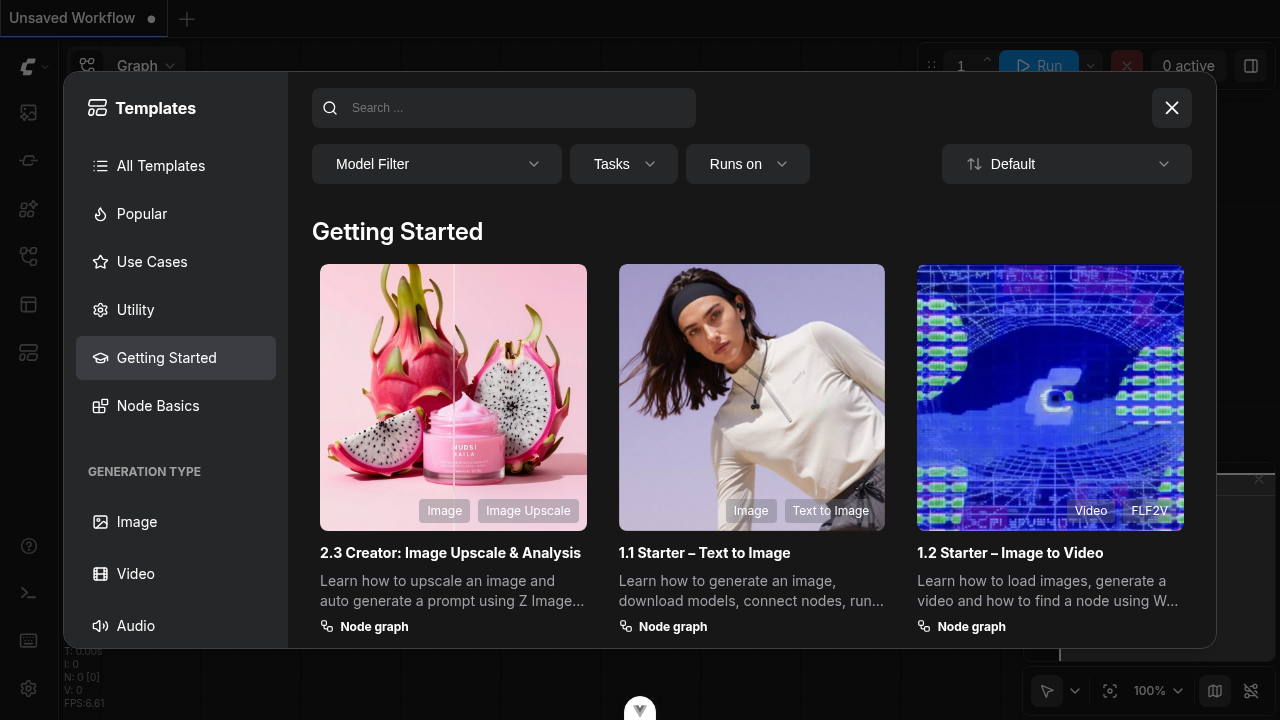
┆Issue is synchronized with this [Notion
page](https://www.notion.so/PR-12075-fix-disable-ultralytics-asset-browser-registration-35a6d73d36508179b394f0915e69742e)
by [Unito](https://www.unito.io)
Co-authored-by: Glary-Bot <glary-bot@users.noreply.github.com>
## Summary

The help icon (lucide circle-help) next to the credits balance in the
cloud user popover was a bare `<i>` with `v-tooltip` and `cursor-help`.
PrimeVue tooltip on a bare `<i>` did not fire reliably and the icon had
no focus/keyboard semantics, so users saw "no hover action and not
clickable".

Wrap the icon in `<Button variant="muted-textonly" size="icon-sm">`,
matching the existing pattern in `InfoButton.vue` and
`MissingPackGroupRow.vue`. Same change applied to
`CurrentUserPopoverLegacy.vue` and `CurrentUserPopoverWorkspace.vue`,
which shared the broken pattern.

- Fixes FE-617
-
https://comfy-organization.slack.com/archives/C0A4XMHANP3/p1778191473621829

## Red-Green CI Verification

The branch was force-pushed back to the test-only commit so CI could run
against it, then restored to the fix commit.

| Commit | CI: Tests Unit | Outcome |
|--------|---------------|---------|
| `test:` (e7c83abd0) — adds the regression test only |
https://github.com/Comfy-Org/ComfyUI_frontend/actions/runs/25532935842 |
failed — `Unable to find an element by:
[data-testid="credits-info-button"]` |
| `fix:` (64ec4cda4) — wraps the icon in `<Button>` |
https://github.com/Comfy-Org/ComfyUI_frontend/actions/runs/25533224195 |
passed |


<img width="434" height="364" alt="Screenshot 2026-05-08 at 5 32 47 PM"
src="https://github.com/user-attachments/assets/d3088b90-813f-4a0f-ba35-0f040fc79a6a"
/>

## Test Plan

- [x] Component test asserts the icon renders as an interactive
`<button>` with the unified-credits tooltip text as `aria-label`
- [x] Red CI failed with the expected error on the test-only commit
- [x] Green CI passed on the fix commit
- [ ] Manual verification on `pnpm dev:cloud` — hover the help icon next
to the credits balance and confirm the unification tooltip appears
## Summary

The nightly `Release Draft Create` -> `publish_types / Build types` job
has been failing on every run since 1.45.1 ([failed
run](https://github.com/Comfy-Org/ComfyUI_frontend/actions/runs/25531376650)).
Reproduced locally on `main` (`c8c0e5386`).

## Root cause

`pnpm build:types` ends with `FATAL ERROR: Reached heap limit Allocation
failed - JavaScript heap out of memory`. The `vite-plugin-dts` rolled-up
type generation now exceeds Node's default ~4GB heap on the GH runner.
The `TS2742`/`TS4082` warnings printed earlier are non-fatal diagnostics
from the plugin pre-pass — the api-extractor rollup itself completes
once the heap is large enough.

## Fix

Set `NODE_OPTIONS='--max-old-space-size=8192'` in `build:types`,
matching the existing pattern already used by `build` and `build:cloud`
(only one-line change).

## Verification

- `pnpm build:types` exits 0 locally with the change (built in ~40s).
- `dist/index.d.ts` (1.9MB) emitted with the public types intact:
`ComfyExtension`, `ComfyApi`, `ComfyApp`, `ComfyNodeDef`, `InputSpec`,
`DOMWidget`, etc.
- `dist/package.json` correctly produced by `scripts/prepare-types.js`.
- Reverting the change reproduces the OOM crash.

## Test plan

- [ ] Trigger `Release NPM Types` workflow manually (or wait for next
nightly) and confirm `Build types` step succeeds.

┆Issue is synchronized with this [Notion
page](https://www.notion.so/PR-12073-fix-restore-nightly-publish_types-build-35a6d73d3650819e95aecfbd8a66847c)
by [Unito](https://www.unito.io)
## Summary

This PR removes the `/api/assets/hash/:hash` verification path from
missing media/model detection.

I decided to remove this path for two reasons:

1. The Cloud runtime implementation and the OpenAPI/generated FE
contract do not agree on the hash format that this endpoint represents.
In current Cloud data, the dominant asset_hash shape is
<64-hex>.<extension> (for example, abc123....png), while the
OpenAPI/generated FE contract expects a blake3:<hash> style value. That
makes this path either dead code that should never be reached, or, when
it is reached, a request that always returns 400 and only adds
unnecessary noise.

2. Even if the format is reconciled, the Cloud implementation is a
global deduplication-oriented lookup, not an access-aware check for
whether the current workflow can use a resource. In theory, it can
return success for another user's personal asset, so it is the wrong
primitive for missing asset detection.

Because of that, this PR makes the existing asset list/store based
checks the primary verification path and removes the hash-specific
helpers, service method, and tests.

## Known follow-ups

These are known issues that are intentionally not solved in this PR:

1. Published assets are not exposed through
`/api/assets?...include_public=true`. This is a backend issue and can
still cause mismatch between missing-asset detection and resources that
preview/run successfully.
2. Shared workflow import has an ordering issue. The API contract issue
is being hotfixed separately under FE-603.
3. Annotated media paths can still be detected incorrectly.

I will prepare follow-up PRs for these, starting with the annotated
media path issue because that is the most critical frontend-side gap.

## Validation

- `pnpm exec vitest run
src/platform/assets/services/assetService.test.ts
src/platform/missingMedia/missingMediaScan.test.ts
src/platform/missingModel/missingModelScan.test.ts`
- `pnpm lint:unstaged`
- `pnpm typecheck`
- `pnpm knip`

┆Issue is synchronized with this [Notion
page](https://www.notion.so/PR-12061-fix-remove-asset-hash-verification-3596d73d365081a088f8dfc874724c1d)
by [Unito](https://www.unito.io)
*PR Created by the Glary-Bot Agent*
---
## Summary
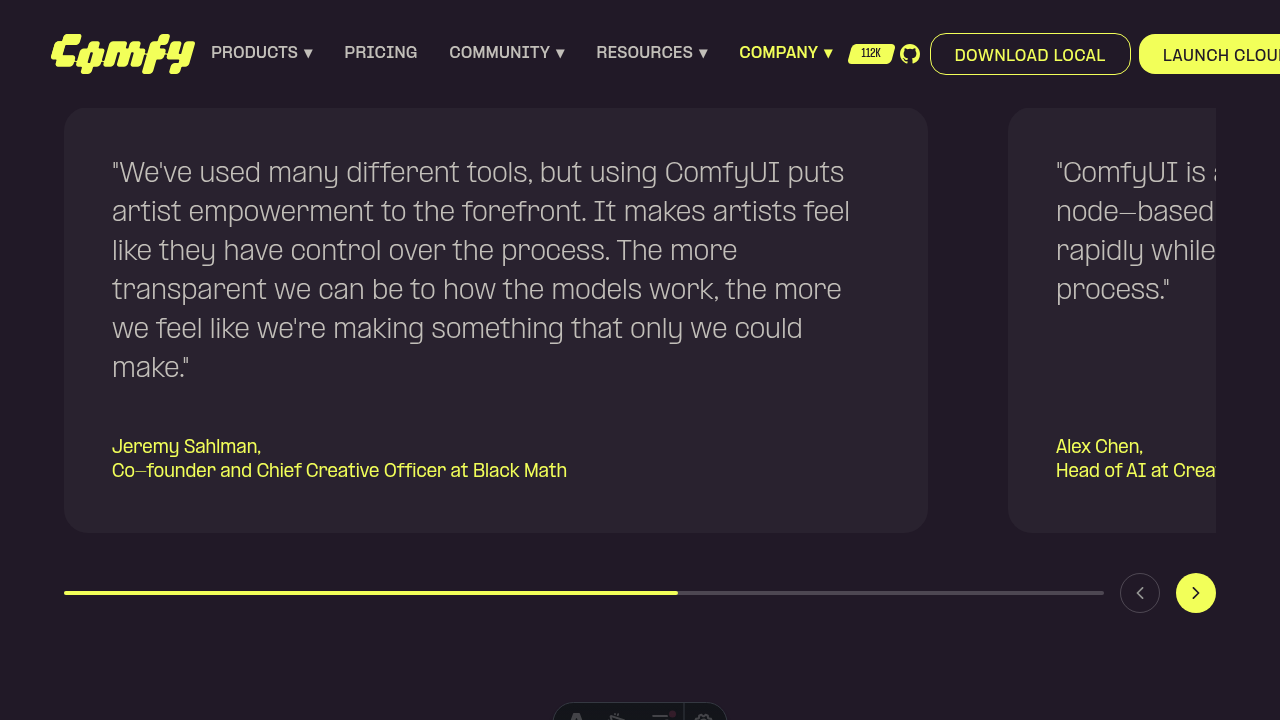
The horizontal progress bar in `FeedbackSection.vue` lagged behind the
carousel scroll position because the bar's width was driven reactively
by `useScroll`, but the `transition-all duration-200` utility animated
each width change over 200ms. As scroll continuously emits new target
widths, the bar visibly trailed the scroll position.
Removing the transition makes the bar track scroll synchronously.
## Verification
- Reproduced the lag locally on `/customers`.
- Verified post-fix that `bar.style.width` updates in the same frame as
`scrollLeft` changes (samples at scrollLeft 0 / 944 / 1600 → width 0% /
59% / 100%, with `transitionDuration: 0s`).
- `pnpm exec eslint`, `pnpm exec oxfmt --check`, `pnpm nx typecheck
website`, and `pnpm test:unit` all pass.
## Notes
No regression test added — the customers section components have no
existing unit/E2E coverage in this repo, and standing up a new test
harness for a one-line CSS fix would be disproportionate. Worth
following up on broader carousel coverage as a separate task.
## Screenshot
After fix, scrolled to second slide — progress bar tracks scroll
position synchronously.
## Screenshots
┆Issue is synchronized with this [Notion
page](https://www.notion.so/PR-12059-fix-remove-transition-delay-from-FeedbackSection-progress-bar-3596d73d36508107bc80dc38ea7ab79e)
by [Unito](https://www.unito.io)
Co-authored-by: Glary-Bot <glary-bot@users.noreply.github.com>
*PR Created by the Glary-Bot Agent*
---
## Summary
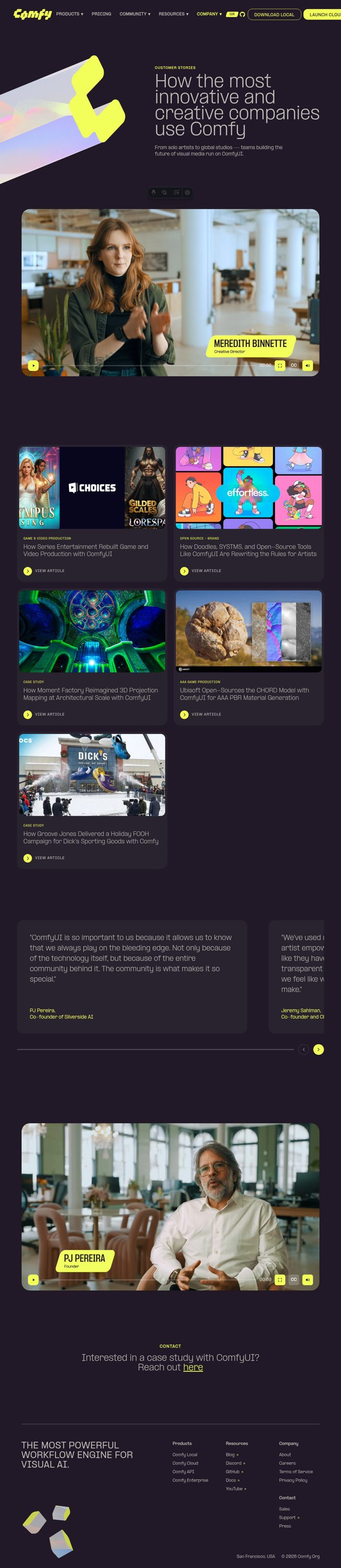
Fix the video position glitch on `/customers` caused by
`c-projection.webp` loading.
## Root cause
In `HeroSection.vue` the hero `<img>` for `c-projection.webp` had no
`width`/`height` attributes, so the browser reserved no space for it.
When the image finished loading, the layout shifted ~192px, pushing the
`VideoPlayer` below it. `useHeroAnimation` registers a GSAP
`ScrollTrigger` parallax against the video in `onMounted` (before the
image is loaded), so the cached scroll geometry then went stale and the
video visibly glitched.
## Fix
- Add explicit `width="1568"` / `height="1763"` to the `<img>` (the
image's native size) so the browser reserves the correct aspect-ratio'd
space upfront.
- Add `h-auto` so the height attribute doesn't override the responsive
layout.
- Refresh `ScrollTrigger` on the image's `@load` (with `refresh(true)`
so measurements happen after layout has settled) as a defensive measure
for any sub-pixel adjustments.
## Test coverage
Added `apps/website/e2e/customers.spec.ts` with a regression guard that:
1. Asserts the hero `<img>` declares numeric `width`/`height`
attributes.
2. Asserts the unloaded image still reserves vertical space (>100px),
which is the exact property that prevents the video from jumping when
the image finishes loading.
Verified the test fails when the `width`/`height` attributes are removed
and passes with the fix applied.
## Verification
- `pnpm typecheck` clean.
- `pnpm test:unit` (website app) — 30/30 pass.
- `pnpm test:e2e customers.spec.ts --project=desktop` — passes.
- ESLint + oxfmt clean on changed files.
- Manual Playwright verification confirmed the video bounding rect stays
at `top=785, height=628` through the full image load lifecycle.
Reverting the fix in DevTools and re-loading the image reproduces the
original ~192px shift.
## Out of scope
`apps/website/src/components/contact/FormSection.vue` uses the same
`c-projection.webp` pattern (also without `width`/`height`). It runs
`useHeroAnimation` with `parallax: false`, so the symptom is much
smaller — leaving as a follow-up to keep this PR minimal.
- Fixes
[FE-607](https://linear.app/comfyorg/issue/FE-607/bug-video-on-customers-shifts-position-when-c-projectionwebp-finishes)
## Screenshots
┆Issue is synchronized with this [Notion
page](https://www.notion.so/PR-12060-fix-website-prevent-video-glitch-when-c-projection-webp-loads-on-customers-3596d73d365081ebbcb8db25aaa5c451)
by [Unito](https://www.unito.io)
---------
Co-authored-by: Glary-Bot <glary-bot@users.noreply.github.com>
## Summary

Unblock CI due to missing function in mock
```
⎯⎯⎯⎯ Unhandled Rejection ⎯⎯⎯⎯⎯
TypeError: this.load3d.emitModelReady is not a function
 ❯ src/extensions/core/load3d/Load3DConfiguration.ts:313:19
    311|       }
    312|
    313|       this.load3d.emitModelReady()
       |                   ^
    314|     }
    315|   }

This error originated in "src/extensions/core/load3d/Load3DConfiguration.test.ts" test file. It doesn't mean the error was thrown inside the file itself, but while it was running.
The latest test that might've caused the error is "prefers persisted Scene/Camera/Light Config over settings". It might mean one of the following:
- The error was thrown, while Vitest was running this test.
- If the error occurred after the test had been completed, this was the last documented test before it was thrown.
⎯⎯⎯⎯⎯⎯⎯⎯⎯⎯⎯⎯⎯⎯⎯⎯⎯⎯⎯⎯⎯⎯⎯⎯⎯⎯⎯⎯⎯⎯


 Test Files  773 passed (773)
      Tests  10417 passed | 8 skipped (10425)
     Errors  2 errors
   Start at  12:06:06
   Duration  446.79s (transform 32.89s, setup 113.26s, import 589.18s, tests 109.19s, environment 228.45s)
```

## Changes

- **What**:
- add `emitModelReady` fn to mock

┆Issue is synchronized with this [Notion
page](https://www.notion.so/PR-12056-test-add-missing-emitModelReady-to-mock-object-3596d73d36508130a087f5c7713e932f)
by [Unito](https://www.unito.io)
## Summary

Follow-up to #11568 and #11785. Keeps the E2E coverage workflow clean
when `CI: Tests E2E` is intentionally skipped and no coverage shard
artifacts are produced.

## Changes

- Detect whether downloaded E2E coverage shard artifacts contain any
`coverage.lcov` files.
- Treat missing coverage shards as an intentionally skipped coverage run
instead of running lcov, Codecov, or Pages deployment on missing files.

┆Issue is synchronized with this [Notion
page](https://www.notion.so/PR-11575-ci-handle-skipped-e2e-workflow-consumers-34b6d73d3650813f92e1d7d6af0bf958)
by [Unito](https://www.unito.io)
## Summary

Align the asset list pagination schema with generated ingest-types
metadata and remove the now-unneeded missing `has_more` fallback branch.

## Changes

- **What**: Reuse `zListAssetsResponse` for `total` and `has_more`, keep
the local loose `AssetItem` shape, and simplify `getAllAssetsByTag()` to
trust the required `has_more` contract.
- **Breaking**: None.
- **Dependencies**: None.

## Review Focus

This is PR 1 of 4 in the missing asset follow-up stack:

1. This PR - Asset schema / pagination cleanup
2. #11900 - Missing asset hash verification utility cleanup
3. #11901 - Browser regression coverage for public input assets
4. #11902 - TanStack Query public-input cache replacement

The key decision is intentionally narrow: pagination metadata now comes
from generated ingest-types, but asset item validation remains locally
loose to avoid changing UI/store synthetic asset shapes in this PR.
`asset_hash` nullability remains unchanged because absent-vs-null hash
semantics are still a backend/API contract follow-up.

Addresses #11894

## Screenshots (if applicable)

N/A
*PR Created by the Glary-Bot Agent*

---

Adds an entry for the new `SaveImageAdvanced` node to
`public/assets/sorted-custom-node-map.json` with the same frequency stat
(1762) as the existing `SaveImage` node, so the new Save Image node
ranks at the top of search results when typing "save" — matching the
original node's behavior.

Context: the new Save Image node ([Notion
spec](https://www.notion.so/comfy-org/Save-Image-94a77c506ce145fc9b8c477c52091a04))
replaces/deprecates the original `SaveImage`. Search ranking uses the
static node frequency map; the new node had no entry and was therefore
ranked at frequency 0. Mirroring the original's stat is the manual-boost
approach discussed in the thread.

## Changes
- `public/assets/sorted-custom-node-map.json`: add `"SaveImageAdvanced":
1762` directly after `"SaveImage": 1762` to preserve descending sort
order.

## Verification
- `pnpm typecheck`, `pnpm lint`, and `pnpm format` all pass via
lint-staged on commit.
- JSON validated and entry placement confirmed (position 4, between
`SaveImage` and `VAEDecode`).
- Review (oracle) ran clean: 0 critical / 0 warning / 0 suggestion.

┆Issue is synchronized with this [Notion
page](https://www.notion.so/PR-11853-feat-boost-SaveImageAdvanced-node-frequency-for-search-ranking-3546d73d36508168b058d9d750fc3c56)
by [Unito](https://www.unito.io)

Co-authored-by: Glary-Bot <glary-bot@users.noreply.github.com>
*PR Created by the Glary-Bot Agent*

---

## Summary

Replaces `right1.webp` with `right1.webm` in the VFX panel of
`UseCaseSection`. `BlobMedia` already auto-detects `.webm` URLs and
mounts a `<video>` element (with the `.webp` as poster), so this single
URL swap is the only change required — matching the pattern used by the
other 4 use-case panels.

## Files changed

- `apps/website/src/components/home/UseCaseSection.vue` — swap
`right1.webp` → `right1.webm`.

## Verification

- `pnpm exec nx run website:typecheck` — clean
- `pnpm exec eslint` on changed file — clean
- `pnpm exec oxfmt --check` — clean
- pre-commit lint-staged hooks — passed

## Reviewer note (Oracle finding)

VFX is the default active panel, so the homepage's initial right-rail
asset moves from ~131 KB `.webp` to ~4.1 MB `.webm`. Behaviorally
consistent with the other 4 panels (which already use `.webm`), but
worth confirming whether `right1.webm` should be re-encoded smaller on
the CDN before promoting this PR out of draft.

┆Issue is synchronized with this [Notion
page](https://www.notion.so/PR-12040-fix-use-webm-video-for-VFX-use-case-right-asset-3596d73d365081829976f37b733840f1)
by [Unito](https://www.unito.io)

---------

Co-authored-by: Glary-Bot <glary-bot@users.noreply.github.com>
Co-authored-by: Amp <amp@ampcode.com>
## Summary

The dirtyClose modal had three buttons (`Cancel | No | Save`) and the
sign-out flow collapsed two distinct outcomes (deny vs. dismiss) into a
single early return — so today clicking "No" *cancels* sign-out instead
of signing out without saving, and clicking "Save" never actually saves
before logging out. This PR drops `Cancel` for `dirtyClose`, gives each
caller a context-specific deny label, and fixes the sign-out 3-state
handling.

- Fixes
[FE-419](https://linear.app/comfyorg/issue/FE-419/unsaved-changes-modal-uses-confusing-button-labels)

## Changes

- **What**:
- `ConfirmationDialogContent.vue`: hide `Cancel` for
`type='dirtyClose'`; add `denyLabel?: string` prop; autofocus `Save`
(preserves work on Enter).
  - `dialogService.confirm()`: accept and forward `denyLabel`.
- `useAuthActions.logout`: handle `null` (cancel) / `false` (sign out
anyway, no save) / `true` (save each modified workflow, then logout)
distinctly. Pass `denyLabel: 'Sign out anyway'`.
  - `workflowService.closeWorkflow`: pass `denyLabel: 'Close anyway'`.
- i18n: add `auth.signOut.signOutAnyway` and
`sideToolbar.workflowTab.closeAnyway`.
- **Breaking**: none. The `denyLabel` prop is optional and falls back to
`g.no`.

## Review Focus

- The "Save" branch in `useAuthActions.logout` now iterates
`workflowStore.modifiedWorkflows` and awaits
`useWorkflowService().saveWorkflow(workflow)` for each before calling
`authStore.logout()`. The close-tab path
(`workflowService.closeWorkflow`) was already correct — only the
sign-out path needed the same shape.
- `ConfirmationDialogContent` autofocus moves from `Cancel` (gone for
`dirtyClose`) to `Save`. The dialog is still dismissable via ESC /
outside-click, which routes through `dialogComponentProps.onClose →
resolve(null)` — sign-out and close-tab both treat `null` as cancel.
- Out of scope: the native browser `beforeunload` warning
(`UnloadWindowConfirmDialog.vue`) is a separate flow and never reaches
the in-app modal.

## Tests

- Unit (`useAuthActions.test.ts`, new): logout handles `null` / `false`
/ `true` / no-modified-workflows; saves *every* modified workflow before
`authStore.logout`; passes `denyLabel='Sign out anyway'`.
- Unit (`ConfirmationDialogContent.test.ts`): Cancel hidden for
`dirtyClose`; custom `denyLabel` rendered; falls back to `g.no` when
omitted.
- E2E (`workflowTabs.spec.ts`): modified-tab close shows `Close anyway`
(not `No`) and no `Cancel`; clicking `Close anyway` removes the tab; ESC
keeps the tab.

## screenshot

### AS IS

<img width="816" height="379" alt="Screenshot 2026-04-27 at 5 40 19 PM"
src="https://github.com/user-attachments/assets/a8e39403-bf72-455a-8d86-6ceb1f94ac85"
/>

<img width="923" height="396" alt="Screenshot 2026-04-27 at 5 40 38 PM"
src="https://github.com/user-attachments/assets/08031c7c-b3a6-45d7-a4dc-5dcb4e63cfa0"
/>


### TO BE

<img width="1661" height="872" alt="Screenshot 2026-04-27 at 5 43 40 PM"
src="https://github.com/user-attachments/assets/b89d160b-be66-450e-981e-32b1591f6841"
/>


<img width="1488" height="584" alt="Screenshot 2026-04-27 at 5 44 21 PM"
src="https://github.com/user-attachments/assets/b3a141a7-1f3b-4f25-85a9-49529229c28b"
/>


┆Issue is synchronized with this [Notion
page](https://www.notion.so/PR-11669-fix-clarify-unsaved-changes-modal-buttons-and-fix-sign-out-3-state-34f6d73d365081bf8afad8e146b3b990)
by [Unito](https://www.unito.io)
*PR Created by the Glary-Bot Agent*

---

## Summary

PR #10890 routed the legacy action bar feedback button and the Help
Center feedback item to the nightly Typeform survey, but the **default
topbar feedback button** in `WorkflowTabs.vue` still called
`buildFeedbackUrl()` and opened Zendesk. Since `Comfy.UI.TabBarLayout`
defaults to `Default` (not `Legacy`), most Cloud/Nightly users were
clicking the WorkflowTabs button and never reaching the Typeform survey
— explaining the lack of survey responses.

## Changes

- Added a shared `buildFeedbackTypeformUrl(source)` helper in
`platform/support/config.ts` that tags the survey URL with:
- `distribution`: `ccloud` / `oss-nightly` / `oss` (preserves the
build-tagging the old `buildFeedbackUrl()` sent to Zendesk so responses
stay segmented)
- `source`: `topbar` / `action-bar` / `help-center` (identifies which UI
entry point launched the survey)

Tags are passed via the URL fragment (Typeform's hidden-field
convention), so they reach the survey but are never sent to the server
in the request line.
- `WorkflowTabs.vue`: replaced `buildFeedbackUrl()` with
`buildFeedbackTypeformUrl('topbar')`.
- `cloudFeedbackTopbarButton.ts` and `HelpCenterMenuContent.vue`: use
the shared builder with their respective source labels instead of inline
URL literals.
- Removed the now-unused `buildFeedbackUrl()` and
`ZENDESK_FEEDBACK_FORM_ID` (knip-clean). `buildSupportUrl()` is
preserved — `Comfy.ContactSupport` (the Help Center "Help" item) still
routes to Zendesk as before.
- Added unit tests for the builder, the WorkflowTabs feedback button,
the legacy action bar button, and the Help Center feedback item
(covering both the Cloud/Nightly Typeform path and the OSS
`Comfy.ContactSupport` fallback).

## Verification

- `pnpm format`, `pnpm lint`, `pnpm typecheck`, `pnpm knip`: clean (one
pre-existing unrelated lint warning in `useWorkspaceBilling.test.ts`)
- `pnpm test:unit` (impacted scope): 506/506 passing, including 13 new
tests

## Review Focus

- Cloud/Nightly gating in `WorkflowTabs.vue` (`v-if="isCloud ||
isNightly"`) is unchanged and matches PR #10890's gating philosophy.
- The Help Center "Help" item and `Comfy.ContactSupport` command
intentionally still route to Zendesk — feedback ≠ support.

┆Issue is synchronized with this [Notion
page](https://www.notion.so/PR-11863-fix-route-default-topbar-feedback-button-to-Typeform-3556d73d3650815fb446dac33095d4be)
by [Unito](https://www.unito.io)

---------

Co-authored-by: Glary-Bot <glary-bot@users.noreply.github.com>
## Summary

Replace `useMouseInElement` in `CompareSliderThumbnail` with a local
`@mousemove` handler to eliminate ~1s of forced layout per keystroke in
the templates dialog search.

## Changes

- **What**: Profiling the templates dialog search (4× CPU throttle,
cloud distribution) showed a single `getClientRects` block at 977ms
inside Vue's `flushPostFlushCbs → update` path on every keystroke. The
call traces back to VueUse's `useMouseInElement`, which (a) shares a
global `mousemove` listener via `useMouse`, and (b) runs
`el.getBoundingClientRect()` inside a `watch([targetRef, x, y], …, {
immediate: true })`. Every template card with `thumbnailVariant ===
'compareSlider'` mounts one instance — when search filters change and
the page's compareSlider cards re-mount, each instance's `immediate`
watch fires a rect read against freshly-inserted DOM, forcing
synchronous layout of the entire new subtree. With many cards on screen
the costs stack into the ~977ms block. Replaced with a native
`@mousemove` listener bound directly to the slider container; the rect
is read from `event.currentTarget` only when the mouse is actually over
that one card, so the work no longer scales with mounted instance count
and is gated by real pointer activity.
- **Breaking**: None
- **Dependencies**: None

## Review Focus

- UX is unchanged: `sliderPosition` still follows the mouse during hover
and keeps its last value on mouseleave (matches previous behaviour where
`if (!isHovered) return` simply stopped updates without resetting).
- The same `useMouseInElement` pattern still exists in
`src/platform/workflow/sharing/composables/useSliderFromMouse.ts` (used
by `ComfyHubThumbnailStep` in the publish dialog). That path is
single-instance and off the templates hot path, so it's left untouched
to keep this PR scoped — happy to fix it in a follow-up.
- New tests use `userEvent.pointer({ coords })` with a stubbed
`getBoundingClientRect` to lock in the native mousemove path and the
zero-width guard.

## E2E coverage

No `browser_tests/` changes. The `fix:` commit is a defensive clamp
inside `updateSliderPosition`; the overshoot it guards against comes
from subpixel rounding and stale rects observed during hover-in, neither
of which can be deterministically reproduced under Playwright. The perf
change itself is verified via the DevTools profiler (forced-layout block
disappears) — also not assertable as a stable e2e signal across CI
hardware. Both the mousemove-driven slider behavior and the clamp guard
are covered by unit tests in
`src/components/templates/thumbnails/CompareSliderThumbnail.test.ts` (8
cases, including out-of-range pointer coordinates and zero-width
containers).
## Summary
Temporarily patch FE-569 by keeping the affected portaled Reka dropdowns
and menus above their containing PrimeVue dialogs when PrimeVue auto
z-index state has been elevated.
## Changes
- **What**: Added a small compatibility helper,
`usePrimeVueOverlayChildStyle`, that returns an anchor ref plus a
computed inline style for child popover content. The helper finds the
nearest PrimeVue dialog mask (`.p-dialog-mask` / `.p-overlay-mask`) from
the parent surface and, only when found, applies `parent z-index + 1` to
the affected Reka overlay content.
- **What**: Applied that helper at the exact PrimeVue parent surfaces
where the issue was found. This PR does not add a global overlay policy
and does not change every Reka select/dropdown in the app.
- **What**: Added optional `contentStyle`/`selectContentStyle` plumbing
only where needed so the style reaches the actual portaled Reka overlay
root.
- **What**: Added focused unit coverage for the helper contract: no
PrimeVue parent preserves existing stacking, PrimeVue dialog/overlay
masks render child content above the parent, low parent z-index values
respect the Reka floor, and invalid z-index values do not inject an
inline override.
- **Approach**: This is intentionally a minimal, parent-scoped band-aid.
It avoids a global PrimeVue overlay scanner because global sampling can
be polluted by unrelated persistent PrimeVue roots such as Toast and
would turn this fix into a broader layering policy.
- **Approach**: The patch targets the confirmed failure mode: a Reka
child overlay rendering below its owning PrimeVue dialog after PrimeVue
autoZIndex has been elevated. It does not attempt to solve PrimeVue
z-index globally.
- **Lifecycle**: This is temporary migration compatibility. PrimeVue
dialogs and controls are being incrementally migrated to Reka UI, so
`usePrimeVueOverlayChildStyle` and the optional style props added for
FE-569 should be removed once the affected parent surfaces move to Reka.
- **Breaking**: None. New props are optional and no public API contract
is changed.
- **Dependencies**: None.
## Patched Entry Points
This PR pinpoints the six affected user-facing surfaces below. Each
patch is applied from the PrimeVue dialog parent and passed only to the
Reka child overlay content that can render underneath that parent.
https://github.com/user-attachments/assets/d0d1522a-ffc7-4934-9e7a-06b83e20f809
1. **Workflow Template Library filters**
- **How to enter**: click the Templates button in the left sidebar, or
open the Comfy menu and choose **Browse Templates**.
- **Affected elements**: the template filter popovers in
`WorkflowTemplateSelectorDialog`: **Model**, **Use case**, **Runs on**,
and **Sort by**.
- **Patch point**: `WorkflowTemplateSelectorDialog.vue` anchors to the
template dialog content filter area and passes `selectContentStyle` to
the affected `MultiSelect` / `SingleSelect` controls.
https://github.com/user-attachments/assets/3641fa24-da51-4392-a904-9085f8a5a2f4
2. **Manager dialog header controls**
- **How to enter**: open Manager from the top/menu Manager entry when
the new Manager UI is available.
- **Affected elements**: the Manager header controls in `ManagerDialog`:
search mode `SingleSelect`, search autocomplete suggestions, and
**Sort** `SingleSelect`.
- **Patch point**: `ManagerDialog.vue` anchors to the dialog header and
passes `selectContentStyle` to those three Reka overlays.
https://github.com/user-attachments/assets/cf25cc06-f851-48ef-9d9c-9ec2da8afc06
3. **Asset Browser filter bar**
- **How to enter**: open the Asset Browser from an eligible model widget
browse action, the Model Library flow, or another
`useAssetBrowserDialog` caller.
- **Affected elements**: `AssetFilterBar` controls: **File formats**,
**Base models**, **Ownership**, and **Sort by**.
- **Patch point**: `AssetBrowserModal.vue` anchors to the PrimeVue
dialog header and passes the style through `AssetFilterBar` to its
`MultiSelect` / `SingleSelect` controls.
https://github.com/user-attachments/assets/e27bd805-10c0-4b3b-97f3-9e11faa47021
4. **Asset Browser model info panel**
- **How to enter**: open Asset Browser, select an asset, then use the
right-side model info panel.
- **Affected element**: the **Model type** select in `ModelInfoPanel`.
- **Patch point**: `AssetBrowserModal.vue` reuses the same parent-scoped
style and passes it to `ModelInfoPanel` as `selectContentStyle`.
https://github.com/user-attachments/assets/5e9f7ef0-ebd7-4987-ba1b-2137c034086f
5. **Upload Model confirmation step**
- **How to enter**: open Asset Browser, click **Upload**, enter/fetch
model metadata, then proceed to the confirmation step.
- **Affected element**: the **Model type** `SingleSelect` in
`UploadModelConfirmation`.
- **Patch point**: `UploadModelConfirmation.vue` anchors within the
upload dialog content and passes `selectContentStyle` to the model type
selector.
https://github.com/user-attachments/assets/ec145f26-8621-455b-915e-bedee47e1cbd
6. **Settings > Keybinding panel controls**
- **How to enter**: open Settings from the sidebar/menu, then select the
**Keybinding** panel.
- **Affected elements**: the keybinding preset select, the preset
overflow dropdown menu, and the row context menu inside
`KeybindingPanel`.
- **Patch point**: `KeybindingPanel.vue` anchors to the settings dialog
panel and passes `keybindingOverlayContentStyle` only to those Reka
overlay roots.
## Review Focus
- Confirm the patch stays narrowly scoped to the six known PrimeVue
parent + Reka child overlay surfaces above.
- Confirm `contentStyle` reaches the actual portaled Reka overlay
content in each patched path.
- Confirm the fallback behavior preserves existing stacking when no
PrimeVue parent overlay is found; in that case the helper returns an
empty style object and leaves existing Tailwind z-index classes alone.
- Please avoid expanding this into a larger overlay refactor. The goal
is a clean, backport-friendly compatibility patch while the Reka
migration continues.
Validation performed:
- `pnpm exec vitest run src/composables/usePopoverSizing.test.ts`
- `pnpm typecheck`
- `pnpm lint` (passes with existing unrelated warnings only)
- `pnpm format:check`
- commit hook lint-staged checks (`oxfmt`, `stylelint`, `oxlint`,
`eslint --fix`, `pnpm typecheck`)
- pre-push `pnpm knip`
Linear: FE-569
## Bug Screenshots
https://github.com/user-attachments/assets/e73761af-9867-4c50-ab0d-4e32e59011e1https://github.com/user-attachments/assets/145daf4d-3268-428b-9987-1e1afd0b866f
┆Issue is synchronized with this [Notion
page](https://www.notion.so/PR-12038-fix-keep-Reka-overlays-above-PrimeVue-dialogs-3596d73d365081e7af49dbc4d3905962)
by [Unito](https://www.unito.io)








